
Overfeeding: Metabolic Load and Feeding Schedules
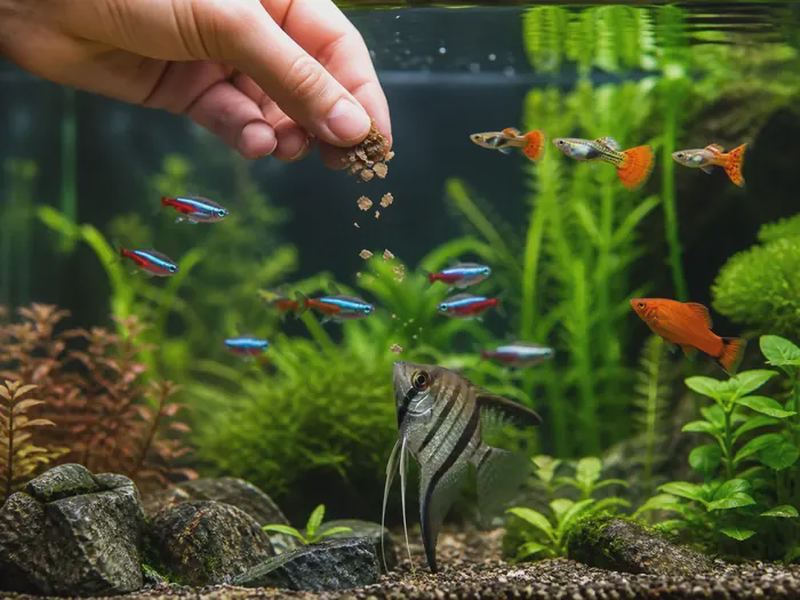
Introduction: The Silent Killer in Your Aquarium
Ask any experienced aquarist about the most common cause of fish death, and the answer is rarely disease, parasites, or equipment failure. It is overfeeding. This seemingly benign act of generosity—tossing an extra pinch of flakes into the tank—is responsible for a cascade of biochemical disasters that slowly, or sometimes rapidly, destroy the very environment your fish depend on. While the immediate visual of fish eagerly gobbling food suggests contentment, the physiological and chemical reality is far more complex. Overfeeding is not merely a matter of excess calories; it is a direct assault on the nitrogen cycle, the immune system of your fish, and the delicate osmotic balance of the aquatic ecosystem. In this article, we will dissect the science behind why overfeeding kills, and provide a rigorous, evidence-based feeding schedule that prioritizes long-term health over momentary gratification.
The fundamental problem lies in the fact that fish are ectothermic (cold-blooded) and have remarkably slow metabolisms compared to mammals. A goldfish, for instance, has a metabolic rate that is a fraction of a human’s, meaning it requires far less energy to sustain its bodily functions. When we feed based on our own intuitive sense of “hunger” or “portion size,” we are projecting mammalian digestive timelines onto a creature that processes food over days, not hours. Furthermore, the digestive systems of most aquarium fish are short and simple, designed to process small, frequent meals of high-protein prey, not large boluses of carbohydrate-rich flakes. The result is that uneaten food and the metabolic waste from over-digestion become the primary pollutants in your tank, far outpacing the capacity of your biological filter to neutralize them. Understanding this fundamental mismatch is the first step toward a more scientific approach to fishkeeping.
The Nitrogen Cycle: How Overfeeding Breaks the System
To truly grasp why overfeeding is lethal, you must understand the nitrogen cycle, the biological engine that keeps your water safe. In a healthy aquarium, beneficial bacteria (primarily *Nitrosomonas* and *Nitrobacter* species) colonize your filter media and substrate. These bacteria oxidize toxic ammonia (NH₃) from fish waste and uneaten food into nitrite (NO₂⁻), and then into nitrate (NO₃⁻), which is far less toxic and can be removed through water changes. This process is not instantaneous; it requires a stable, oxygen-rich environment and a steady, but not excessive, supply of ammonia. When you overfeed, you are essentially dumping a massive, unprocessed load of organic nitrogen into the system.
The immediate consequence is a spike in ammonia. Research on aquaculture systems has consistently shown that a single overfeeding event can raise ammonia levels from near zero to 2.0 mg/L or higher within 12-24 hours, especially in tanks with low bacterial biomass. At a pH of 7.5 and a temperature of 25°C (77°F), even 0.5 mg/L of ammonia is enough to cause gill damage and neurological stress in sensitive species like angelfish (*Pterophyllum scalare*) or discus (*Symphysodon aequifasciatus*). The bacteria, overwhelmed by this sudden influx, cannot convert the ammonia fast enough. Furthermore, the decomposition of excess food consumes dissolved oxygen. A study published in *Aquaculture Research* demonstrated that the biochemical oxygen demand (BOD) of a tank with overfeeding can increase by 300% within 48 hours, leading to hypoxia. Fish under these conditions exhibit rapid gill movement, lethargy, and surface gasping, but the damage is already occurring at the cellular level. Chronic sub-lethal ammonia exposure suppresses the fish’s immune system, making them susceptible to opportunistic infections like fin rot and ich (*Ichthyophthirius multifiliis*), which are often misdiagnosed as the primary cause of death when overfeeding is the true culprit.
Metabolic Realities: Why Fish Need Less Than You Think
The most common misconception among hobbyists is that fish are perpetually hungry and therefore need constant feeding. This is a behavioral artifact, not a physiological need. Wild fish often go days or even weeks between successful hunts. A study on wild guppies (*Poecilia reticulata*) in Trinidad found that gut fullness averaged only 60% even in resource-rich streams, indicating that they are adapted to energy conservation, not constant intake. In an aquarium, the absence of predators and the constant availability of food removes the natural cues that regulate feeding. Fish will eat until they are physically full, and some species, like cichlids, will continue to eat even when their stomachs are distended, a behavior known as "competitive overeating" that evolved to secure resources in a scarce environment.
The metabolic rate of fish is directly proportional to water temperature. For every 10°C increase, metabolic rate roughly doubles (the Q10 effect). A tropical fish at 28°C (82°F) has a metabolic rate roughly four times that of a temperate fish at 18°C (64°F). However, even at higher temperatures, the energy requirement for maintenance is surprisingly low. Research on juvenile rainbow trout (*Oncorhynchus mykiss*) showed that their daily maintenance energy requirement is approximately 1-2% of their body weight per day. For adult fish, this drops to 0.5-1%. This means a 50-gram angelfish requires only about 0.25 to 0.5 grams of high-quality protein per day to sustain its basic bodily functions. A single flake of commercial food weighs about 0.01 grams, so a few flakes per fish per day is biologically sufficient. Anything beyond that is not converted to energy but is either stored as fat (leading to hepatic lipidosis, a fatty liver disease common in overfed bettas and goldfish) or excreted as waste, polluting the water.
Building a Science-Based Feeding Schedule
Given the metabolic constraints and the fragility of the nitrogen cycle, a feeding schedule must be built on three pillars: frequency, portion size, and food type. The old adage "feed once a day, as much as they eat in two minutes" is a starting point, but it is too imprecise. A more rigorous approach is to calculate the total weekly food mass. For most ornamental fish, a total weekly intake of 1-2% of the fish's body weight is optimal for adult maintenance, while juveniles (which are growing) can be fed 3-5% of their body weight, split into smaller, more frequent meals. Since weighing food is impractical for most hobbyists, a volumetric approximation works well: the amount of food equivalent to the size of the fish's eye, per feeding, is a reliable proxy for stomach capacity.
For a practical schedule, consider the following protocol based on species and age. For adult community fish (tetras, rasboras, danios), feed once every 24-48 hours. This mimics their natural foraging intervals and reduces the organic load. For juvenile fish, feed two to three times daily, but with very small amounts—only what they can consume in 30 seconds. For bottom feeders like corydoras catfish, which are primarily scavengers, feed once daily, but target the sinking pellets directly to them to avoid food settling in the substrate. For herbivorous fish like *Ancistrus* plecos, provide a constant source of blanched vegetables (zucchini, cucumber) for 12 hours, then remove, and supplement with a high-fiber algae wafer every other day. The most crucial rule is to establish a "fasting day" once per week. Research on fish physiology shows that a 24-48 hour fasting period allows the digestive tract to clear completely, reducing the risk of intestinal blockages and allowing the liver to process accumulated lipids. This is not starvation; it is a metabolic reset that mirrors the natural feast-or-famine cycles in the wild.
Water temperature should also dictate feeding frequency. If you keep a temperate tank at 20°C (68°F), feed every 48-72 hours. If you keep a tropical tank at 27°C (80°F), feed every 24 hours, but never more than that. Use a digital thermometer and adjust your schedule accordingly. Do not feed on days when you perform a water change, as the stress of handling combined with the sudden shift in water chemistry can impair digestion. This disciplined approach will immediately reduce your nitrate levels. In a well-planted tank, weekly nitrate accumulation should be less than 10 mg/L; if you are seeing 40 mg/L or higher, your feeding schedule is the primary suspect.
Quantifying the Damage: Water Parameters as a Diagnostic Tool
Your water test kit is your most powerful ally in diagnosing overfeeding. Do not rely on visual observation alone. Test your water parameters every 48 hours for two weeks after implementing a new feeding schedule. Specifically, monitor ammonia (NH₃/NH₄⁺), nitrite (NO₂⁻), nitrate (NO₃⁻), and phosphate (PO₄³⁻). A healthy, cycled tank with a proper feeding schedule should show ammonia and nitrite at 0 mg/L consistently. Nitrate should be below 20 mg/L in a low-tech setup, and phosphate below 0.5 mg/L. If you see a rising ammonia trend after feeding, you are overfeeding, regardless of whether the fish appear to eat everything. The bacteria cannot keep up.
Consider a real-world example: a 100-liter community tank with 20 neon tetras (*Paracheirodon inexpectatus*) and 5 corydoras. If you feed one pinch of flake (approximately 0.2 grams) twice daily, that is 2.8 grams of food per week. Each gram of flake contains approximately 45% protein, meaning 1.26 grams of nitrogenous waste enters the system. The nitrogen cycle will convert this to about 0.5 grams of nitrate, which in a 100-liter tank raises nitrate by approximately 5 mg/L per week. With weekly water changes, this is manageable. However, if you double the feeding to four times daily, you double the nitrate production to 10 mg/L per week. Within three weeks, your nitrate will exceed 30 mg/L, triggering algae blooms and stressing fish. If you also have live plants, they will consume some nitrate, but the phosphate from the food (typically 1.5% of flake weight) will accumulate faster than plants can absorb, leading to unsightly green water and cyanobacteria. These are not random occurrences; they are predictable chemical outcomes of excess food input.
Furthermore, overfeeding directly alters pH stability. The decomposition of uneaten food produces organic acids, lowering pH over time. A sudden drop of more than 0.5 pH units in 24 hours is lethal to many species. Fish are osmoregulators; they maintain internal salt balance against the surrounding water. A fluctuating pH and elevated ammonia force their gills and kidneys to work overtime, consuming energy that should be used for growth and immune function. This is why fish that are overfed often die of "sudden" bacterial infections—their physiological resilience is already compromised.
Species-Specific Considerations: Not All Fish Are Equal
While general principles apply, different species have vastly different dietary needs and metabolic rates. Failing to account for this is a form of overfeeding in itself. For example, goldfish (*Carassius auratus*) are cold-water fish with no true stomach; they have a long intestine that extracts nutrients slowly. They are also compulsive feeders. Feeding them tropical fish flakes (high protein) is a double error: the protein load exceeds their metabolic capacity, and the food passes through their system partially undigested, contributing to massive waste. Goldfish should be fed a low-protein (30-35%), high-carbohydrate diet, and only once every 24-48 hours. A study on goldfish nutrition showed that feeding them a 45% protein diet significantly increased their nitrogen excretion compared to a 32% protein diet, directly correlating with higher ammonia levels in the tank.
Conversely, marine fish, particularly pelagic predators like clownfish (*Amphiprion ocellaris*) or anthias (*Pseudanthias squamipinnis*), have very high metabolic rates and require frequent, small feedings of high-quality protein. However, in a reef tank, the presence of live rock and copepod populations provides natural grazing, so you can reduce artificial feeding. For predatory fish like lionfish (*Pterois volitans*), feeding a single frozen silverside every 3-4 days is sufficient; they are ambush predators adapted to infrequent large meals. The most common error is feeding all fish in the tank the same food at the same rate. A community tank with both fast-swimming tetras and slow-moving bottom feeders requires a two-pronged approach: feed a small amount of flake for the tetras, wait 30 seconds, then add a sinking pellet for the catfish. This ensures each fish gets its nutritional requirement without one group monopolizing and the other starving or, worse, overeating to compensate. This targeted feeding reduces total food input by up to 30% compared to broadcasting food indiscriminately.
FAQ: Common Questions on Feeding Frequency and Quantity
Q: My fish always look hungry and beg at the glass. Isn't it cruel to feed them only once a day?
A: No. This "begging" is a learned behavior, not a sign of true hunger. Fish quickly associate your presence at the tank with food delivery. In the wild, they would not have this association. Overfeeding to satisfy their begging is the equivalent of giving a child candy every time they cry. The fish are not starving; they are displaying an operant conditioned response. Stick to your schedule, and they will adapt within a week.
Q: Is it better to feed small amounts multiple times a day or one large feeding?
A: For most adult fish, one feeding every 24-48 hours is optimal. Multiple small feedings (2-3 times) are only necessary for fry and juvenile fish under 6 months old, which have higher growth requirements. For adults, multiple feedings only increase the risk of water pollution and fatty liver disease. The exception is for herbivorous fish like tangs or plecos, which graze continuously; for these, provide a constant source of vegetable matter, but remove it after 12 hours to prevent decay.
Q: How do I know if I am feeding the right amount if the food is gone in 30 seconds?
A: The "30-second rule" is a good baseline, but it is not sufficient. After the 30-second feeding, observe the fish's abdomen. It should be slightly rounded, not bulging. If the belly is distended, you have overfed. Also, check the substrate after 10 minutes. If any food is visible on the bottom, you are feeding too much. Reduce the portion size by 20% next time. A better test is to fast the fish for 48 hours, then feed a small portion. If they eat it eagerly and you see no leftover after 5 minutes, you have found the correct maintenance dose.
Q: What about automatic feeders for when I am on vacation?
A: Automatic feeders are often a source of overfeeding. Most models dispense a fixed amount daily, which is usually too much. Instead, fast your fish for 3-4 days before you leave (they will be fine), then use a feeder set to dispense only a tiny amount every other day, or better, use a vacation block that dissolves slowly. For a 7-day absence, a single block of food is often sufficient for a community tank, as fish can also graze on biofilm and microfauna in the tank.
Q: My fish are bloated after eating. What should I do?
A: Bloating is a sign of overfeeding or feeding the wrong food. Immediately stop feeding for 72 hours. Perform a 25% water change to reduce any ammonia spike. If the bloating persists, it may be dropsy (fluid retention), which is often caused by bacterial infection secondary to poor water quality. The primary treatment is to correct the water conditions, not to add medication. Epsom salt baths (1 tablespoon per 10 liters) can help reduce fluid retention, but prevention through proper feeding is the only lasting cure.
Conclusion: Discipline Over Generosity
The science is unequivocal: the greatest threat to your aquarium's health is not what you put in it, but how much. Overfeeding is a well-intentioned but lethal practice that disrupts the nitrogen cycle, suppresses immune function, and accelerates biological aging in your fish. By adopting a rigorous, evidence-based feeding schedule—one that respects the metabolic rate of your fish, the capacity of your biological filter, and the chemical balance of your water—you can prevent the silent killer from ever entering your tank. The benefits are immediate and measurable: lower nitrate levels, clearer water, more vibrant fish coloration, and a dramatic reduction in disease outbreaks.
Begin by fasting all your fish for 48 hours. This resets their digestive systems and allows your filter to catch up. Then, implement a schedule based on the guidelines in this article: feed once every 24-48 hours for adults, target the food to each species, and never exceed the volume of the fish's eye per feeding. Test your water every 48 hours for two weeks and adjust your portions downward if you see any nitrate accumulation above 20 mg/L. Remember, you are not a fish's provider; you are the manager of an ecosystem. The most loving action you can take for your fish is to feed them less, not more. Your fish will live longer, swim more actively, and reward you with the vibrant health that only a balanced, low-stress environment can provide. In the end, the science is simple: less food in, more life out.
💬 Comments
No comments yet — be the first!
Sign in to comment