
Pygmy Cory: Complete Care Guide for Nano Tanks
Species Overview
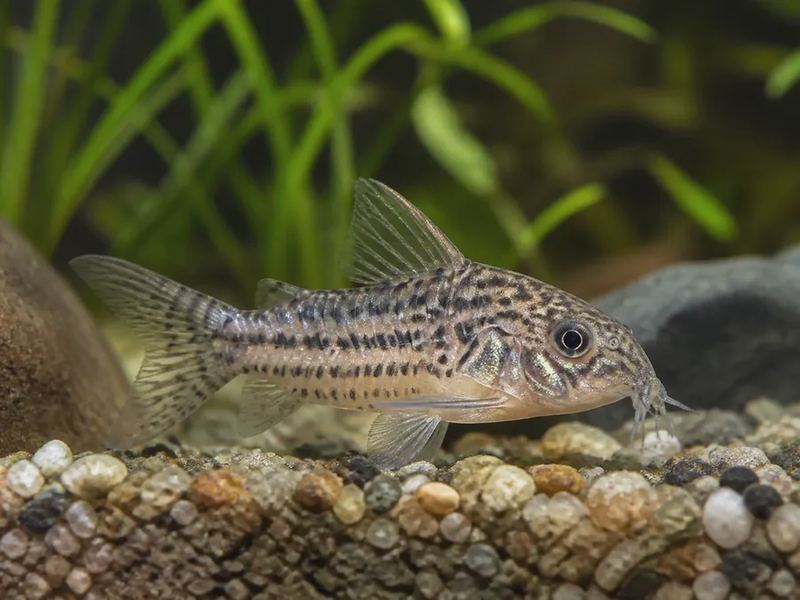
Corydoras pygmaeus, commonly known as the Pygmy Cory, is a diminutive species of armored catfish in the family Callichthyidae. First described by Knaack in 1966, this species belongs to the genus Corydoras, which comprises over 160 valid species of South American catfishes. The Pygmy Cory is native to the upper Amazon River basin in Peru and Brazil, particularly in the Rio Madeira and Rio Itaya drainages. It inhabits slow-moving tributaries, floodplain lakes, and blackwater streams with dense vegetation and soft, acidic water conditions.
In the aquarium hobby, Corydoras pygmaeus is prized for its tiny adult size (rarely exceeding 1 inch or 2.5 cm total length), peaceful temperament, and active shoaling behavior. Unlike many larger corydoras species, the Pygmy Cory is a mid-water swimmer as well as a bottom dweller, often seen hovering in loose schools. It is an excellent candidate for nano tanks and planted community aquariums. Its natural history includes a diet of small invertebrates and detritus, and it plays a role in controlling biofilm in the wild. The species is listed as Least Concern on the IUCN Red List, but habitat degradation from deforestation and gold mining is a localized threat.
Tank Requirements
Minimum tank size: 10 gallons (38 liters) for a small shoal of 6–8 individuals. While some sources claim 5 gallons may suffice, the species' active swimming and social nature demand at least a 10-gallon tank to maintain stable water quality and provide adequate horizontal swimming space.
Substrate
Use fine, smooth sand or very small rounded gravel (1–2 mm diameter). Corydoras have delicate barbels that can be abraded by sharp, coarse substrates, leading to infections. A sand substrate of 1–2 inches depth allows natural foraging behavior without barbel damage.
Decor
Provide dense planting with species such as Java moss (Taxiphyllum barbieri), Amazon frogbit (Limnobium laevigatum), and Cryptocoryne species. Driftwood, smooth rocks, and leaf litter (e.g., Indian almond leaves) mimic the blackwater habitat and provide hiding spots. Floating plants reduce lighting intensity and create shaded areas, which the fish prefer.
Tank Mates
Pygmy Corys are peaceful and should be kept with similarly small, non-aggressive species. Suitable tank mates include small tetras (e.g., Paracheirodon simulans — green neon tetra), dwarf rasboras (e.g., Boraras brigittae), small shrimp (e.g., Neocaridina davidi), and otocinclus catfish. Avoid large or aggressive fish like cichlids, barbs, or gouramis that may harass or outcompete them for food. Keep a minimum group size of 6; larger groups of 10–15 promote natural shoaling behavior and reduce stress.
Water Parameters
| Parameter | Target Range | Notes |
|---|---|---|
| Temperature | 72–78 °F (22–26 °C) | Optimal at 74–76 °F; avoid rapid swings |
| pH | 5.5–7.0 | Wild populations live in pH 4.5–6.5; stable pH < 7.0 preferred |
| General Hardness (GH) | 2–10 dGH | Soft to moderately soft water |
| Carbonate Hardness (KH) | 1–5 dKH | Low alkalinity helps maintain stable pH |
| Ammonia (NH₃/NH₄⁺) | 0 ppm | Highly toxic; must be undetectable |
| Nitrite (NO₂⁻) | 0 ppm | Equally toxic; any reading is dangerous |
| Nitrate (NO₃⁻) | < 20 ppm | Below 10 ppm ideal; above 40 ppm stresses fish |
Use a liquid test kit (e.g., API Master Test Kit) for accurate readings. Weekly water changes of 25–30% are essential to keep nitrates low and maintain water quality.
Filtration and Lighting
Filter Type
A sponge filter or hang-on-back (HOB) filter with a pre-filter sponge is ideal. Sponge filters provide gentle biological filtration without creating strong currents that stress Pygmy Corys. If using a HOB filter, add a sponge intake cover to prevent fish or shrimp from being sucked in. Canister filters can work but must be adjusted for low flow.
Flow Preference
This species requires low to moderate water flow. In the wild, they inhabit still or slow-moving waters. Aim for a turnover rate of 3–5 times tank volume per hour. Use a spray bar or diffuser to break up flow if necessary. Strong currents will exhaust the fish and inhibit feeding.
Lighting
Low to moderate lighting (30–50 lumens per liter or ~0.5–1 watt per gallon with LEDs) is sufficient. Pygmy Corys are not light-sensitive but prefer shaded areas. Floating plants (e.g., Salvinia minima) or a dimmer timer can create a dappled light effect. Avoid intense lighting that promotes excessive algae or causes the fish to hide.
Diet and Nutrition
In the wild, Corydoras pygmaeus feeds on small benthic invertebrates, insect larvae, and organic detritus. In captivity, they are omnivorous and accept a variety of foods.
Staple Food
Offer high-quality sinking pellets or wafers designed for catfish or bottom feeders (e.g., Hikari Sinking Wafers, Repashy Community Plus). These should form the base of the diet. Crush pellets into smaller pieces if needed for tiny mouths.
Treats
Supplement with frozen or live foods such as daphnia, baby brine shrimp, microworms, or bloodworms (cut into small pieces). Blanched vegetables (e.g., zucchini, spinach) are accepted occasionally but should not exceed 10% of the diet.
Feeding Frequency
Feed 2–3 times per day in small amounts that the fish consume within 2–3 minutes. For growing juveniles, three feedings are optimal; adults can be fed twice daily.
Portion Rule
Use the “2-minute rule”: offer only as much food as the fish can eat in 2 minutes. Overfeeding leads to water quality issues and obesity. Remove uneaten food after 5 minutes.
Supplements
Pygmy Corys generally obtain sufficient nutrients from a varied diet, but the following supplements can enhance health:
- Spirulina powder — added to food once weekly to boost immune function and coloration. Mix into a paste with water and soak pellets.
- Garlic extract — used as an appetite stimulant and mild antiparasitic. Add 1 drop per tablespoon of food when treating picky eaters or after illness.
- Calcium and iodine — essential for proper barbel and scale development. Provide via cuttlebone (boiled and crushed) or liquid calcium supplements designed for freshwater shrimp, added at manufacturer's recommended dose once monthly.
- Vitamin B complex — supports stress recovery. Use a commercial vitamin supplement (e.g., Seachem Nourish) added to the water column weekly at half the recommended dose.
Common Health Issues
Pygmy Corys are hardy when kept in clean water, but they are susceptible to several conditions:
- Barbel Erosion (Abrasion) — Symptoms: frayed, shortened, or infected barbels. Cause: sharp substrate or poor water quality. Treatment: move to quarantine tank with fine sand, treat with Seachem StressGuard (1 mL per 10 gallons) daily for 7 days, and perform 20% water changes every other day.
- Fin Rot — Symptoms: ragged, discolored fins with white edges. Cause: Pseudomonas or Aeromonas bacteria from poor water quality. Treatment: improve water parameters, add aquarium salt (1 tsp per 5 gallons), and use a broad-spectrum antibiotic like Maracyn (doxycycline) as directed.
- Ich (White Spot Disease) — Symptoms: white cysts (1 mm) on fins and body, flashing, clamped fins. Cause: Ichthyophthirius multifiliis parasite. Treatment: raise temperature to 82°F (28°C) gradually, add Ich-X (malachite green + formalin) per label, and increase aeration.
- Internal Parasites (Nematodes) — Symptoms: thinness, white stringy feces, lethargy. Cause: Capillaria or Camallanus. Treatment: use Fenbendazole (0.1 g per 10 gallons of food) or Levamisole (2 mg/L in water) for 3 days, repeated after 2 weeks.
- Dropsy — Symptoms: swollen abdomen, raised scales (pinecone appearance), lethargy. Cause: bacterial infection (often Aeromonas) or kidney failure. Treatment: isolate, add Epsom salt (1 tsp per 5 gallons) to reduce swelling, and treat with Kanamycin (15 mg/L) for 5 days. Prognosis is guarded.
Beginner Mistakes
- Keeping fewer than 6 individuals. Pygmy Corys are obligate shoalers; solitary fish become stressed, hide constantly, and often die prematurely. Always keep a group of at least 6, preferably 10+.
- Using sharp gravel or sand. Coarse substrates abrade the barbels, leading to infections and difficulty feeding. Use only smooth sand or fine gravel.
- Overfeeding or feeding only flakes. Flakes float and decay quickly; Pygmy Corys need sinking food. Overfeeding fouls the water and causes obesity. Stick to the 2-minute rule with sinking pellets.
- Adding them to an uncycled tank. This species is sensitive to ammonia and nitrite spikes. Always cycle the tank fully (ammonia and nitrite 0 ppm) before introduction, which takes 4–8 weeks.
FAQ
Can pygmy corys live with bettas?
Yes, but with caution. A betta in a 10-gallon or larger tank with plenty of hiding spots can coexist peacefully. However, some bettas may nip at the corys' fins. Monitor closely and provide visual barriers (plants, driftwood).
How long do pygmy corys live?
In optimal aquarium conditions, 3–5 years. Some well-cared-for individuals have been reported to live up to 7 years. Lifespan is strongly correlated with water quality and diet.
Do pygmy corys need a heater?
Yes, unless the room temperature remains stable between 72–78°F (22–26°C). Use a reliable aquarium heater (50 watts for a 10-gallon tank) to prevent temperature fluctuations, which stress the fish.
Why are my pygmy corys swimming at the top?
Occasional surface swimming is normal for labyrinth organ breathing, but persistent top-dwelling indicates low dissolved oxygen, high ammonia, or high temperature. Test water parameters immediately and increase surface agitation (e.g., with a sponge filter).
Can I breed pygmy corys in a community tank?
Yes, but survival of fry is low without a dedicated breeding setup. To increase success, condition adults with live foods, perform a 50% water change with cooler water (68°F/20°C) to simulate rainy season, and remove eggs to a separate tank with gentle sponge filtration and infusoria for feeding.
References
- Journal of Fish Biology
- Neotropical Ichthyology (SciELO)
- American Museum of Natural History