
Cardinal Tetra: Complete Care Guide for Paracheirodon axelrodi
Species Overview
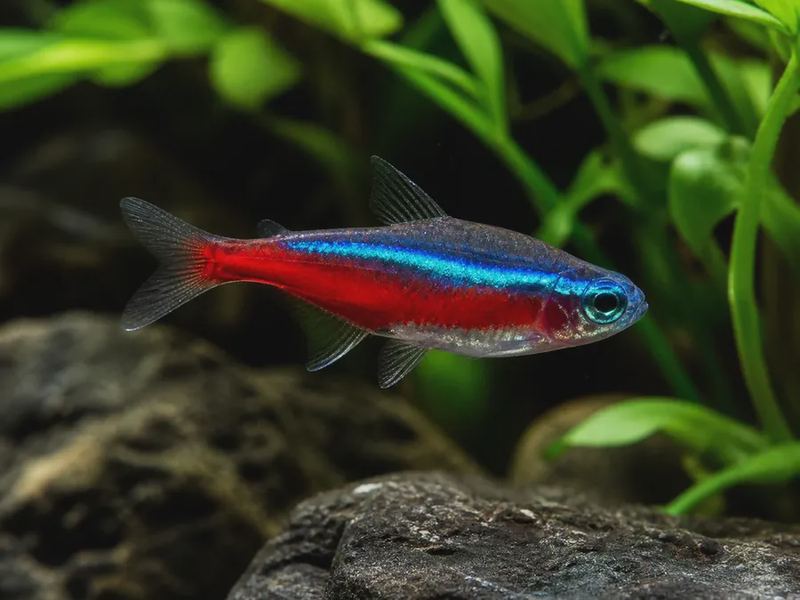
The cardinal tetra, Paracheirodon axelrodi, stands as one of the most iconic and widely recognized freshwater aquarium fish in the world, celebrated for its brilliant neon-blue lateral stripe and vivid crimson underbelly. Despite its ubiquity in the aquarium trade, the species' natural history is remarkably specific, and its wild populations face ongoing pressure from both collection and habitat degradation. Taxonomically, the cardinal tetra belongs to the family Characidae, the largest family of freshwater fish in South America, and is one of three species within the genus Paracheirodon, alongside the closely related neon tetra (P. innesi) and the lesser-known green neon tetra (P. simulans).
The species was formally described in 1956 by the prominent ichthyologist Leonard Peter Schultz, who named it in honor of Herbert R. Axelrod, the prolific aquarium author and publisher who first brought the fish to scientific attention after encountering it in the Rio Negro region of Brazil. Interestingly, the cardinal tetra was actually known to aquarium hobbyists prior to its formal scientific description, with specimens appearing in the trade as early as the 1930s, though their exact origin remained a mystery for decades. This delayed formal recognition is a testament to the remoteness of the species' natural habitat and the challenges of exploring the Amazon's blackwater tributaries.
Geographically, Paracheirodon axelrodi is endemic to the upper Orinoco and Rio Negro river systems of South America, spanning parts of Venezuela, Colombia, and Brazil. The species' distribution is notably disjunct from that of the neon tetra, which inhabits the clearer, whitewater tributaries of the Solimões River. The cardinal tetra's stronghold lies in the blackwater streams and flooded forests of the Rio Negro basin, particularly around the city of Barcelos, Brazil, as well as the upper Orinoco near Puerto Ayacucho, Venezuela. These regions are characterized by nutrient-poor, highly acidic waters stained dark brown by tannins leached from decomposing vegetation, creating an environment that is visually striking and chemically extreme. The wild habitat is seasonally dynamic, with water levels fluctuating dramatically between the dry season and the annual flood pulse, during which the fish migrate into the flooded forest floor to feed and spawn among submerged leaf litter and root systems.
Appearance & Size
The cardinal tetra is arguably the most visually stunning of all tetras, and its coloration serves both aesthetic and biological purposes. The fish possesses a single, uninterrupted iridescent blue-green stripe that runs horizontally from the eye to the base of the caudal fin. This stripe is produced by structural coloration—specifically, the reflection of light by guanine crystals within specialized chromatophores, which creates the intense, metallic sheen. Below this blue stripe, the entire ventral half of the body, from the operculum to the caudal peduncle, is a brilliant, saturated red. This red pigmentation extends much farther forward on the body than in the closely related neon tetra, where the red is confined to the posterior half. This is the single most reliable distinguishing feature between the two species, and it is immediately apparent even to novice aquarists.
In terms of size, the cardinal tetra is a small fish, reaching a maximum standard length of approximately 5 centimeters (2 inches), with most wild specimens falling between 3.5 and 4.5 centimeters. Females are typically slightly larger and deeper-bodied than males, particularly when gravid, while males tend to be slimmer and marginally more vibrant in coloration. The body shape is fusiform and laterally compressed, adapted for quick, darting movements through dense aquatic vegetation and submerged root tangles. The dorsal fin is small and triangular, while the anal fin is elongated and slightly rounded, and the caudal fin is forked. The adipose fin, a small fleshy fin located between the dorsal and caudal fins, is present as is characteristic of characins. In high-quality specimens, the fins are translucent with a faint hint of blue at the edges, though fin coloration is generally subtle compared to the body's striking two-tone pattern.
One of the most fascinating aspects of cardinal tetra coloration is its dynamic nature. When the fish is stressed, frightened, or kept under poor water conditions, the red pigmentation can fade significantly, and the blue stripe may lose its iridescence. Conversely, when the fish is healthy, well-fed, and kept in suitable conditions with dark substrate and subdued lighting, the colors intensify dramatically. This color change is controlled by the aggregation and dispersion of pigment granules within the chromatophores, a process regulated by the fish's endocrine and nervous systems. For aquarists, observing a vibrant, fully-colored cardinal tetra is one of the most reliable indicators of good husbandry and overall fish health.
Diet & Feeding
In its natural habitat, Paracheirodon axelrodi is an omnivorous micro-predator, feeding on a diverse array of small invertebrates, zooplankton, insect larvae, and organic detritus. The blackwater ecosystems of the Rio Negro and Orinoco are notoriously nutrient-poor, and the cardinal tetra has evolved to be a highly opportunistic feeder, consuming whatever small prey items are available within the water column and among submerged vegetation. Stomach content analyses of wild specimens have revealed a diet consisting primarily of aquatic insect larvae (particularly chironomids and mosquitoes), microcrustaceans such as copepods and cladocerans, and terrestrial insects that fall onto the water surface. During the annual flood season, when the fish move into the inundated forest floor, they also consume significant quantities of terrestrial invertebrates and plant matter that become available in the newly flooded environment.
In the aquarium, the cardinal tetra is notably unfussy and adapts readily to a variety of prepared foods. However, to maintain optimal health, coloration, and longevity, a varied diet is essential. A high-quality micro-pellet or flake food should serve as the dietary staple, but this should be supplemented with regular offerings of frozen or live foods. Frozen bloodworms, brine shrimp, daphnia, and cyclops are all eagerly accepted and provide the high protein content necessary for growth and color development. Live foods, such as freshly hatched baby brine shrimp or microworms, are particularly beneficial for conditioning fish for breeding and for stimulating natural foraging behaviors. It is important to note that cardinal tetras have small mouths and should be fed appropriately sized particles; oversized foods will be ignored and may decompose in the aquarium, contributing to water quality issues.
Feeding frequency should be two to three times daily in small amounts, with all food consumed within two to three minutes. Overfeeding is a common error among aquarists and is a leading cause of poor water quality and subsequent disease outbreaks in tetra species. Because cardinal tetras are naturally shoaling fish, they feed more confidently when kept in groups of at least six individuals, and observing a school of cardinals feeding on a sinking pellet or a cloud of daphnia is one of the most rewarding sights in the hobby. Additionally, it is worth noting that wild-caught specimens may initially refuse prepared foods, and transitioning them requires patience and the use of high-quality live or frozen foods to entice them. Conversely, captive-bred cardinal tetras, which are increasingly available in the aquarium trade, typically accept prepared foods immediately upon acclimation.
Aquarium Setup
Recreating the natural blackwater biotope of the cardinal tetra is not merely an aesthetic choice; it is the single most important factor in ensuring the long-term health, coloration, and breeding potential of this species. The cardinal tetra is a shoaling fish that naturally inhabits dimly lit, tannin-stained waters, and the aquarium environment should reflect these conditions. A minimum tank size of 20 gallons (75 liters) is recommended for a small shoal of six to eight individuals, though larger tanks of 30 gallons or more are preferable for maintaining a more impressive and naturalistically sized school of 12 or more fish. The tank should be longer than it is tall, as these fish are active swimmers that appreciate horizontal swimming space.
The substrate should ideally be a dark, fine-grained sand or small gravel, which not only mimics the natural riverbed but also helps to create a visually striking contrast against the fish's bright coloration. Dark substrates also absorb light rather than reflecting it, which encourages the fish to display their most intense colors. The addition of leaf litter, particularly Indian almond leaves (Terminalia catappa), is highly recommended, as these leaves slowly release tannins and humic acids into the water, replicating the chemical conditions of the blackwater environment while also providing a natural food source for the fish and a substrate for beneficial microorganisms. Driftwood, particularly bogwood or Malaysian driftwood, is another essential element, serving both as a structural feature and as a continuous source of tannin release.
Live plants are not typical of the cardinal tetra's native habitat, where submerged vegetation is sparse and the flooded forest floor is dominated by root systems and leaf litter. However, many aquarists successfully keep cardinal tetras in planted aquariums, provided the plants are chosen to tolerate low light and slightly acidic conditions. Suitable plant species include Java fern (Microsorum pteropus), Anubias species, Amazon sword plants (Echinodorus spp.), and floating plants such as frogbit (Limnobium laevigatum) or water lettuce (Pistia stratiotes), which help to diffuse the light and create shaded areas. Lighting should be subdued; bright, intense lighting will stress cardinal tetras and cause their colors to wash out. A lighting period of six to eight hours per day is generally sufficient, and the use of floating plants or a dimmer switch can help to achieve the desired low-light environment.
Water Parameters
The cardinal tetra is a stenotopic species, meaning it is adapted to a narrow range of environmental conditions, and maintaining these conditions in the aquarium is critical for its survival and well-being. The waters of the Rio Negro and upper Orinoco are among the most chemically extreme freshwater habitats on Earth, characterized by near-total absence of dissolved minerals, extremely low conductivity, and pH values that can drop below 4.0 during the dry season. While captive-bred specimens are somewhat more tolerant of less extreme conditions, replicating the essential characteristics of blackwater is vital for long-term success.
| Parameter | Wild Habitat Range | Recommended Aquarium Range |
|---|---|---|
| Temperature | 23–29°C (73–84°F) | 24–27°C (75–81°F) |
| pH | 3.5–6.5 | 5.0–6.5 (ideal: 5.5–6.0) |
| General Hardness (GH) | 0–3 dGH | 1–4 dGH |
| Carbonate Hardness (KH) | 0–2 dKH | 0–3 dKH |
| Conductivity | 10–50 µS/cm | 50–150 µS/cm |
| Total Dissolved Solids (TDS) | 5–30 ppm | 50–100 ppm |
Water temperature should be maintained between 24°C and 27°C, with a stable temperature being more important than the absolute value. Rapid temperature fluctuations are poorly tolerated and can induce stress, leading to disease outbreaks. The pH should ideally be maintained below 6.5, and preferably between 5.5 and 6.0, using natural methods such as the addition of peat moss to the filter, the use of Indian almond leaves, or the employment of reverse osmosis (RO) water mixed with tap water. It is crucial to avoid using chemical pH buffers, as these can cause dangerous pH swings. Hardness should be minimal, with GH below 4 dGH and KH below 3 dKH. The use of RO or deionized water is strongly recommended for those living in areas with hard, alkaline tap water.
Maintaining pristine water quality is arguably more important than matching exact parameter values. Cardinal tetras are sensitive to ammonia, nitrite, and nitrate, and regular partial water changes of 20–30% per week are essential. It is also important to note that the aquarium should be fully cycled before introducing cardinal tetras, as they are particularly susceptible to the effects of nitrogenous waste. A well-maintained, mature aquarium with stable blackwater parameters will not only keep the fish healthy but will also encourage the most vivid expression of their natural coloration.
Behavior & Compatibility
Paracheirodon axelrodi is a quintessential shoaling species, and its behavior in the aquarium is defined by this social imperative. In the wild, cardinal tetras form large, tightly coordinated schools that can number in the thousands, a strategy that provides protection from predators and improves foraging efficiency. In the aquarium, they should always be kept in groups of at least six individuals, though groups of ten or more are strongly recommended to observe their natural shoaling behavior and to reduce stress. A lone cardinal tetra will become withdrawn, lose color, and may refuse food, and keeping them in insufficient numbers is a common cause of premature death.
Cardinal tetras are peaceful, non-aggressive fish that pose no threat to other tank inhabitants. They are, however, small and may be viewed as prey by larger, predatory species. Therefore, tankmates must be chosen carefully. Ideal companions include other small, peaceful South American species such as other tetras (e.g., rummy-nose tetras Hemigrammus rhodostomus, black neon tetras Hyphessobrycon herbertaxelrodi, and pencilfish), dwarf corydoras catfish (Corydoras spp.), small plecos such as bristlenose catfish (Ancistrus spp.), and peaceful dwarf cichlids such as the ram cichlid (Mikrogeophagus ramirezi). Invertebrates such as dwarf shrimp (e.g., Caridina and Neocaridina species) and snails are also suitable tankmates, though shrimp fry may occasionally be consumed.
Species to avoid include all large cichlids, aggressive barbs, and any fish large enough to swallow a cardinal tetra. Additionally, the cardinal tetra should not be kept with the closely related neon tetra (P. innesi) in a breeding setup, as the two species may hybridize, though this is less of a concern in a general community tank. The tank should be heavily planted or decorated with driftwood and leaf litter to provide refuge and to break up lines of sight, which reduces stress and encourages natural behavior. A densely planted tank also provides shaded areas where the fish can retreat if they feel threatened. The cardinal tetra is an active, mid-water swimmer, and the tank should have open swimming areas in addition to planted refuges.
Breeding
Breeding Paracheirodon axelrodi in the home aquarium is notoriously challenging, though not impossible, and it requires a dedicated, species-only setup and a thorough understanding of the fish's natural reproductive biology. In the wild, spawning occurs during the rainy season when rising water levels flood the forest floor, creating vast, shallow, tannin-stained expanses of water with very soft, acidic conditions. The trigger for spawning is the combination of these chemical changes, the influx of fresh, cool rainwater, and the increased availability of food.
To induce breeding, a separate breeding tank of 10–15 gallons should be set up with extremely soft, acidic water (pH 5.0–5.5, GH below 2 dGH), achieved through the use of RO water and the addition of peat extract or Indian almond leaves. The tank should be dimly lit, with a spawning mop or fine-leaved plants such as Java moss (Taxiphyllum barbieri) provided as a substrate for egg deposition. A group of six to eight conditioned fish, ideally with a higher proportion of females, should be introduced to the breeding tank. Conditioning involves feeding the fish a high-protein diet of live and frozen foods for several weeks prior to the breeding attempt.
Spawning typically occurs in the early morning hours, with the male pursuing the female and performing a courtship dance before the pair releases eggs and sperm simultaneously. The eggs are adhesive and will attach to the spawning mop or plant leaves. A single spawning event can produce 100–300 eggs, though the parents will consume the eggs if given the opportunity, so the adults must be removed immediately after spawning is observed. The eggs are extremely sensitive to light and fungal infection, and the addition of a few drops of methylene blue to the water is recommended to prevent fungal growth. The eggs hatch in approximately 24–30 hours, and the fry become free-swimming after four to five days. The fry are minuscule and require infusoria or commercially available liquid fry food for the first few days, gradually transitioning to newly hatched baby brine shrimp as they grow. Growth is slow, and it may take several months for the fry to reach a size where they can be moved to a grow-out tank. The difficulty of breeding, combined with the low fecundity and slow growth of the fry, explains why most cardinal tetras in the aquarium trade are still wild-caught, despite increasing efforts at commercial captive breeding.
Common Diseases & Health
Cardinal tetras, like all aquarium fish, are susceptible to a range of diseases, but their specific sensitivity to water quality and their delicate constitution make them particularly vulnerable to stress-related illnesses. The most notorious and devastating disease affecting cardinal tetras is neon tetra disease, caused by the microsporidian parasite Pleistophora hyphessobryconis. This parasite infects the muscle tissue, causing the characteristic bright blue and red coloration to fade, followed by the development of cysts, spinal curvature, and eventually death. The disease is highly contagious and has no known cure; affected fish should be removed immediately, and the entire aquarium should be treated with a broad-spectrum antiparasitic medication, though success rates are low. It is important to note that neon tetra disease is not exclusive to neon tetras and can affect cardinal tetras with equal severity.
Ich, or white spot disease, caused by Ichthyophthirius multifiliis, is another common affliction, presenting as small white spots on the body and fins. Ich is often triggered by sudden temperature fluctuations or the introduction of new, infected fish. Treatment involves raising the water temperature gradually to 30°C (86°F) and using a commercial ich medication, though care must be taken as cardinal tetras are sensitive to some medications and the elevated temperature reduces dissolved oxygen levels. Fin rot and fungal infections are secondary conditions that typically arise from poor water quality or physical injury, and they are best prevented through meticulous tank maintenance and the avoidance of overcrowding.
Prevention is unequivocally the best medicine for cardinal tetras. Quarantining all new fish for a minimum of two to four weeks before introducing them to the main display tank is essential, as is maintaining stable water parameters and performing regular water changes. A varied, high-quality diet is also crucial for maintaining a robust immune system. It is also worth noting that wild-caught cardinal tetras are often more susceptible to disease than captive-bred specimens, as they have endured the stress of capture, transport, and acclimation to captive conditions. When sourcing cardinal tetras, aquarists should prioritize reputable dealers who practice proper quarantine procedures and who can provide healthy, well-acclimated specimens.
FAQs
Q1: What is the difference between a cardinal tetra and a neon tetra?
The most obvious difference is the extent of the red stripe on the body. In the cardinal tetra (Paracheirodon axelrodi), the red stripe runs the entire length of the body from the head to the tail, while in the neon tetra (Paracheirodon innesi), the red stripe only covers the posterior half of the body, from the middle to the tail. Additionally, cardinal tetras are slightly larger, growing to about 5 cm (2 inches), compared to the neon tetra's 3.5 cm (1.5 inches). Cardinal tetras also generally require softer, more acidic water than neon tetras, and they are typically more sensitive to poor water conditions.
Q2: Why are my cardinal tetras losing their red color?
Color loss in cardinal tetras is almost always a sign of stress. The most common causes include poor water quality (high ammonia, nitrite, or nitrate), sudden changes in water parameters (temperature, pH, or hardness), insufficient tank size or lack of a proper shoal (fewer than six individuals), and bright, intense lighting. If your cardinal tetras are losing color, first test your water parameters and perform a water change if necessary. Ensure the tank is dimly lit and provides plenty of hiding places, and confirm that you are keeping a sufficiently large group. Once the stressor is removed, the fish should regain their vibrant coloration within a few days.
Q3: Can cardinal tetras be kept with other fish?
Yes, cardinal tetras are peaceful community fish and can be kept with a wide range of similarly sized, non-aggressive species. Ideal tankmates include other small tetras, rasboras, dwarf corydoras catfish, small plecos, dwarf cichlids like rams, and peaceful invertebrates like dwarf shrimp. Avoid keeping them with large cichlids, aggressive barbs, or any fish large enough to swallow them. Always maintain a group of at least six cardinals, as they are shoaling fish that require conspecific companionship to feel secure.
Q4: How long do cardinal tetras live?
In a well-maintained aquarium with stable, appropriate water parameters and a varied, high-quality diet, cardinal tetras can live for 5 to 7 years, with some individuals reportedly living up to 10 years. However, their lifespan is heavily dependent on the quality of care they receive. Wild-caught specimens that have undergone the stress of transport may have a shorter lifespan, while captive-bred fish, which are becoming more common, often prove to be hardier and longer-lived. Consistent water quality, proper nutrition, and a stress-free environment are the keys to maximizing their lifespan.
References
- Journal of Fish Biology
- Freshwater Biology (Wiley)
- National Museum of Natural History, Paris