
Pterophyllum scalare angelfish: care, size, and breeding
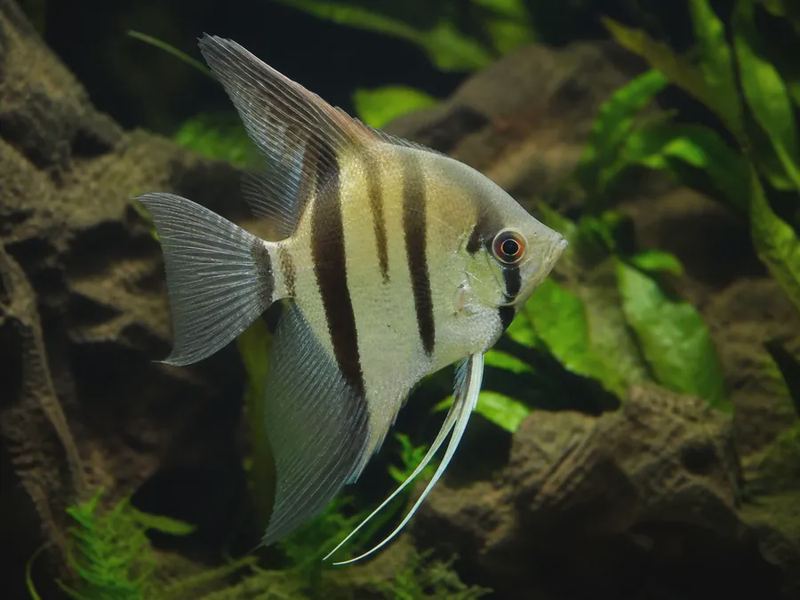
Species Overview
The freshwater angelfish, Pterophyllum scalare, stands as one of the most recognizable and enduringly popular species in the aquarium hobby, yet its true biological identity is frequently obscured by a tangle of commercial mislabeling and decades of selective breeding. First formally described by the German naturalist and zoologist Hermann Schomburgk in 1843, the species was originally assigned to the genus Platax, a group of marine batfish, before being reclassified into the South American cichlid genus Pterophyllum by the Belgian-British zoologist George Albert Boulenger in 1898. The genus name translates from Greek as "winged leaf," a remarkably apt descriptor for a fish whose dorsal and anal fins extend into sweeping, sail-like membranes that allow it to navigate vertically through dense submerged vegetation and between the roots of flooded trees. It is essential to distinguish Pterophyllum scalare from its two congeners: the smaller, more delicate Pterophyllum altum, which is endemic to the upper Orinoco and Rio Negro basins, and the rare Pterophyllum leopoldi, sometimes sold as the "dwarf angelfish," which occupies the middle Amazon and its tributaries. While all three share the characteristic triangular body plan, P. scalare is the most geographically widespread and the species most commonly encountered in the ornamental trade.
Geographically, the natural range of Pterophyllum scalare is expansive, encompassing the central and lower Amazon River basin, the Tocantins River, the Essequibo River in Guyana, and the Oyapock River in French Guiana. This is a critical point of clarification for aquarists: the species does not occur in the clearwater Rio Negro or the blackwater tributaries of the upper Amazon, which are the exclusive domain of P. altum. Instead, P. scalare inhabits slow-moving, marginal waters—floodplain lakes, oxbow lakes, seasonally inundated forests, and the quiet backwaters of major rivers—where the current is negligible and the water is typically classified as "whitewater" or "clearwater" with a moderate to high concentration of dissolved minerals. In these habitats, the fish are rarely found in open water; they are almost always observed sheltering beneath the surface canopy of floating vegetation, among the submerged branches of fallen trees, or within the dense root masses of riparian flora. The water chemistry in these regions is characteristically warm, soft, and slightly acidic, with a pH typically ranging from 6.0 to 7.5 and a general hardness of 5 to 12 dGH. The substrate is predominantly sand or fine silt, often littered with decomposing leaf litter, and the water column is frequently stained a tea-brown color due to the release of tannins from organic matter, though not to the extreme extent seen in true blackwater biotopes.
In the wild, Pterophyllum scalare exhibits a pronounced social structure that is rarely replicated in the confines of an aquarium. They are gregarious, forming loose aggregations of dozens to hundreds of individuals in the wild, which provides both safety in numbers and a higher probability of finding a compatible mate. These shoals are not random groupings; they are structured hierarchies, with dominant individuals occupying the most sheltered and food-rich territories. The species is also notable for its remarkable capacity for parental care, a trait that has made it a subject of fascination for ethologists and aquarists alike. Wild specimens, which are still exported in limited numbers from Guyana and Peru, are distinctly more drab than their domesticated counterparts, displaying a silver-grey body with three prominent vertical black bars and subtle iridescent blue and bronze highlights on the flanks. The vast majority of angelfish sold in pet stores today, however, are the product of generations of selective breeding, resulting in a dazzling array of color morphs—marble, koi, zebra, black, gold, and veil-tails—that bear little resemblance to their wild ancestors but retain the same underlying physiological and behavioral imperatives.
Appearance & Size
The body morphology of Pterophyllum scalare is a masterpiece of evolutionary adaptation to a life spent navigating vertical spaces. The fish's body is strongly laterally compressed, forming a near-perfect disc when viewed from the side, with the dorsal and anal fins extending into elongated, filamentous rays that can trail nearly the full length of the body in large adults. The pelvic fins are similarly elongated and delicate, often reduced to two or three long, whip-like rays that serve as tactile sensors in murky water. The species possesses a small, terminal mouth that is distinctly upturned, an adaptation for feeding on insects and crustaceans that drift down from the surface or become trapped in the surface film. The overall silhouette is triangular, with the apex at the mouth and the broad base at the posterior of the body, a design that allows for rapid acceleration and precise maneuverability in tight spaces but makes sustained high-speed swimming energetically costly.
In terms of size, Pterophyllum scalare is one of the larger freshwater cichlids kept in the hobby, though its actual maximum size is frequently overstated in popular literature. A healthy, fully mature wild-type specimen will reach a standard length (measured from the tip of the snout to the base of the caudal fin) of approximately 10 to 12 centimeters (4 to 5 inches). However, because the dorsal and anal fins extend vertically, the total height of the fish, including fins, can reach 20 to 25 centimeters (8 to 10 inches) in well-maintained specimens. The caudal fin is relatively short and fan-shaped, contributing little to the overall length. Domestication has not significantly altered the body size of the species, though some selectively bred lines, such as the "giant" or "super" varieties, may achieve slightly larger dimensions due to improved nutrition and controlled breeding practices. It is crucial for prospective owners to understand that the "one inch per gallon" rule is fundamentally flawed for this species; an angelfish requires vertical space more than horizontal length, and a tank measuring only 30 centimeters (12 inches) in height will severely restrict the fish's fin development and cause chronic stress.
The coloration of wild P. scalare is relatively conservative but exquisitely effective for camouflage. The base body color is a silvery-grey with a subtle bronze or olive sheen, overlaid with three distinct vertical black bars: the first passes through the eye, the second is situated just posterior to the operculum (gill cover) and extends down the flank, and the third is located at the base of the caudal peduncle. These bars are not static; the fish can rapidly darken or lighten them in response to stress, aggression, or changes in environmental background, a phenomenon known as physiological color change. The dorsal and anal fins are translucent, often with a faint bluish or purplish iridescence, and the eye frequently displays a red or orange iris. Domesticated varieties have been bred to express a wide spectrum of color mutations, including solid black ("black lace"), a mottled black-and-white pattern ("marble"), a golden base with reduced barring ("gold"), and the "koi" variety, which combines orange, white, and black patches. Regardless of the morph, the fundamental anatomy remains identical, and all varieties require the same level of care.
Diet & Feeding
In its natural habitat, Pterophyllum scalare is an opportunistic omnivore with a distinct preference for animal protein. Stomach content analyses of wild specimens have revealed a diet composed primarily of aquatic insect larvae—particularly those of chironomid midges (bloodworms) and mosquitoes—along with small crustaceans such as copepods, cladocerans, and amphipods. They also consume a significant quantity of terrestrial insects that fall onto the water's surface, as well as the eggs and fry of other fish species. The upturned mouth morphology is a clear indication of a feeding strategy that targets prey in the upper water column and the surface film; angelfish are not bottom feeders and will rarely, if ever, scavenge for food on the substrate. In the flooded forests of the Amazon, they also derive a portion of their nutrition from soft plant matter, filamentous algae, and the decomposing fruits and seeds that fall from overhanging trees, though these items constitute a minor fraction of their overall intake.
For the home aquarist, replicating this varied diet is essential for maintaining the long-term health, vibrancy, and reproductive capability of the fish. A high-quality, spirulina-based flake food or a small-pellet cichlid formula should serve as the dietary staple, providing a balanced matrix of proteins, lipids, and micronutrients. However, dry foods alone are insufficient to satisfy the species' physiological requirements. A minimum of three to four feedings per week should consist of live or frozen foods to provide essential fatty acids and stimulate natural foraging behaviors. Suitable options include frozen or live bloodworms (Chironomus larvae), brine shrimp (Artemia), daphnia, and blackworms. Frozen foods should be thawed in a small container of tank water before feeding to prevent the introduction of cold spots and to allow any excess packaging liquid to be discarded. It is also advisable to offer a small amount of blanched vegetables—such as zucchini, spinach, or shelled peas—once or twice weekly, particularly if the fish are being conditioned for breeding. Overfeeding is a common cause of obesity and subsequent organ failure in angelfish; a good rule of thumb is to offer only what the fish can consume within two minutes, twice per day, and to fast the fish one day per week to allow the digestive tract to clear.
Feeding behavior in P. scalare is also a useful indicator of social dynamics and health. In a well-established group, a clear feeding hierarchy will emerge, with dominant individuals feeding first and more aggressively. When introducing new fish, it is common for subordinate individuals to refuse food for the first few days; this is normal behavior and should not be a cause for alarm unless it persists beyond a week. However, a sudden loss of appetite in an established fish, particularly one that is normally an aggressive feeder, is often the first clinical sign of disease, parasitism, or deteriorating water quality. Conversely, a fish that is feeding voraciously but exhibiting a distended abdomen or stringy, white feces may be suffering from an internal parasitic infection, such as Capillaria or Hexamita, and should be quarantined and treated accordingly.
Aquarium Setup
Designing an aquarium for Pterophyllum scalare requires a fundamental departure from the "fishbowl" mentality that plagues many freshwater setups. The overriding principle is that this species needs height. A standard 75-gallon (284-liter) aquarium with dimensions of 48 inches (122 cm) in length and 18 inches (46 cm) in depth is considered the absolute minimum for a group of four to six adult angelfish, but the tank height should be at least 24 inches (61 cm) to accommodate the full vertical extension of their fins. For a breeding pair, a smaller tank of 29 to 40 gallons (110 to 151 liters) with a height of at least 18 inches is acceptable, but for a community group, larger is always better. The footprint of the tank is also critical; because angelfish are laterally compressed, they require horizontal swimming space to turn around comfortably, and a long, shallow tank is preferable to a tall, narrow one.
The substrate should be fine-grained and smooth—ideally a soft sand or a fine, rounded gravel. Angelfish do not dig or excavate substrate as do many other cichlids, but they do spend considerable time foraging near the bottom, and a coarse, sharp substrate can abrade their delicate pelvic fins and the skin around the mouth. A layer of 2 to 3 centimeters (1 inch) of sand is sufficient. Live plants are not merely decorative in an angelfish aquarium; they are essential for the psychological well-being of the fish. In the wild, angelfish are never exposed to open expanses of water; they are always within reach of cover. A densely planted tank provides refuge, reduces stress, and encourages natural behaviors. Tall, broad-leaved plants are particularly favored, as angelfish will use large leaves as spawning sites. Amazon sword plants (Echinodorus species), giant vallisneria, and Java ferns (Microsorum pteropus) are all excellent choices. Floating plants, such as Salvinia or Limnobium, are also beneficial, as they diffuse intense lighting and provide a sense of security. Driftwood and bogwood, arranged to create caves and overhangs, complete the aquascape.
Lighting requirements for P. scalare are moderate. In their natural habitat, the water is often stained with tannins and shaded by dense overhanging vegetation, so the fish are accustomed to subdued, dappled light. A standard T5 or LED light bar providing approximately 30 to 50 lumens per liter (or roughly 1.5 to 2.5 watts per gallon) is adequate for plant growth without causing undue stress to the fish. If the tank is brightly lit, the addition of floating plants is highly recommended to create shaded zones. The water flow should be gentle; angelfish are poor swimmers in strong currents. A sponge filter or a canister filter with a spray bar positioned to create a gentle, laminar flow is ideal. Powerheads or wavemakers that generate turbulent currents should be avoided, as they will cause the fish to expend excessive energy and may lead to fin damage.
Water Parameters
Maintaining stable, appropriate water chemistry is the single most important factor in the long-term health of Pterophyllum scalare. While domesticated strains are considerably more tolerant of a range of conditions than their wild ancestors, the species is not a "hardy" fish in the sense of tolerating poor husbandry. The fundamental requirement is stability; rapid fluctuations in temperature, pH, or hardness are far more detrimental than a slight deviation from the ideal range. The following table provides the target parameters for both wild-caught and commercially bred specimens:
| Parameter | Wild-Caught (Ideal) | Domesticated (Acceptable) | Critical Tolerance |
|---|---|---|---|
| Temperature (°C) | 26.0 – 28.0 | 25.0 – 29.0 | Below 22°C or above 32°C |
| Temperature (°F) | 78.8 – 82.4 | 77.0 – 84.2 | Below 72°F or above 90°F |
| pH | 6.0 – 6.8 | 6.5 – 7.5 | Below 5.5 or above 8.0 |
| General Hardness (dGH) | 2 – 5 | 4 – 12 | Above 20 dGH |
| Carbonate Hardness (dKH) | 1 – 3 | 3 – 8 | Below 1 dKH (pH crash risk) |
| Ammonia (NH₃) | 0 mg/L | 0 mg/L | Any detectable level is harmful |
| Nitrite (NO₂⁻) | 0 mg/L | 0 mg/L | Any detectable level is harmful |
| Nitrate (NO₃⁻) | < 20 mg/L | < 40 mg/L | Above 80 mg/L is chronically toxic |
Temperature management is straightforward: a reliable submersible heater with a wattage of 3 to 5 watts per gallon is required, and the heater should be placed near the filter outflow to ensure even heat distribution. The pH of the water should be tested weekly, and if the tap water is significantly alkaline (pH above 7.5), it is preferable to use an acid buffer or to filter the water over peat moss rather than relying on chemical pH adjusters, which can cause dangerous fluctuations. The use of reverse osmosis (RO) or deionized (DI) water, mixed with tap water, is the most reliable method for achieving the soft, slightly acidic conditions favored by the species, particularly for breeding. It is also essential to ensure that the aquarium is fully cycled—that is, the biological filter is established to convert ammonia to nitrite and then to nitrate—before introducing angelfish. A new tank should be cycled with a small number of hardy fish or through an ammonia-dosing method for a period of 4 to 6 weeks.
Behavior & Compatibility
The behavior of Pterophyllum scalare is complex, intelligent, and often misunderstood by novice aquarists. They are not aggressive in the manner of many African cichlids, which engage in relentless territorial warfare; rather, they are semi-aggressive, with aggression primarily directed toward conspecifics (members of their own species) and, occasionally, toward smaller fish that they perceive as potential prey or competitors. In a group of six or more, a distinct pecking order will emerge, and this hierarchy is maintained through ritualized displays of fin flaring, body quivering, and lateral pushing, rather than through damaging physical combat. However, when a pair forms and begins to breed, their territoriality intensifies dramatically, and they will aggressively defend a spawning site against all intruders, including fish several times their size.
For the community aquarium, careful tankmate selection is paramount. The primary rule is to avoid any fish small enough to fit into an angelfish's mouth—which, in an adult, is remarkably large. Neon tetras (Paracheirodon innesi) and other fish under 3 centimeters (1.2 inches) in length are at high risk of being eaten, particularly if the angelfish are underfed or if the tetras are sickly. Suitable tankmates include medium-sized, peaceful characins such as the black skirt tetra (Gymnocorymbus ternetzi) or the Congo tetra (Phenacogrammus interruptus), peaceful bottom-dwelling catfish such as the corydoras species (Corydoras spp.) or the bristlenose pleco (Ancistrus spp.), and other similarly sized cichlids like the keyhole cichlid (Cleithracara maronii). Rainbowfish, such as the Boeseman's rainbowfish (Melanotaenia boesemani), are also excellent tankmates due to their active, peaceful nature and their speed, which allows them to avoid any aggression. It is generally inadvisable to keep angelfish with tiger barbs (Puntigrus tetrazona), which are notorious fin-nippers and will relentlessly harass the angelfish's long fins. Similarly, any fish with a reputation for aggression, such as convict cichlids (Amatitlania nigrofasciata), should be avoided.
It is also critical to understand the social dynamics of the angelfish group itself. Keeping only two or three angelfish in a tank is a recipe for disaster, as the dominant individual will relentlessly bully the subordinate fish, leading to chronic stress, suppressed immunity, and eventual death. The species is best kept in a group of at least six, which allows the aggression to be dispersed among multiple individuals and permits the natural pair-bonding process to occur. When a pair does form, the other fish in the group may be subjected to increased aggression, and the aquarist must be prepared to remove the pair to a separate breeding tank if the harassment becomes excessive.
Breeding
Breeding Pterophyllum scalare is a rewarding and surprisingly achievable endeavor for the intermediate aquarist, provided that the fish are healthy, well-fed, and provided with the appropriate environmental cues. The species is a monogamous, substrate-spawning cichlid, meaning that a pair will form a lifelong bond and lay their eggs on a vertical surface, which they will then guard and tend until the fry are free-swimming. In the aquarium, the first step is to obtain a group of six or more juveniles and raise them together. As they mature, which typically occurs at 6 to 10 months of age, they will naturally pair off. The formation of a pair is often signaled by the two fish spending increasing amounts of time together, swimming in tandem, and engaging in a behavior known as "lip-locking," which is a non-aggressive form of bonding. The pair will also begin to select and clean a spawning site, which in the aquarium is often a broad leaf of an Amazon sword plant, a piece of slate, or even the glass wall of the tank.
To trigger spawning, the aquarist should simulate the onset of the rainy season in the Amazon. This involves performing a large (50%) water change with slightly cooler, softer water, and increasing the frequency and protein content of feedings. Live or frozen bloodworms and brine shrimp should be offered several times daily. The female will become visibly plump with eggs, while the male's genital papilla (a small tube located behind the vent) will become more prominent and pointed. The actual spawning event is a spectacle to behold. The female will lay a string of adhesive eggs—typically 100 to 400, though large females can lay over 1,000—in neat rows on the chosen surface. The male follows immediately behind, fertilizing the eggs. The process can take several hours. After spawning, both parents will take turns fanning the eggs with their pectoral fins to provide oxygenation and removing any infertile or fungused eggs with their mouths.
The eggs will hatch in approximately 48 to 60 hours, depending on the temperature. The newly hatched larvae are not free-swimming; they remain attached to the spawning site via a sticky thread and absorb their yolk sacs for a further 4 to 5 days. Once the yolk sac is fully absorbed, the fry become free-swimming and the parents will lead them to a pre-selected "nursery" area, often a shallow depression in the substrate or a broad leaf. At this point, the aquarist has a choice: allow the parents to raise the fry, or remove the fry and rear them artificially. Parental care is fascinating to observe, but the parents may occasionally eat their first few clutches, which is normal. If artificial rearing is preferred, the fry should be transferred to a separate rearing tank using a smooth siphon. The fry should be fed infusoria or commercially available liquid fry food for the first few days, followed by freshly hatched brine shrimp nauplii and then finely crushed flake food. The young fish grow rapidly and should be fed three to four times daily, with daily water changes of 20% to ensure pristine water quality.
Common Diseases & Health
Like all freshwater fish, Pterophyllum scalare is susceptible to a range of infectious and parasitic diseases, but its susceptibility is significantly influenced by water quality and stress levels. The most common affliction is "Ich" or white spot disease, caused by the ciliate protozoan Ichthyophthirius multifiliis. This parasite manifests as small, white, salt-grain-sized spots on the body and fins, accompanied by flashing (rubbing against objects) and rapid breathing. Ich is almost always introduced via new fish or plants, and outbreaks are triggered by temperature stress or sudden pH shifts. Treatment involves raising the temperature to 30°C (86°F) for three days, adding aquarium salt at a concentration of 1 tablespoon per 5 gallons, and using a commercial malachite green-based medication.
A second common ailment is fin rot, a bacterial infection typically caused by Pseudomonas or Aeromonas species, which manifests as frayed, discolored, or receding fin tissue. Fin rot is almost always a secondary infection resulting from a primary stressor, such as poor water quality, overcrowding, or fin-nipping by tankmates. The treatment is twofold: address the underlying cause by improving water quality and removing any aggressive tankmates, and treat the bacterial infection with a broad-spectrum antibiotic such as erythromycin or tetracycline. If left untreated, fin rot can progress to the base of the body and become fatal. Another prevalent issue, particularly in angelfish, is hole-in-the-head disease (HITH), also known as head and lateral line erosion (HLLE). This condition is characterized by small pits or erosions on the head and along the lateral line, and is believed to be caused by a combination of factors, including nutritional deficiencies (particularly of vitamin C and minerals), chronic stress, and the presence of the flagellate parasite Hexamita in the intestine. Treatment involves improving the diet with high-quality, vitamin-enriched foods, reducing stress, and using a metronidazole-based medication if a parasitic infection is suspected.
Prevention is always superior to treatment. The most effective prophylactic measures are: (1) quarantining all new fish, plants, and invertebrates for a minimum of four weeks before introducing them to the main display tank; (2) performing weekly water changes of 25% to 30% and maintaining pristine water quality; (3) providing a varied, high-quality diet to prevent nutritional deficiencies; and (4) minimizing stress by ensuring adequate tank size, appropriate tankmates, and stable water parameters. It is also advisable to keep a small hospital tank set up and cycled at all times, so that any sick fish can be isolated for treatment without exposing the entire community to medication.
FAQs
Q: Can I keep a single angelfish in a 10-gallon tank?
A: No. While a single juvenile angelfish may temporarily survive in a 10-gallon (38-liter) tank, it will quickly outgrow the space. Adult angelfish require a minimum of 20 gallons (76 liters) for a single specimen, but they are shoaling fish and should be kept in groups of at least six. A 10-gallon tank is far too small to meet their physical or psychological needs, and keeping one in such a confined space will lead to stunted growth, fin deformities, and a significantly shortened lifespan. The minimum recommended tank size for a group of angelfish is 75 gallons (284 liters) with a height of at least 24 inches (61 cm).
Q: Why are my angelfish fighting?
A: Aggression between angelfish is normal and is part of establishing a social hierarchy. If you are keeping only two or three fish, the dominant individual will relentlessly bully the subordinates. The solution is to keep a larger group—six or more—so that aggression is dispersed. However, if the fighting is intense, with fish chasing each other constantly and causing physical damage, it may be a sign that the tank is too small, there is insufficient cover (plants or driftwood), or that a breeding pair has formed and is defending a spawning site. In the latter case, the pair should be moved to a separate breeding tank if the aggression is excessive.
Q: What is the difference between Pterophyllum scalare and Pterophyllum altum?
A: The two species are often confused but are distinct. P. altum, the "Altum angelfish," is native to the upper Orinoco and Rio Negro basins, is larger (reaching up to 18 cm / 7 inches in standard length), has a more pronounced "dished" forehead, and a longer, more sloping snout. P. altum is also more demanding in terms of water quality, requiring very soft, acidic water (pH below 6.0) and lower temperatures. P. scalare is more adaptable, has a flatter forehead, and is the species almost exclusively sold in pet stores. If you are a beginner, P. scalare is the appropriate choice.
Q: My angelfish is laying eggs on the glass. What should I do?
A: If you have a breeding pair, they will often lay eggs on the aquarium glass, which is not an ideal substrate but is acceptable. You have two options: leave the eggs in place and allow the parents to tend them, or remove the eggs for artificial incubation. If you leave the eggs, be aware that the parents will guard them fiercely and may attack tankmates. If the eggs turn white within 24 hours, they are infertile (likely because the male is too young or the pair is two females). If you wish to raise the fry, you may gently remove the eggs using a razor blade and transfer them to a hatching container with gentle aeration and methylene blue to prevent fungal growth.
References
- Nature Ecology & Evolution
- Journal of Evolutionary Biology
- Max Planck Institute for Evolutionary Biology