
Cyprinus carpio Koi: Complete Pond Fish Care Guide
Species Overview
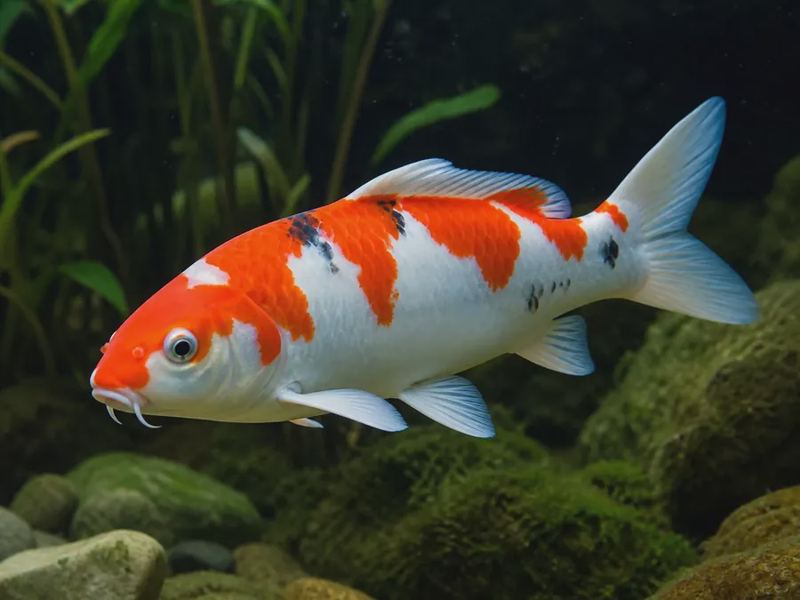
The common carp, Cyprinus carpio, is one of the most historically significant and widely distributed freshwater fish species on Earth. While the term "koi" in the aquarium trade specifically refers to the ornamental, selectively bred varieties of this species, the wild type remains the biological baseline from which all these colorful mutations derive. The species was first formally described by Carl Linnaeus in his 1758 Systema Naturae, making it one of the earliest scientifically catalogued fish. However, the relationship between humans and Cyprinus carpio predates Linnaeus by millennia. Archaeological evidence indicates that the common carp was first domesticated in China around 2000 BCE, primarily as a food fish in aquaculture ponds. The ornamental breeding that gave rise to what we now call koi (the Japanese word for "carp") began in the Niigata prefecture of Japan during the 1820s, where rice farmers noticed and selectively bred natural color mutations that appeared in their food carp stock. These early breeders developed the first distinct color varieties, including the red-and-white Kohaku, which remains one of the most iconic koi patterns today.
In terms of natural distribution, the wild Cyprinus carpio is native to the temperate regions of Eurasia, specifically the Black, Caspian, and Aral Sea drainages, including the rivers of Eastern Europe, the Danube basin, and parts of Central Asia. However, due to centuries of intentional introduction for aquaculture, sport fishing, and ornamental purposes, the species now exists on every continent except Antarctica. This global spread has had profound ecological consequences, as the species is listed among the 100 worst invasive alien species by the IUCN due to its destructive bottom-feeding habits that uproot aquatic vegetation and increase water turbidity. In its native range, the wild carp inhabits slow-moving rivers, oxbow lakes, floodplain backwaters, and large ponds with soft, muddy substrates and abundant aquatic vegetation. They are remarkably tolerant of low-oxygen conditions, high turbidity, and even brackish water, which explains their ability to colonize such a wide variety of environments. This adaptability is a core component of their biology and directly informs how we must approach their care in captivity.
Appearance & Size
The appearance of Cyprinus carpio varies dramatically depending on whether one is examining a wild specimen or a domestic ornamental variety. The wild type is typically an olive-green to bronze-brown color with a lighter, yellowish belly, providing effective camouflage in murky, vegetated waters. Their bodies are robust and somewhat deep, with a thick caudal peduncle and a slightly arched back. They possess two barbels on each side of the upper jaw — one long and one short — which are highly sensitive chemosensory organs used to locate food in muddy substrates. These barbels are a key identifying feature that distinguishes them from goldfish (Carassius auratus), which lack them entirely. The dorsal fin is long, with a serrated spine at its origin, and the scales are large, thick, and cycloid (smooth-edged). Ornamental koi, by contrast, have been bred for over two centuries to express a staggering array of color patterns, including solid white (Ogon), red and white (Kohaku), red, white and black (Taisho Sanke), and metallic platinum (Purachina Ogon), among hundreds of recognized varieties.
Regarding size, Cyprinus carpio is a genuinely large fish, and this is the single most critical factor that prospective keepers must understand. In a typical outdoor garden pond, ornamental koi generally reach 45 to 60 centimeters (18 to 24 inches) in length and weigh between 4.5 and 9 kilograms (10 to 20 pounds). However, in large, well-maintained earthen ponds or natural bodies of water with abundant food and ample swimming space, they routinely exceed 90 centimeters (35 inches). The current world record for a common carp is over 45 kilograms (100 pounds), caught in Europe. In an aquarium setting, growth is stunted by tank size and water quality, but this is not a healthy outcome; stunted koi suffer from internal organ compression and reduced lifespan. Their growth rate is rapid during the first three years, with juveniles capable of growing 2.5 to 5 centimeters per month under optimal conditions. It is essential to recognize that a koi acquired at 10 centimeters will not remain that size; they are a commitment to a very large animal that requires hundreds of liters of water to thrive.
Diet & Feeding
Cyprinus carpio is an omnivorous, opportunistic feeder with a highly flexible dietary strategy that has been a major factor in its evolutionary success. In the wild, their diet consists primarily of benthic (bottom-dwelling) organisms. They use their sensitive barbels and protrusible mouth to root through soft mud and silt, consuming insect larvae, aquatic worms, crustaceans, mollusks, and small fish. However, a significant portion of their natural diet is plant matter, including aquatic vegetation, algae, and seeds. They are also known to consume detritus and decaying organic matter, which makes them effective nutrient recyclers in their native ecosystems. This dietary plasticity means that in captivity, koi are not particularly fussy eaters, but their nutritional needs are specific and must be met with high-quality food to ensure proper growth, coloration, and immune function.
In an aquarium setting, the staple diet should be a high-quality, sinking or slow-sinking pelleted food specifically formulated for koi. These pellets should have a protein content of 30 to 36 percent for maintenance, increasing to 38 to 42 percent for juvenile growth and during warmer months when metabolic rates are higher. The protein should be derived from fish meal (such as whitefish or menhaden) rather than plant sources, as koi require the essential amino acids found in animal proteins. Carbohydrates should be kept relatively low, as koi have a limited ability to metabolize complex sugars. Commercial koi foods are also supplemented with carotenoids, particularly astaxanthin and canthaxanthin, which are essential for enhancing and maintaining red and orange pigmentation in varieties like Kohaku and Tancho. Without these dietary pigments, koi will gradually fade to a pale, washed-out appearance.
Feeding frequency must be adjusted based on water temperature, as koi are ectothermic and their digestive enzyme activity is directly temperature-dependent. At temperatures above 20°C (68°F), feed two to three times per day, offering only as much as they can consume within five minutes. Between 15°C and 20°C (59°F to 68°F), reduce feeding to once daily. Below 15°C, their metabolism slows dramatically, and feeding should be reduced to once every two to three days with a wheat-germ-based, easily digestible food. Below 10°C (50°F), digestive function essentially ceases, and feeding should be stopped entirely to prevent food from rotting in the gut and causing bacterial infections. It is also beneficial to supplement the pelleted diet with occasional treats of blanched vegetables like zucchini, peas, and lettuce, as well as live or frozen foods such as bloodworms and brine shrimp, although these should comprise no more than 10 percent of the total diet to prevent nutritional imbalances.
Aquarium Setup
The aquarium setup for Cyprinus carpio is, without exaggeration, the most challenging aspect of keeping this species indoors. It cannot be overstated that koi are pond fish; they are not suitable for typical home aquariums in the long term. However, for those committed to keeping a juvenile koi in an indoor system, the minimum tank size for a single fish is 750 liters (200 gallons), and this is only suitable for the first two to three years of life. For any long-term indoor maintenance, a tank of 1,500 to 2,500 liters (400 to 660 gallons) is required for a small group of two to three fish. The primary biological reason for these enormous volumes is not just swimming space but waste production. Koi are exceptionally messy fish, producing high levels of ammonia and solid waste due to their continuous feeding and high metabolic rate. A larger water volume dilutes these toxins and provides a buffer against rapid water quality deterioration.
In terms of substrate, bare-bottom tanks are strongly recommended for koi. Gravel or sand traps uneaten food and fecal matter, leading to anaerobic pockets where harmful bacteria can thrive. If a substrate is absolutely desired for aesthetic reasons, use large, smooth river pebbles (at least 3 to 5 centimeters in diameter) that allow water to circulate freely between them and do not trap detritus. Live plants are generally not viable in a koi aquarium. Koi are relentless diggers and uprooters; they will destroy virtually any rooted plant within hours. They also consume soft-leaved aquatic plants. The only aquatic plants that might survive are floating species like Pistia stratiotes (water lettuce) or Eichhornia crassipes (water hyacinth), but these require strong lighting and may be eaten. Most experienced keepers opt for artificial silk or plastic plants that can be easily cleaned and replaced, or they forego plants entirely, relying on the fish's natural beauty as the focal point.
Filtration is the most critical piece of equipment in a koi aquarium. You will need a high-capacity external canister filter or, preferably, a sump-based system with a biological media volume of at least 10 percent of the total water volume. The biological filtration must be robust enough to process the heavy ammonia load, and mechanical filtration must be easily accessible for frequent cleaning. Water movement is also important; koi appreciate a moderate to strong current, so a circulation pump or powerhead is recommended in addition to the filter return. Lighting should be moderate; koi do not require high-intensity lighting and, in fact, can become stressed by overly bright conditions. A photoperiod of 8 to 10 hours per day is sufficient, and it is beneficial to provide shaded areas using floating cover or a partially covered tank top, as koi can be startled by sudden light changes. The aquarium must also have a secure, heavy lid or mesh cover, as koi are known to jump when startled, which is a common cause of injury or death in indoor setups.
Water Parameters
Maintaining stable, high-quality water is non-negotiable for the health of Cyprinus carpio. As a coldwater species, koi do not require a heater in most climates, but they do require excellent water chemistry and diligent maintenance. The most critical parameter is ammonia and nitrite, which must always be at zero. Koi produce a massive amount of ammonia through their gills and urine, and any detectable level of ammonia or nitrite is a medical emergency. Nitrate, the end product of the nitrogen cycle, should be kept below 40 parts per million (ppm) for koi, although they can tolerate higher levels for short periods. Regular water changes of 20 to 30 percent per week are essential in an aquarium, as there is no natural dilution from rain or runoff as there would be in a pond.
The ideal temperature range for koi is broad, reflecting their temperate origin. They can survive in water from near-freezing to 30°C (86°F), but their optimal physiological range is 18°C to 24°C (65°F to 75°F). At these temperatures, their immune system functions optimally, and their metabolism is balanced. Temperatures above 27°C (80°F) increase their metabolic rate and oxygen demand while simultaneously reducing the oxygen-carrying capacity of the water, creating a risk of hypoxia. Temperatures below 10°C (50°F) suppress their immune system, making them susceptible to opportunistic infections like Ichthyophthirius multifiliis (ich) and fungal infections. In an aquarium, it is generally recommended to maintain a stable temperature of 20°C to 22°C (68°F to 72°F) year-round, as this avoids the stress of temperature fluctuations that are common in outdoor ponds.
| Parameter | Ideal Range | Acceptable Range | Critical Level |
|---|---|---|---|
| Temperature | 18–24°C (65–75°F) | 10–27°C (50–80°F) | >30°C (86°F) or <5°C (41°F) |
| pH | 7.0–7.5 | 6.5–8.5 | <6.0 or >9.0 |
| General Hardness (GH) | 100–150 ppm (6–8 dGH) | 50–250 ppm (3–14 dGH) | <30 ppm (1.5 dGH) |
| Carbonate Hardness (KH) | 80–120 ppm (4–7 dKH) | 50–200 ppm (3–11 dKH) | <40 ppm (2 dKH) |
| Ammonia (NH3) | 0 ppm | 0 ppm | >0.02 ppm (toxic) |
| Nitrite (NO2) | 0 ppm | 0 ppm | >0.1 ppm (toxic) |
| Nitrate (NO3) | <20 ppm | <40 ppm | >80 ppm (chronic stress) |
| Dissolved Oxygen | 6–8 mg/L | 5–10 mg/L | <4 mg/L (hypoxia risk) |
Koi are relatively tolerant of pH fluctuations but prefer a slightly alkaline environment. A pH between 7.0 and 7.5 is ideal, as it supports optimal biological filtration and reduces the toxicity of ammonia (which becomes more toxic at higher pH). Carbonate hardness (KH) is arguably more important than pH, as it acts as a buffer against pH crashes. A KH of at least 80 ppm is necessary to prevent rapid pH drops that can occur from the accumulation of organic acids. In an aquarium, regular water changes are the most effective way to maintain stable KH and pH.
Behavior & Compatibility
Cyprinus carpio is a social, gregarious species that thrives in the company of conspecifics. In an aquarium, they should always be kept in groups of at least three to five individuals, as solitary koi can become withdrawn, lethargic, and prone to stress-related diseases. They are not aggressive in the traditional sense; they do not exhibit territorial aggression or fin-nipping behavior. However, they are highly competitive around food and will outcompete slower, more passive tankmates for access to food. Their behavior is characterized by constant, deliberate foraging along the substrate, and they will rearrange décor and uproot any unsecured items. They are also remarkably intelligent for fish; they can learn to recognize their keeper, associate specific times with feeding, and even learn to take food from a person's hand. This intelligence makes them engaging pets, but it also means they require environmental enrichment, such as varied feeding schedules and occasional rearrangements of décor, to prevent boredom.
Regarding tankmates, the options are limited due to the koi's size, temperature requirements, and waste production. Coldwater goldfish (Carassius auratus) are the most commonly kept tankmates, particularly the hardier varieties like common goldfish, comet goldfish, and shubunkin. These fish share similar temperature tolerances and water chemistry preferences, and they are fast enough to avoid being outcompeted for food. However, it is critical to ensure that the goldfish are large enough (at least 10 to 15 centimeters) to avoid being swallowed, as koi are opportunistic feeders that will consume any fish that fits in their mouths. Other potential tankmates include large coldwater minnows like the golden orfe (Leuciscus idus) and the rosy red minnow (Pimephales promelas), but these are active swimmers that require significant tank space. Tropical fish are entirely unsuitable due to the temperature mismatch; koi require cooler water that would be fatal to tropical species.
It is generally recommended to avoid bottom-dwelling catfish or loaches, as koi will compete with them for substrate space and may injure them with their constant rooting behavior. Invertebrates such as snails and shrimp will be quickly consumed as food. The best approach for a koi aquarium is to keep it as a single-species display, or to house koi exclusively with large, fast-swimming goldfish of similar size. This minimizes stress and competition while maximizing the visual impact of the koi themselves. It is also worth noting that koi are jumpers; any tankmate that startles them can trigger a jump, so a secure lid is essential.
Breeding
Breeding Cyprinus carpio in an aquarium is challenging but possible, particularly if you have a large system with a temperature control mechanism. In nature, spawning is triggered by a combination of increasing photoperiod and water temperature, typically occurring in late spring to early summer when water temperatures reach 18°C to 22°C (64°F to 72°F). The breeding behavior is dramatic and can be quite violent. Males will aggressively chase females, nudging and pushing them into shallow, vegetated areas. This pursuit stimulates the female to release her eggs, which are adhesive and will stick to aquatic plants, roots, or any submerged structure. A single large female can release 100,000 to 300,000 eggs per spawning event, though survival in the wild is very low. The eggs are small, about 1 to 1.5 millimeters in diameter, and are transparent with a slight yellowish tint.
To breed koi in an aquarium, you must first condition the fish. This involves feeding them a high-protein diet (38-42 percent protein) for four to six weeks prior to the intended spawning, along with gradually increasing the water temperature by 1°C per day until it reaches 20°C. You will need a separate breeding tank of at least 500 liters, filled with soft, slightly acidic water (pH 6.5-7.0) to facilitate egg fertilization and prevent fungal growth. The tank should be furnished with spawning mops — bundles of acrylic yarn or fine-leaved artificial plants — which serve as the egg deposition site. Introduce one female and two to three males into the breeding tank. Spawning typically occurs at dawn and may last for several hours. The males will fertilize the eggs externally as the female releases them. After spawning, the adults must be removed immediately, as they will consume the eggs and fry voraciously.
The eggs will hatch in 3 to 5 days, depending on temperature. The newly hatched fry, called "alevins," are tiny (4-5 millimeters) and will remain attached to the substrate for 24 to 48 hours, absorbing their yolk sacs. Once free-swimming, they require infusoria or commercially available liquid fry food for the first few days, followed by freshly hatched brine shrimp nauplii (Artemia salina) and finely crushed flake food. Fry survival is highest at 22°C to 24°C (72°F to 75°F), and water quality must be meticulously maintained with daily partial water changes. It is critical to note that the offspring of two ornamental koi will exhibit significant genetic variation; a large percentage will revert to the wild-type brown or olive coloration, with only a small fraction displaying the desired ornamental patterns. Culling is a standard practice in koi breeding to select for quality, but this is a difficult ethical decision for the home aquarist.
Common Diseases & Health
Koi are susceptible to a range of diseases, many of which are caused by opportunistic pathogens that take advantage of stressed fish. The most common stressor is poor water quality, particularly elevated ammonia or nitrite, which compromises the fish's mucous coat and immune system. The first and most frequently encountered disease is Ichthyophthirius multifiliis, commonly known as "ich" or white spot disease. This protozoan parasite manifests as small, white, salt-like grains on the skin, fins, and gills. Affected fish will flash (scratch against objects) and clamp their fins. Treatment requires raising the temperature gradually to 26°C (78°F) and using a commercial malachite green and formalin treatment, while performing aggressive water changes to remove free-swimming tomites.
Another prevalent issue is fin rot, a bacterial infection (often Aeromonas or Pseudomonas species) that causes the fins to become ragged, frayed, and bloody at the edges. This is almost always secondary to poor water quality or physical injury. Treatment involves correcting the water parameters, performing a partial water change, and applying a broad-spectrum antibacterial medication. More serious is "koi herpesvirus" (KHV), a highly contagious and often fatal viral disease that specifically affects Cyprinus carpio. Symptoms include lethargy, gasping at the surface, patchy necrosis on the gills, and sunken eyes. There is no effective treatment; affected fish must be quarantined immediately, and the entire system must be disinfected. Prevention through strict quarantine of new fish is the only effective strategy.
Parasitic infections such as gill flukes (Dactylogyrus species) and skin flukes (Gyrodactylus species) are also common, especially in fish that have been introduced from outdoor ponds. These trematode worms cause excessive mucus production, flashing, and labored breathing. Treatment involves praziquantel-based medications. Anchor worms (Lernaea species) and fish lice (Argulus species) are larger crustacean parasites that can be seen with the naked eye; they cause localized inflammation and secondary bacterial infections. They are treated with organophosphate or diflubenzuron-based medications, but manual removal of the parasites with tweezers is sometimes necessary. A proactive health regimen includes quarantining all new fish for a minimum of 30 days, maintaining optimal water quality, and providing a varied, high-quality diet to support immune function. Regular observation of your koi's behavior and appearance is the most effective diagnostic tool you have; early detection and intervention dramatically improve outcomes.
FAQs
Can I keep a koi in a 50-gallon aquarium?
No, absolutely not. A 50-gallon (190-liter) aquarium is far too small for any Cyprinus carpio, even a juvenile. Koi grow rapidly, reaching 20-30 centimeters within their first year, and they produce a massive bioload that will quickly overwhelm the filtration of a small tank. Keeping a koi in a small tank causes stunted growth, organ compression, and a dramatically shortened lifespan. The absolute minimum for a single koi is 200 gallons (750 liters), and even that is only a temporary solution for a few years. If you cannot provide a pond or a very large indoor system, this is not the species for you.
How long do koi live?
With proper care, koi have an exceptionally long lifespan. In a well-maintained outdoor pond, they routinely live 25 to 35 years, and there are documented cases of koi living over 50 years. The oldest verified koi was a scarlet female named "Hanako" from Japan, which died in 1977 at the age of 226 years, making it one of the longest-lived vertebrates ever recorded. However, in an indoor aquarium with suboptimal conditions, lifespans are drastically reduced to 5 to 10 years due to chronic stress and water quality issues.
Do koi need a heater in their aquarium?
Not necessarily, but a heater can help maintain stability. Koi are coldwater fish and can tolerate temperatures down to near-freezing. However, in an aquarium, rapid temperature fluctuations are stressful and can trigger disease. If your home's ambient temperature causes the water to fluctuate by more than 3°C (5°F) in a 24-hour period, a heater set to a stable 20°C (68°F) is recommended. It is not about keeping them warm, but about preventing sudden drops and rises that compromise their immune system.
Can I keep koi with tropical fish?
No. Koi require water temperatures between 10°C and 24°C (50°F to 75°F) for optimal health. Tropical fish, such as angelfish, tetras, or cichlids, require temperatures between 24°C and 28°C (75°F to 82°F). The overlap is minimal, and attempting to keep them together will result in one species being chronically stressed. Furthermore, koi grow to be enormous and will view smaller tropical fish as food. Koi are strictly compatible with other coldwater fish, primarily large goldfish varieties.
References
- Journal of Experimental Biology
- Journal of Fish Diseases
- University of Cambridge Dept. of Zoology