
Betta Splendens: Siamese Fighting Fish Care Guide
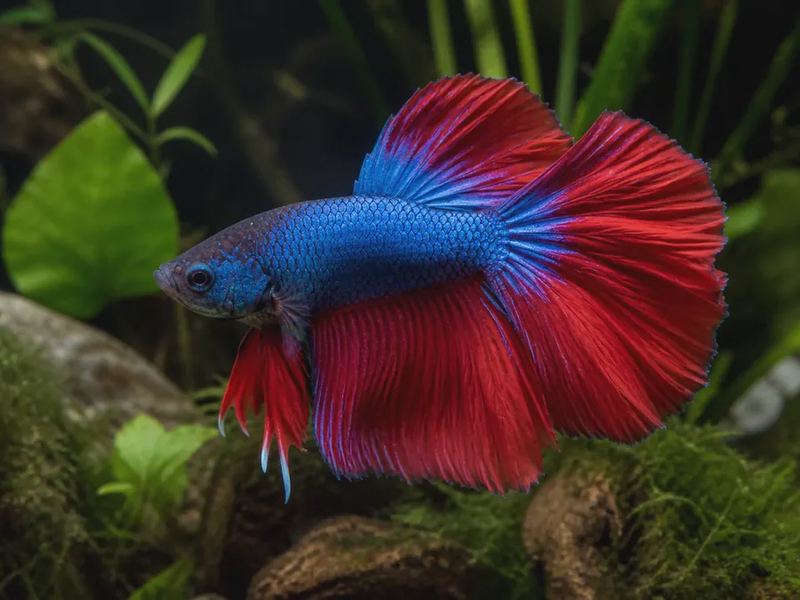
Species Overview
The Siamese Fighting Fish, Betta splendens, stands as one of the most recognizable and culturally significant freshwater fishes in the aquarium hobby. Belonging to the family Osphronemidae—the gourami family—this species is a member of the suborder Anabantoidei, a group distinguished by the presence of a labyrinth organ. This specialized suprabranchial structure allows the fish to respire atmospheric oxygen directly, a critical adaptation for survival in oxygen-depleted waters. The species was first formally described in 1849 by the German ichthyologist Wilhelm Peters, who assigned the specific epithet splendens, meaning "shining" or "brilliant," in reference to the iridescent scales that characterize wild populations.
The natural range of Betta splendens is confined to the tropical lowlands of mainland Southeast Asia, specifically the Chao Phraya and Mekong River basins. This encompasses modern-day Thailand (historically Siam, hence the common name), Cambodia, Laos, and Vietnam. Within this region, the species inhabits a remarkably narrow ecological niche: shallow, slow-moving or stagnant waters with dense emergent vegetation. The type localities include the floodplains, rice paddies, roadside ditches, and temporary pools that form during the monsoon season. These habitats are characterized by extreme environmental conditions—water temperatures that can soar to 36°C (97°F) in the afternoon sun, dissolved oxygen levels approaching zero, and high concentrations of organic decomposition products. The labyrinth organ is not merely an accessory; it is an evolutionary imperative for survival in these hypoxic environments.
Wild Betta splendens are drably colored compared to their domestic counterparts, displaying a brownish-olive or grey body with faint vertical bars and iridescent blue-green or red highlights on the fins. The fish have been culturally significant in Thailand for centuries, where they were originally bred for their fighting prowess rather than their appearance. Historical records indicate that the practice of pitting male bettas against each other for sport dates back to at least the 14th century, with King Rama III (reigned 1824–1851) reportedly collecting and wagering on fighting fish. The transition from fighting animal to ornamental pet began in the late 19th century when the fish were first exported to Europe, reaching France in 1874 and Germany in 1896. The subsequent selective breeding programs, particularly in the United States and Southeast Asia, have produced the extraordinary finnage and color variations seen in the modern aquarium trade.
Appearance & Size
Sexual dimorphism in Betta splendens is pronounced, with males growing to a standard length of 5 to 6 cm (2 to 2.5 inches) and possessing significantly more elaborate finnage than females. Females are typically smaller, reaching 4 to 5 cm (1.5 to 2 inches), with shorter fins and a more rounded body shape. In wild populations, males display moderate fin extension, but the domestic forms exhibit an astonishing array of fin morphologies. The iconic "veiltail" (VT) remains the most common, characterized by a long, flowing caudal fin that trails downward. The "crown tail" (CT) features reduced webbing between fin rays, creating a spiky, fringed appearance. The "half-moon" (HM) and "over-half-moon" (OHM) varieties possess caudal fins that spread to 180 degrees or more, forming a perfect semicircle. The "plakat" (PK) type represents a reversion to the shorter, rounder fins of the wild type, bred for both aesthetic and athletic purposes. Additionally, "dumbo" or "elephant ear" bettas exhibit enlarged pectoral fins, while "dragon" types display thick, metallic scaling.
Coloration in domestic bettas is equally diverse, resulting from selective breeding for chromatophore expression. Pigment cells (chromatophores) include melanophores (black/brown), erythrophores (red), xanthophores (yellow), and iridophores (iridescent blue/green). The iridescent quality arises from the crystalline structure of guanine within iridophores, which reflects light at specific wavelengths. Common color patterns include solid red, blue, turquoise, and yellow, as well as bicolor, marble (variable patches), butterfly (distinct fin/body color separation), and koi (mottled patterns of red, white, and black). The "metallic" or "copper" varieties exhibit a high density of iridophores, producing a mirror-like sheen. Notably, the fish's coloration can shift slightly with mood, health, and environmental conditions; a stressed or frightened fish may display "stress bars" (vertical dark bands) on the body. The operculum (gill cover) also features an iridescent membrane, which males flare during aggressive displays.
Diet & Feeding
In their natural habitat, Betta splendens are obligate carnivores, feeding primarily on aquatic insects, insect larvae, zooplankton, and occasionally on terrestrial insects that fall onto the water's surface. Their upturned mouths are specifically adapted for surface feeding, and in the wild, they are opportunistic predators that consume any small animal matter available. The natural diet includes mosquito larvae, which is a significant reason why the species has been historically valued in Southeast Asia as a natural biological control agent for malaria vectors.
In the aquarium, a nutritionally complete diet must mimic this carnivorous requirement. High-quality commercial betta pellets or granules should form the dietary staple; these are specifically formulated with elevated protein levels (typically 40–50%) and appropriate lipid content to support fin growth and metabolic function. Look for products listing whole fish meal, krill meal, or insect larvae as the primary ingredient. Offer 2 to 3 small pellets once or twice daily, providing only what the fish can consume within two minutes. Overfeeding is a common cause of obesity and subsequent health issues such as fatty liver disease and swim bladder dysfunction.
Supplementation with live or frozen foods is essential for optimal health and coloration. Bloodworms (Chironomus larvae), brine shrimp (Artemia), daphnia, and blackworms are excellent choices. Live foods also provide behavioral enrichment, triggering natural hunting instincts. Frozen foods should be thawed to room temperature before feeding and rinsed to remove excess phosphate. Vegetable matter is not required; however, some bettas will occasionally nibble on blanched peas or zucchini, which can aid in digestion and act as a mild laxative if constipation is suspected. It is advisable to fast the fish one day per week to allow the digestive tract to clear. All uneaten food must be removed promptly to prevent ammonia spikes in the aquarium.
Aquarium Setup
Despite their reputation as "bowl fish," Betta splendens require a properly cycled, filtered aquarium to thrive. The absolute minimum tank size for a single adult is 5 gallons (19 liters), though a 10-gallon (38-liter) tank is strongly recommended for providing stable water chemistry and adequate swimming space. The misconception that bettas can thrive in small, unfiltered containers is biologically incorrect; the labyrinth organ allows survival in hypoxic conditions, but it does not mitigate the toxic effects of ammonia and nitrite accumulation. A filtration system with a gentle flow rate is essential—sponge filters or adjustable HOB (hang-on-back) filters set to low flow are ideal, as strong currents can stress the fish and damage delicate fins.
Substrate selection should prioritize ease of maintenance and aesthetic harmony. Fine sand or smooth, rounded gravel is appropriate; sharp-edged substrates can abrade the fish's belly and fins. Dark-colored substrates are recommended as they enhance the fish's coloration and reduce stress by providing a sense of security. Live plants are not merely decorative; they are critical for providing shelter, reducing stress, and maintaining water quality. Floating plants such as Salvinia, Limnobium (frogbit), or Pistia (water lettuce) are particularly beneficial, as bettas naturally inhabit shaded, plant-dense waters. Their root systems provide refuge and mimic the dappled light of wild habitats. Submerged plants such as Anubias, Cryptocoryne, Java fern (Microsorum pteropus), and Vallisneria are excellent choices, as they tolerate the warm, soft water conditions bettas prefer. Avoid plastic plants with sharp edges; silk or live plants are always safer.
Lighting requirements are moderate. Bettas do not require high-intensity lighting; in fact, excessive light can cause stress and promote algal growth. A standard LED fixture providing 6–8 hours of light per day is sufficient. The inclusion of a small piece of driftwood or a few smooth rocks can create additional structure and provide resting spots near the surface. Critically, the tank must have a tight-fitting lid. Bettas are accomplished jumpers and will readily exit the aquarium if given the opportunity. Leave a small gap of 1–2 cm between the water surface and the lid to allow the fish to access atmospheric air through its labyrinth organ.
Water Parameters
Maintaining stable, appropriate water parameters is the single most important factor in the long-term health of Betta splendens. The species originates from warm, soft, slightly acidic waters, and while domestic strains have adapted to a broader range, replicating natural conditions is always preferable. The single most critical parameter is temperature; bettas are tropical fish that require a constant temperature between 25.5°C and 28.5°C (78°F–83°F). Temperatures below 24°C (75°F) suppress the immune system, slow metabolism, and can lead to lethargy and increased susceptibility to disease. A submersible aquarium heater with a thermostat is mandatory, and a thermometer should be used to verify accuracy.
Water chemistry should reflect the soft, slightly acidic conditions of the Chao Phraya basin. The pH should be maintained between 6.5 and 7.5, with a general hardness (GH) of 5–15 dGH and carbonate hardness (KH) of 3–10 dKH. While bettas can tolerate slightly alkaline conditions, prolonged exposure to pH above 8.0 or below 6.0 can cause osmoregulatory stress. Weekly water changes of 25–30% are essential, using water that has been dechlorinated and temperature-matched. The use of Indian almond leaves (Terminalia catappa) is a traditional and scientifically supported practice; they release tannins that lower pH, exhibit mild antibacterial and antifungal properties, and simulate the blackwater conditions of the natural habitat.
| Parameter | Ideal Range | Acceptable Range | Critical Level |
|---|---|---|---|
| Temperature | 26–28°C (79–82°F) | 25.5–28.5°C (78–83°F) | <24°C or >30°C |
| pH | 6.8–7.2 | 6.5–7.5 | <6.0 or >8.0 |
| General Hardness (GH) | 5–10 dGH | 5–15 dGH | >20 dGH |
| Carbonate Hardness (KH) | 3–6 dKH | 3–10 dKH | <2 dKH (pH instability) |
| Ammonia (NH₃) | 0 ppm | 0 ppm | >0.25 ppm |
| Nitrite (NO₂⁻) | 0 ppm | 0 ppm | >0.5 ppm |
| Nitrate (NO₃⁻) | <20 ppm | <40 ppm | >50 ppm |
Behavior & Compatibility
The behavior of Betta splendens is fundamentally shaped by its highly territorial and aggressive nature, particularly in males. The common name "Siamese Fighting Fish" derives from the historical practice of pitting males against each other in gladiatorial contests. In the wild, males maintain territories of approximately 1–2 square meters and will aggressively defend these areas against conspecific males. When two males encounter each other, they engage in a ritualized display involving flaring of the gill covers (opercula), spreading of the fins, and lateral body posturing. This display can escalate to physical combat, which may result in severe fin damage, scale loss, or even death. Consequently, two males must never be housed together in the same aquarium, regardless of tank size.
Females are less aggressive but still exhibit a hierarchical social structure. A group of females (a "sorority") can sometimes be maintained in a larger tank (minimum 20 gallons) with dense planting and multiple hiding spots, but this requires experience and careful observation, as aggression can erupt unpredictably. Males and females should only be introduced for breeding purposes and separated immediately after spawning. Regarding tankmates, the betta's aggression is primarily directed at fish with similar morphology—particularly those with long, flowing fins or bright, flashy colors. Therefore, avoid housing bettas with other gouramis, guppies (Poecilia reticulata), or fancy goldfish, which can be mistaken for rivals and attacked.
Suitable tankmates include peaceful, fast-moving, or bottom-dwelling species that do not occupy the same ecological niche. Good choices include corydoras catfish (Corydoras spp.), small rasboras such as the chili rasbora (Boraras brigittae) or harlequin rasbora (Trigonostigma heteromorpha), small tetras like the ember tetra (Hyphessobrycon amandae), and peaceful shrimp such as the Amano shrimp (Caridina multidentata) or cherry shrimp (Neocaridina davidi). Snails, including nerite and mystery snails, are also excellent companions. It is crucial to avoid any fish known for fin-nipping, such as tiger barbs (Puntigrus tetrazona) or certain tetras, as their activity will stress the betta and cause fin damage. Always introduce tankmates first and add the betta last to minimize territorial aggression.
Breeding
Breeding Betta splendens is a fascinating process that requires dedicated preparation and careful timing. The reproductive strategy of this species is characterized by paternal mouthbrooding—a misnomer in this case, as the male does not mouthbrood but instead builds a bubble nest at the water's surface. The male creates this nest by gulping air at the surface and enveloping it in a mucous secretion, producing a raft of bubbles that accumulate among floating plants or under a flat leaf. The nest serves to keep the fertilized eggs near the oxygen-rich surface and protects them from predators.
To initiate breeding, condition a pair by feeding them high-protein live or frozen foods for 1–2 weeks. The breeding tank should be shallow (10–15 cm water depth) with a gentle filter, a heater set to 28°C (82°F), and a floating plant or a small polystyrene cup placed on its side to provide a nesting site. Introduce the female first, contained within a clear glass or plastic cup so the male can see her but cannot physically interact. This visual stimulation triggers nest building in the male. After 24–48 hours, when the male has constructed a substantial nest and the female displays vertical "breeding bars" (dark stripes) on her white belly and exhibits a submissive posture, release her.
Spawning is an elaborate courtship dance. The male wraps his body around the female, and they roll over together, releasing eggs and milt simultaneously. The eggs, numbering 100–500, are heavier than water and sink; the male quickly retrieves them in his mouth and spits them into the bubble nest. This process repeats over several hours. After spawning, the female must be removed immediately, as the male will guard the nest aggressively and may injure or kill her. The male then tends the nest, repairing bubbles and returning any fallen eggs or fry. The eggs hatch in 24–36 hours, and the fry become free-swimming after approximately 3–4 days. At this point, the male should be removed, as he may consume the fry. The fry are initially fed infusoria or liquid fry food, transitioning to freshly hatched brine shrimp nauplii after 3–5 days.
Common Diseases & Health
Like all aquarium fish, Betta splendens are susceptible to a range of infectious and non-infectious diseases. Prevention through optimal water quality and nutrition is always superior to treatment. The most prevalent health issues in captive bettas are fin rot, ich (white spot disease), and velvet disease. Fin rot, typically caused by bacterial infections (commonly Aeromonas or Pseudomonas species) or fungal agents, manifests as frayed, discolored, or receding fins. It is almost always secondary to poor water quality or physical stress. Treatment involves immediate water changes, improving filtration, and, in severe cases, administering a broad-spectrum antibacterial medication. Ichthyophthirius multifiliis, the causative agent of ich, presents as small white spots resembling salt grains on the body and fins. It is highly contagious and requires treatment with a proprietary ich remedy, while raising the tank temperature to 30°C (86°F) to accelerate the parasite's life cycle.
Velvet disease, caused by the dinoflagellate Piscinoodinium, is characterized by a fine, gold or rust-colored dust on the body, often accompanied by lethargy and loss of appetite. It is frequently misdiagnosed as ich but requires different treatment, typically copper-based medications. Another common condition is "popeye" (exophthalmia), where one or both eyes protrude due to fluid accumulation behind the eyeball, usually caused by bacterial infection or trauma. Swim bladder disorder, often presenting as the fish listing to one side, floating upside down, or struggling to maintain buoyancy, is commonly caused by overfeeding, constipation, or sudden temperature fluctuations. Treatment involves fasting the fish for 24–48 hours, then feeding a small piece of blanched, peeled pea (if the fish will accept it) to act as a laxative.
One of the most significant threats to betta health is the presence of the parasite Cryptobia iubilans, which causes chronic wasting and internal lesions. This pathogen is notoriously difficult to treat and is often fatal. Furthermore, the domestication process has inadvertently selected for certain genetic weaknesses, including a predisposition to "betta cancer" (lymphosarcoma), which presents as raised, lumpy growths, and a susceptibility to "diamond eye," where a layer of iridophores grows over the cornea, impairing vision. Regular observation of the fish's behavior, appetite, and physical appearance is essential for early detection. Quarantine all new fish for at least 4 weeks before introducing them to a display tank.
FAQs
Q: Can I keep my Betta in a bowl without a filter or heater?
A: No. While Betta splendens can survive in such conditions for a short period due to their labyrinth organ, they cannot thrive. Without filtration, ammonia and nitrite accumulate to toxic levels, causing tissue damage and immunosuppression. Without a heater, water temperature fluctuates, suppressing the immune system and leading to disease. A minimum 5-gallon tank with a heater and gentle filter is the ethical standard for keeping this species.
Q: Why is my Betta building bubbles at the surface?
A: This is a natural and healthy behavior. The male betta constructs a bubble nest as part of its reproductive instinct, even in the absence of a female. The presence of a bubble nest indicates that the fish is mature, healthy, and in good condition. It does not require any special action, and you should avoid breaking the nest during water changes.
Q: How often should I feed my Betta, and how much?
A: Feed your betta 2 to 3 high-quality pellets once or twice daily, providing only what it can consume within two minutes. Overfeeding is a common cause of obesity, constipation, and swim bladder issues. One day of fasting per week is beneficial for digestive health. Supplement with frozen or live foods like bloodworms or brine shrimp 2–3 times per week for optimal nutrition.
Q: My Betta is flaring its gills and fins at its reflection. Is this harmful?
A: Occasional flaring at a reflection is normal territorial behavior and is not inherently harmful. However, constant, prolonged flaring can lead to physical exhaustion and stress, weakening the immune system. If your betta persistently flares at the glass, you can reduce the reflection by adding more background plants, dimming the lighting, or moving the tank to a location with less external light reflection.
References
- Journal of Fish Biology (labyrinth organ studies)
- Ichthyological Research (Springer)
- Smithsonian National Zoo & Conservation Biology Institute