
Poecilia Reticulata Guppy: Care, Varieties & Breeding
Species Overview
The guppy, Poecilia reticulata, is arguably the most widely recognized and commercially significant freshwater fish in the aquarium hobby, and its scientific and cultural footprint extends far beyond the confines of the home tank. Described scientifically by Wilhelm Peters in 1859, the species was originally assigned to the genus Lebistes before being reclassified into Poecilia following comprehensive phylogenetic analyses in the latter half of the 20th century. The common name "guppy" itself is a fascinating historical artifact, deriving from Reverend Robert John Lechmere Guppy, a Trinidadian naturalist who sent specimens to the British Museum in 1866. Ironically, Guppy believed he had discovered a new species, but it was already described; nonetheless, his name became permanently affixed to the fish in the popular imagination, a testament to the complex interplay between colonial-era natural history and the development of the ornamental fish trade.
In their natural state, Poecilia reticulata are native to the warm, slow-moving freshwater systems of northeastern South America, specifically the islands of Trinidad and Tobago, as well as the coastal drainages of Venezuela, Guyana, and Suriname. They are also found in Barbados and parts of the Guianas. This distribution is not entirely pristine, as guppies have been introduced to every continent except Antarctica for mosquito control and as aquarium releases, often establishing feral populations in tropical and subtropical regions. The wild habitats of the guppy are remarkably diverse, ranging from clear, fast-flowing mountain streams with rocky substrates to turbid, lowland rivers, and even brackish coastal lagoons. A key ecological characteristic of their native environment is the presence or absence of predatory fish, which has driven extraordinary local adaptation. In high-predation zones, guppies tend to be smaller, mature earlier, and produce more offspring, while in low-predation headwaters, they grow larger, exhibit more elaborate coloration, and have fewer, larger young. This phenotypic plasticity has made P. reticulata a model organism in evolutionary biology, with studies spanning decades examining sexual selection, predator-prey dynamics, and life-history evolution.
For the aquarist, understanding this evolutionary backdrop is crucial. The guppy you purchase from a fish store is almost certainly a highly domesticated strain, selectively bred for extreme finnage, vivid colors, and hardiness, bearing little visual resemblance to the drabber, wild-type fish. However, the underlying genetic hardiness and adaptability of the species remain, which is why guppies are often recommended for beginners. They are livebearers, meaning they give birth to free-swimming young, and their reproductive biology is intimately tied to their social structure and stress levels. In the wild, they inhabit shallow, vegetation-rich margins where they feed on a variety of detritus, aquatic insect larvae, and algae. This omnivorous, opportunistic feeding strategy translates directly to their dietary needs in captivity, where they require a balanced intake of both plant matter and protein to maintain optimal health and coloration. The guppy’s success as a species, both in the wild and in the aquarium, is a direct result of this ecological flexibility and its rapid reproductive potential, making it a perennial favorite and a cornerstone of the freshwater aquarium community.
Appearance & Size
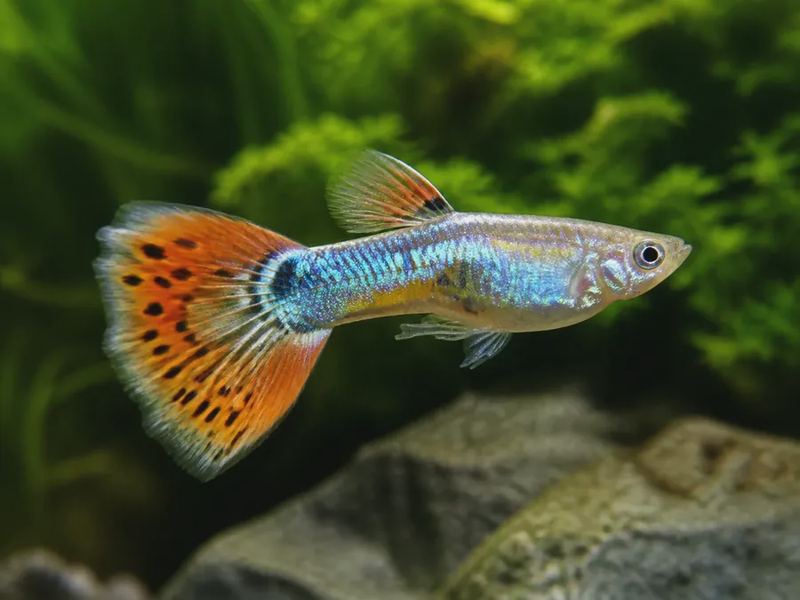
The appearance of Poecilia reticulata is famously sexually dimorphic, with males and females presenting vastly different phenotypes. Wild-type males are the more colorful of the two sexes, possessing a mosaic of iridescent spots, stripes, and splotches in colors ranging from metallic blues and greens to oranges, reds, and blacks. This coloration is not merely ornamental; it serves as a signal of genetic quality and health to females, who exhibit strong mate choice preferences for males with more extensive and brighter carotenoid-based pigments. The body shape of a male guppy is slender and streamlined, with a pronounced gonopodium—a modified anal fin used for internal fertilization. In contrast, wild-type females are considerably larger, more robust, and predominantly a uniform silvery-gray or brown, with a gravid spot near the anal fin that darkens as pregnancy progresses. This stark difference in appearance is a classic example of sexual selection driving divergent evolution.
Domesticated guppies, however, represent an explosion of morphological diversity far beyond the wild type. Breeders have developed dozens of distinct varieties, classified by tail shape (e.g., fantail, delta, veiltail, lyretail, swordtail, and roundtail) and coloration patterns (e.g., snakeskin, cobra, tuxedo, Moscow, and solid colors like red albino or blue grass). Male domestic guppies can display truly spectacular fins that drape and flow, often doubling or tripling their apparent body size. Some of the most extreme varieties, such as the "Moscow" guppies, exhibit a deep, uniform velvet-like blue or purple across the entire body and fins, while "Endler's" guppies, sometimes classified as a separate species Poecilia wingei but often interbred, showcase a more wild, high-contrast pattern of orange and black spots. The size of guppies also varies considerably by sex and strain. Adult male guppies typically reach a total length of 1.5 to 2.5 inches (4 to 6 cm), including the tail fin. Females, being the larger sex, commonly grow to 2 to 3 inches (5 to 7.5 cm), with some exceptional specimens reaching nearly 3.5 inches (9 cm) in well-maintained aquariums. It is important to note that the impressive finnage of show-quality males can make them appear larger than they are, and they are often more delicate than their shorter-finned counterparts, which are better suited for community tanks.
Beyond size and finnage, there are subtle but important differences in body condition that indicate health. A healthy guppy should have a smooth, unblemished body with clear eyes and an erect, unclamped dorsal fin. The scales should lie flat, and the belly should be rounded but not distended. In females, a very swollen, boxy appearance often indicates advanced pregnancy or, conversely, a potential issue with egg binding or dropsy. The coloration of a guppy is also a reliable health indicator; a sudden loss of color or the appearance of pale patches can signal stress, parasitic infection, or poor water quality. When selecting guppies for a home aquarium, it is advisable to observe them at the store for a few minutes, watching for active swimming, foraging behavior, and consistent fin posture. Avoid fish that are listless, have frayed fins, or are being harassed by tankmates, as these are signs of underlying problems that may not resolve once you bring them home.
Diet & Feeding
In their natural habitat, Poecilia reticulata are micro-omnivores, exhibiting a continuous grazing behavior throughout the day. Their diet consists primarily of small aquatic invertebrates, including mosquito larvae, chironomid midge larvae, and other insect larvae, alongside a significant proportion of plant matter, algae, and organic detritus. This feeding strategy is highly opportunistic; they will consume essentially any small organic particle they can fit into their mouths. The high metabolic rate of guppies, particularly the smaller males, means they require frequent, small meals rather than one large feeding. In the wild, this constant foraging also helps to keep their digestive systems active and prevents the constipation issues that can sometimes plague aquarium fish fed a dry-only diet.
Translating this wild diet into a captive feeding regimen is straightforward but requires attention to nutritional balance. A high-quality flake food designed for tropical fish should form the staple of the diet, as these are generally fortified with vitamins and minerals. However, flake food alone is insufficient for long-term health and vibrant coloration. To truly thrive and display their best colors, guppies should be offered a varied diet that includes live or frozen foods. Artemia (brine shrimp), Daphnia (water fleas), and finely chopped bloodworms (Chironomus larvae) are excellent sources of protein and essential fatty acids. These foods promote growth, enhance the intensity of red, orange, and yellow pigments (carotenoids), and support reproductive health. Additionally, guppies benefit from vegetable matter in their diet. Blanched spinach, zucchini, or commercially prepared algae wafers can be offered once or twice a week to provide necessary fiber and aid digestion. Some advanced aquarists also culture infusoria or microworms to feed newborn fry, which require extremely small food particles.
A practical feeding schedule for adult guppies involves offering small portions two to three times per day. The key rule is to provide only as much food as the fish can consume within two to three minutes, removing any uneaten food to prevent water fouling. Overfeeding is a common mistake among novice aquarists and leads to elevated ammonia and nitrite levels, which are toxic to fish. For fry, more frequent feedings—up to four or five times daily—of appropriately sized foods are necessary to support their rapid growth. It is also worth noting that guppies, particularly show-quality males with large fins, can be prone to obesity if overfed, which can lead to liver problems and reduced lifespan. A fasting day once a week, where no food is offered, can be beneficial to allow their digestive systems to clear out and to prevent the buildup of organic waste in the aquarium. Observing your guppies during feeding is one of the best ways to monitor their health; a fish that eagerly swims to the surface and actively competes for food is generally a healthy fish.
Aquarium Setup
Creating an appropriate aquarium environment for Poecilia reticulata is not particularly demanding, but it is essential to replicate certain aspects of their natural habitat to ensure long-term health and vibrant coloration. The first consideration is tank size. While guppies are small, they are active and social, and they should be kept in groups. A single guppy can technically survive in a 5-gallon (19-liter) tank, but for a thriving community, a minimum of 10 gallons (38 liters) is recommended for a small group of three to five fish. For a mixed-sex colony or a community tank with multiple species, a 20-gallon (76-liter) or larger aquarium is far more appropriate, as it provides stable water parameters and ample swimming space. Overcrowding leads to stress, increased aggression, and poor water quality, all of which suppress the immune system and make fish susceptible to disease.
The substrate choice is relatively flexible, but a fine-grained sand or small, smooth gravel is preferable. Guppies are not substrate diggers, but they do spend time foraging near the bottom, and sharp or jagged gravel can damage their delicate fins and barbels. A darker substrate can help to enhance the perceived intensity of the guppies' colors, providing a striking contrast. Live plants are not just decorative; they are functionally important for guppies. Dense plantings, particularly of fine-leaved species like Cabomba, Ceratophyllum (hornwort), or Vallisneria, provide essential cover for fry and subordinate fish, reducing stress and offering refuge from the attention of males. Floating plants such as Salvinia or Limnobium (frogbit) are also highly beneficial, as they diffuse harsh lighting and provide shaded areas that mimic the overhanging vegetation of their native streams. Hardy, undemanding plants like Anubias and Java fern (Microsorum) can be attached to driftwood or rocks, creating a naturalistic aquascape.
Lighting requirements for guppies are moderate. They do not require intense lighting, and in fact, excessively bright light can cause stress and promote algae growth. A standard LED aquarium light on a 8-10 hour photoperiod is sufficient. The lighting primarily serves the live plants and allows the aquarist to appreciate the fish's colors. Water flow should be gentle to moderate. Guppies are adapted to slow-moving streams and pools, and strong, turbulent currents from powerful filters will exhaust them, particularly the long-finned fancy varieties. A sponge filter or a hang-on-back filter with an adjustable flow rate is ideal. The filter should provide adequate biological filtration to process waste but not create a whirlpool effect. In terms of tank décor, driftwood and smooth rocks can be added to create structure and territorial boundaries, but it is crucial to leave open swimming areas in the mid-water zone where guppies naturally congregate. The overall goal is to create a balanced, heavily planted, and calm environment that replicates the safety and richness of their wild, vegetated habitats.
Water Parameters
Understanding the water chemistry requirements of Poecilia reticulata is fundamental to their successful keeping. As a species native to tropical South American and Caribbean drainages, they are accustomed to warm, moderately hard, and slightly alkaline water. However, their adaptability is one of their greatest strengths, and domesticated strains have been bred to tolerate a broader range of conditions than their wild ancestors. Nevertheless, maintaining stable parameters within their preferred range is the single most important factor in preventing disease and promoting longevity. Fluctuations in temperature or pH are far more stressful to guppies than a constant value that is slightly outside the ideal range.
The optimal temperature for guppies lies between 74°F and 82°F (23°C to 28°C). A consistent temperature of around 78°F (25.5°C) is a good middle ground that supports healthy metabolism and immune function. Temperatures below 70°F (21°C) can slow their metabolism, making them lethargic and more susceptible to fungal infections like ich, while temperatures above 85°F (29°C) increase their metabolic rate and oxygen demand, potentially leading to oxygen deprivation and accelerated aging. A reliable aquarium heater with a thermostat is essential, especially in cooler climates or rooms with fluctuating ambient temperatures. Regarding pH, guppies prefer a range of 6.8 to 7.8, with 7.2 being a common target. They are not acidophilic fish; very soft, acidic water (pH below 6.5) can inhibit their reproductive capabilities and make them more prone to certain bacterial infections. In terms of hardness, they prefer moderately hard to hard water, with a general hardness (GH) of 8 to 12 dGH and a carbonate hardness (KH) of 5 to 8 dKH. This hardness provides essential minerals for osmoregulation and helps to buffer the pH against sudden drops.
The following table summarizes the recommended water parameters for Poecilia reticulata in a home aquarium:
| Parameter | Preferred Range | Ideal Target |
|---|---|---|
| Temperature | 74°F - 82°F (23°C - 28°C) | 78°F (25.5°C) |
| pH | 6.8 - 7.8 | 7.2 - 7.4 |
| General Hardness (GH) | 8 - 12 dGH | 10 dGH |
| Carbonate Hardness (KH) | 5 - 8 dKH | 6 dKH |
| Ammonia (NH3) | 0 ppm | 0 ppm |
| Nitrite (NO2) | 0 ppm | 0 ppm |
| Nitrate (NO3) | < 40 ppm | < 20 ppm |
It is critical to note that guppies are highly sensitive to ammonia and nitrite, which should always be at zero. The nitrogen cycle must be fully established before introducing guppies to a new tank. Regular water changes of 25% to 50% weekly are necessary to keep nitrate levels low and to replenish trace minerals. When performing water changes, it is vital to match the temperature and pH of the new water to the tank water to avoid shocking the fish. Using a dechlorinator is mandatory to remove chlorine and chloramine from tap water. For those keeping wild-type or F1 guppies, replicating their specific native water (often slightly brackish in coastal areas) may be necessary, but for standard aquarium strains, the parameters above are universally accepted as optimal.
Behavior & Compatibility
The behavioral repertoire of Poecilia reticulata is characterized by constant, lively activity and a social hierarchy that is both fascinating and, at times, problematic. Guppies are inherently peaceful, shoaling fish that exhibit no aggression towards other species. They spend the majority of their time swimming in the mid-water and upper regions of the tank, actively foraging and interacting with conspecifics. A well-established social structure will see a dominant male who has the most access to females, with subordinate males often displaying more subdued colors and spending more time hiding among plants. This constant social interaction is essential for their psychological well-being; keeping a single guppy in isolation is considered poor husbandry, as it leads to lethargy and a suppressed immune system. They should always be kept in groups of at least three, but ideally six or more, with a higher ratio of females to males (e.g., 2:1 or 3:1) to spread the male's persistent courtship attention and reduce stress on the females.
The most significant behavioral issue with guppies is the relentless male mating drive. Males will constantly chase and attempt to mate with females, which, without adequate cover and female numbers, can lead to severe stress and physical exhaustion for the females. This chasing is not predatory aggression but reproductive behavior; however, its consequences are real. Providing dense plant thickets and floating plants is crucial to allow females to escape and rest. In species-only tanks, this is manageable. In a community setting, the presence of other, slightly larger peaceful fish can actually help to distract males and reduce the intensity of their focus on the females. However, it is crucial to avoid any fish that are known fin-nippers or that are large enough to view guppies as food.
When selecting tankmates for a guppy community, the primary rule is to choose species that are peaceful, similar in size, and share similar water parameter preferences. Excellent tankmates include other small livebearers like Xiphophorus hellerii (swordtails) and Xiphophorus maculatus (platies), as they are similarly peaceful and active. Small tetras such as Paracheirodon innesi (neon tetra) or Hyphessobrycon amandae (ember tetra) are also good choices, as are rasboras like Trigonostigma heteromorpha (harlequin rasbora). Peaceful bottom-dwellers such as Corydoras catfish and small Otocinclus species add diversity without causing conflict. Invertebrates like Caridina multidentata (Amano shrimp) and various Neritina snails are excellent algae cleaners and are completely ignored by guppies.
Conversely, there are many fish that should be strictly avoided. Any species with a reputation for fin-nipping, such as tiger barbs (Puntigrus tetrazona) or serpae tetras (Hyphessobrycon eques), will devastate the flowing fins of fancy male guppies. Larger, semi-aggressive cichlids like angelfish (Pterophyllum scalare) or any gourami species that are territorial will harass or outright eat guppies. Even smaller but aggressive fish like dwarf gouramis (Trichogaster lalius) can be problematic. It is also wise to avoid keeping guppies with very large, predatory fish like oscars or arowanas, as this is simply a feeding exercise. The golden rule is to prioritize the safety and comfort of the guppies; a peaceful, slow-moving community tank is the ideal environment to observe their natural, engaging behaviors.
Breeding
Breeding Poecilia reticulata is so straightforward that it often occurs unintentionally in a community tank. They are livebearers, meaning fertilization is internal and females give birth to live, free-swimming young rather than laying eggs. The male uses his gonopodium, a modified anal fin, to transfer sperm packets to the female. A single mating can store sperm within the female's body for several months, allowing her to produce multiple broods of fry from a single encounter. This reproductive strategy is a key reason for their success as a species and their popularity among hobbyists. The gestation period is typically 21 to 30 days, depending on temperature and the female's condition; warmer temperatures accelerate the development.
Recognizing a pregnant female is relatively easy. As the embryos develop, the female's abdomen becomes progressively more swollen and boxy. The gravid spot, located near the anal fin, becomes darker and more prominent as the pregnancy advances. In light-colored females, you can sometimes even see the dark eyes of the developing fry through the translucent skin of the belly in the final days before birth. When the female is close to giving birth, she may become reclusive, seek out dense plant cover, and exhibit a slight shimmying or twitching behavior. It is advisable to separate the pregnant female into a breeder box or a separate, heavily planted tank to protect the fry from being eaten by the adults, including the mother. Guppies are notorious for cannibalizing their own young, as they do not exhibit any parental care.
Once born, the fry are remarkably self-sufficient. They are miniature versions of the adults, typically 0.25 to 0.5 inches (6-12 mm) in length, and they will immediately swim to the surface to fill their swim bladders with air. They can consume finely crushed flake food, powdered fry food, or freshly hatched brine shrimp nauplii from the first day. Providing a steady supply of infusoria or micro-worms is ideal for the first few days. The fry grow rapidly, and under optimal conditions, they will begin to show sex-specific coloration within 4 to 6 weeks. Males typically mature faster than females and may begin attempting to breed as early as 6 to 8 weeks of age. At this point, it is crucial to separate the sexes to prevent uncontrolled breeding and to allow the males to develop their full finnage without the energetic cost of constant mating.
For hobbyists interested in selective breeding, the process is both an art and a science. To breed for specific traits—such as tail shape, color intensity, or fin length—you must begin with a breeding trio of a quality male and two or three virgin females from a known lineage. The females must be separated from males before they reach sexual maturity to ensure they have not stored sperm from prior matings. The breeding tank should be a species-only setup with optimal water parameters and abundant live plants. After the females give birth, they can be removed, and the fry raised to adulthood. As the fry grow, the breeder must cull (remove) individuals that do not meet the desired standards, keeping only the best specimens for future breeding. This process, repeated over many generations, is how the spectacular fancy guppy varieties seen in shows and stores are developed. It is a rewarding, though patient, endeavor that offers deep insight into the principles of genetics and artificial selection.
Common Diseases & Health
While Poecilia reticulata are generally hardy, they are not immune to disease, and their susceptibility is often directly linked to water quality and stress levels. The most common affliction is "ich," or white spot disease, caused by the protozoan parasite Ichthyophthirius multifiliis. This manifests as small, white, salt-like granules on the fins and body, accompanied by flashing (rubbing against objects) and labored breathing. Ich is highly contagious and often introduced by new fish or plants. Treatment involves raising the temperature gradually to 86°F (30°C) for several days and using a commercial ich medication containing malachite green or formalin. Another frequent issue is fin rot, a bacterial infection that causes the fins to become ragged, frayed, and discolored at the edges. Fin rot is almost always a secondary infection resulting from poor water quality, physical injury, or fin-nipping tankmates. The primary treatment is to improve water conditions through frequent water changes and to address the underlying stressor. Antibacterial medications may be necessary in severe cases.
Guppies are also particularly prone to a condition colloquially known as "guppy disease," which is a wasting disease caused by internal parasites, often Camallanus worms. Symptoms include a hollow-looking belly, loss of appetite, lethargy, and a curved spine in advanced stages. Red, thread-like worms may be visible protruding from the fish's anus. This is a serious condition that requires treatment with anthelmintic medications like levamisole or fenbendazole, which are available from aquarium specialty retailers. Another protozoan disease is velvet (Oodinium), which appears as a fine, gold or rust-colored dust on the fish's body, giving it a velvety sheen. It is accompanied by clamped fins and rapid breathing. Velvet is often fatal if left untreated and requires a dark tank and copper-based medications. Finally, dropsy, characterized by a severely swollen abdomen and raised scales (pinecone appearance), is a symptom of organ failure, usually kidney or liver, often caused by bacterial infection. Treatment is rarely successful, and euthanasia may be the most humane option to prevent suffering.
Prevention is unequivocally the best medicine for guppies. The cornerstone of disease prevention is maintaining pristine water quality through regular water changes and not overstocking. Quarantining all new fish, plants, and invertebrates for a minimum of two to three weeks in a separate tank is essential to prevent introducing pathogens to an established system. Providing a varied, nutritious diet boosts the immune system, while reducing stress through appropriate tankmates and hiding places is critical. Observing your guppies daily for any changes in behavior, appetite, or appearance is vital for early detection. A fish that is isolated, breathing rapidly, or not eating is showing early warning signs. By catching problems early, you can often resolve them with simple water changes and salt baths (using aquarium salt) before they escalate into full-blown outbreaks requiring aggressive chemical treatment. Remember that many common guppy ailments are exacerbated by stress, so a calm, stable, and clean environment is your strongest defense.
FAQs
Q1: How many guppies should I keep together, and what is the ideal male-to-female ratio?
Guppies are social fish and should never be kept alone. A group of at least six individuals is recommended to establish a natural hierarchy and reduce stress. However, the male-to-female ratio is more critical than the total number. Because males are relentlessly amorous, females need constant reprieve. The ideal ratio is one male to two or three females (1:2 or 1:3). This allows the females to escape male attention and reduces the risk of them being harassed to death. In a 10-gallon tank, a good starting group would be one male and two females, or two males and four females, provided there is ample plant cover.
Q2: Why are my guppies' tails splitting and fraying?
Frayed or splitting fins are almost always a symptom of one of two issues: fin rot or fin-nipping. Fin rot is a bacterial infection that thrives in poor water conditions. If your water parameters are off (high ammonia, nitrite, or nitrate), the bacteria take hold on the damaged fin edges. The first step is to perform a 50% water change and test your water. If fin rot is advanced, you may need a bacterial treatment. The second cause is aggression from tankmates. Tiger barbs, angelfish, and even some tetras will nip at the long, flowing fins of fancy male guppies. Remove the aggressors or move the guppies to a species-only tank. Also, check for sharp decorations or rough substrate that could cause physical tearing.
Q3: My female guppy looks very fat and has a dark spot near her tail. Is she sick?
No, this is almost certainly a pregnant female. The dark spot you are seeing is the gravid spot, which darkens as the embryos mature. A "fat" guppy with a boxy appearance is typically a female carrying a large brood of fry. Guppies are livebearers, and a single mating can produce multiple batches of fry over several months. If you do not want to raise fry, you can leave the female in the main tank, but be aware that the adults will eat most of the newborns. If you want to save the fry, move the female to a breeding box or a heavily planted nursery tank just before she gives birth, then remove her immediately after.
Q4: Can guppies live in a bowl or a small vase without a filter?
Technically, a guppy can survive for a short time in a bowl, but it is not an acceptable long-term environment and is considered inhumane. Guppies produce a significant amount of waste, and without a filter, ammonia and nitrite levels will quickly rise to toxic concentrations. The lack of surface agitation also leads to low oxygen levels. Furthermore, a bowl is too small to provide any meaningful swimming space or to establish a stable temperature. Guppies require a minimum of 5-10 gallons with a proper filter, heater, and ideally live plants. Keeping a guppy in a bowl is a leading cause of premature death and disease. If you cannot provide a filtered, heated tank, you should not keep guppies.
References
- Science (AAAS)
- Proceedings of the Royal Society B
- Oxford University Dept. of Zoology (Endler lab)