
Xiphophorus Hellerii Swordtail: Care Guide & Facts
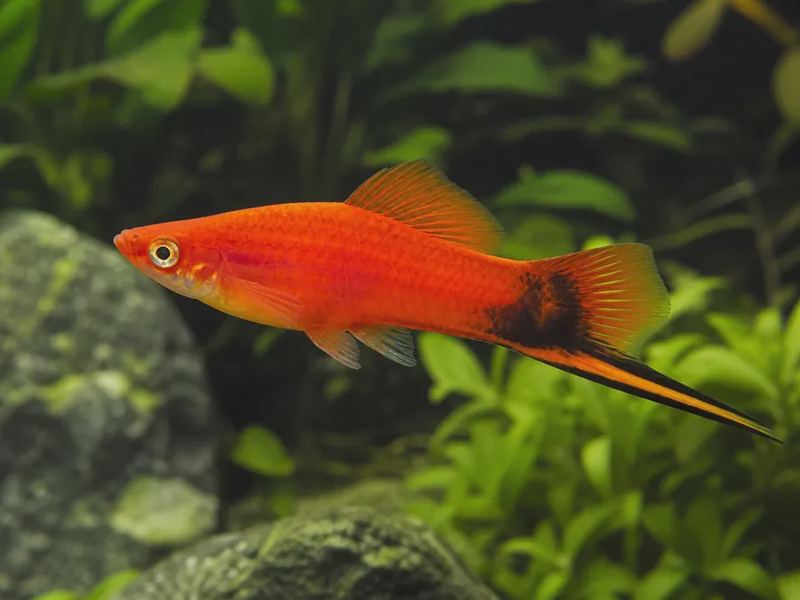
Species Overview
The swordtail, Xiphophorus hellerii, is one of the most enduring and recognizable freshwater fish in the aquarium hobby, yet its ubiquity often obscures a fascinating biological and ecological history. Described scientifically by the Austrian ichthyologist Franz Steindachner in 1868, the species was named in honor of the Austrian naturalist Karl Heller, who collected the type specimens during an expedition to Mexico. Steindachner’s original description placed the fish within the genus Xiphophorus, a name derived from the Greek xiphos (sword) and pherein (to bear), a direct reference to the elongated caudal appendage that distinguishes mature males of this and several closely related species. The swordtail belongs to the family Poeciliidae, a group of live-bearing freshwater fishes that also includes guppies (Poecilia reticulata), mollies (Poecilia sphenops and allies), and platies (Xiphophorus maculatus and Xiphophorus variatus). Poeciliids are notable for internal fertilization and the production of live young, a reproductive strategy that has contributed to their success across a wide range of Neotropical habitats.
The natural range of X. hellerii is impressively broad for a species often perceived as a simple "beginner fish." Its native distribution extends from the Río Nautla system in Veracruz, Mexico, southward through the Atlantic drainages of Central America, encompassing the entirety of Belize, Guatemala, and Honduras, and continuing into northwestern Costa Rica. The species is particularly abundant in the Río Papaloapan and Río Coatzacoalcos basins of Mexico, as well as in the slow-moving lowland rivers of the Yucatán Peninsula. In these regions, swordtails inhabit a variety of freshwater environments, but they show a marked preference for vegetated, slow-flowing waters such as streams, irrigation canals, and the margins of larger rivers. They are rarely found in the open, fast-flowing channels of major waterways, instead favoring the sheltered shallows where submerged aquatic plants, overhanging riparian vegetation, and fallen woody debris provide both cover and a rich source of invertebrate prey. Water clarity in these habitats varies seasonally, with distinct wet and dry periods altering flow rates and turbidity, yet the species demonstrates remarkable ecological plasticity, thriving in clear spring-fed streams and somewhat murkier, organically enriched lowland channels alike.
Beyond its native range, X. hellerii has become a globally successful invasive species, establishing feral populations on every continent except Antarctica. Documented introductions exist in Hawaii, Australia, New Zealand, South Africa, Madagascar, Puerto Rico, and numerous other tropical and subtropical locales, often resulting from aquarium releases. In these novel environments, swordtails often outcompete native poeciliids and small cyprinodontids due to their high reproductive output, broad dietary tolerance, and resistance to degraded water quality. This dual identity—beloved aquarium resident and problematic invader—makes X. hellerii particularly interesting from a conservation and management perspective. For the aquarist, understanding the species' natural ecological context is essential, as it explains the fish's remarkable hardiness, its behavioral quirks, and its specific requirements for long-term health and successful breeding in captivity.
Appearance & Size
The swordtail is a sexually dimorphic species, with differences between males and females becoming increasingly pronounced as the fish mature. The most conspicuous feature, and the source of the common name, is the "sword"—an elongated extension of the lower rays of the caudal fin that develops exclusively in males. This sword begins to manifest when males reach approximately 3 to 4 months of age and can ultimately extend to a length equal to or even exceeding the length of the fish's body. In wild-type specimens, the sword is typically a striking greenish-yellow or gold color, edged with a bold black margin that runs along its entire length. The sword is not merely ornamental; behavioral studies have demonstrated that females preferentially select males with longer, more vividly colored swords, and the presence of a sword also influences male-male dominance hierarchies. The remainder of the male's caudal fin consists of a shorter, fan-shaped upper lobe that is often hyaline or faintly tinted.
Body shape in X. hellerii is streamlined and slightly compressed laterally, an adaptation for navigating through dense aquatic vegetation. The dorsal profile is relatively straight, while the ventral profile curves gently. The dorsal fin is positioned approximately mid-body and is relatively large and sail-like in mature males, though not as exaggerated as in the related green swordtail's close cousin, the highfin swordtail (Xiphophorus hellerii "highfin" morph). The mouth is slightly upturned, indicating a preference for feeding at the water's surface and in the mid-water column, though the species is also an opportunistic benthic feeder. Wild-type coloration is generally a muted olive-green to silvery-gray on the flanks, with a distinctive horizontal stripe of deep red or brick-red running from the snout, through the eye, and along the body to the base of the caudal fin. The belly is lighter, often whitish or pale yellow. A second, less distinct stripe may be present above the primary red stripe in some populations.
Domesticated swordtails, however, have been selectively bred for over a century, resulting in a dazzling array of color morphs and fin variations that deviate substantially from the wild phenotype. Common aquarium varieties include the red swordtail (a solid, vivid red), the wagtail (black fins with a colored body), the tuxedo (black posterior half of the body), the pineapple (golden-yellow with orange highlights), and the albino. The "lyretail" variety possesses a symmetrical, elongated extension of both the upper and lower caudal fin rays, while the "hi-fin" or "sailfin" varieties exhibit an exaggerated dorsal fin. These ornamental strains often require slightly more careful husbandry than wild-type fish, as intensive selection can be associated with reduced immune function and a propensity for spinal deformities. In terms of size, swordtails are a medium-sized poeciliid. Standard body length (excluding the caudal fin) typically reaches 10 to 12 cm (4 to 4.7 inches) in females, with males slightly smaller at 8 to 10 cm (3.1 to 3.9 inches), not including the sword. In exceptional cases, particularly in large, well-maintained aquaria with ample space and high-quality nutrition, females have been recorded at up to 14 cm. Swordtails typically live for 3 to 5 years in captivity, though exceptional individuals may reach 6 years with optimal care.
Diet & Feeding
In their natural habitat, X. hellerii are omnivorous with a distinct tendency toward herbivory, a dietary profile that is often underestimated by hobbyists who treat them as generic insectivores. Gut content analyses of wild-caught specimens have revealed a diet composed of a broad spectrum of items, including filamentous algae, soft aquatic plants, detritus, and a wide variety of aquatic invertebrates. Common prey items include mosquito larvae, chironomid midge larvae, small crustaceans such as copepods and cladocerans, and terrestrial insects that fall onto the water's surface. The relative proportion of plant to animal matter shifts seasonally and with ontogeny; juvenile swordtails consume a higher fraction of small animal prey to support rapid growth, while adults, particularly females, increase their intake of algae and plant material. This dietary flexibility is a key factor in the species' ability to colonize a wide range of habitats and its success as an invasive species.
For the home aquarium, replicating this omnivorous-herbivorous balance is crucial for maintaining vibrant coloration, robust growth, and long-term health. A high-quality flake food or micro-pellet formulated for livebearers or community omnivores should serve as the dietary staple. These prepared foods are generally well-fortified with vitamins and minerals, but it is essential to select a product that lists plant-based ingredients, such as spirulina or seaweed meal, among the primary components. Feed a small amount two to three times daily, offering only what the fish can consume within two to three minutes. Overfeeding is a common error that leads to obesity, reduced water quality, and subsequent disease outbreaks. In addition to the staple diet, swordtails should be offered a variety of live or frozen foods to provide essential amino acids and fatty acids. Brine shrimp (Artemia spp.), daphnia, bloodworms (Chironomus larvae), and blackworms (Lumbriculus variegatus) are all eagerly accepted. These foods should be offered one to two times per week as a supplement, not a replacement.
Critically, swordtails must also receive a consistent source of vegetable matter. This can be provided in the form of blanched spinach, zucchini, cucumber, or romaine lettuce, which should be clipped to the aquarium glass or weighed down with a fork for a period of 24 hours before removal. Alternatively, commercially available spirulina-based flakes or wafers are an excellent convenience. The inclusion of live aquatic plants in the aquarium is also beneficial, as swordtails will graze on soft-leaved species such as Vallisneria and Cabomba, though this can be destructive to the aquascape. Providing a dedicated vegetable component in the diet helps prevent the digestive issues and nutrient deficiencies that can arise from an overly protein-rich diet. Neglecting the herbivorous component is a primary cause of the "shimmying" behavior and bloat sometimes seen in poorly managed swordtail tanks. Observing your fish during feeding is a valuable diagnostic tool; healthy swordtails are active, aggressive feeders with a strong appetite, and a sudden loss of interest in food is often one of the first indicators of stress or incipient disease.
Aquarium Setup
When planning an aquarium for X. hellerii, the first and most important consideration is that these are active, schooling fish that thrive in groups. A minimum tank size of 30 gallons (114 liters) is recommended for a small group of five to six individuals, though a 40-gallon "breeder" or a 55-gallon tank is far preferable for a mixed-sex group or a community setup. The primary reason for this generous space requirement is twofold: swordtails are strong, continuous swimmers, and, more importantly, males establish a dominance hierarchy that requires space to mitigate aggression. In a tank that is too small, the dominant male will relentlessly harass subordinates, leading to chronic stress, fin damage, and suppressed immune function. A longer, horizontally oriented tank is superior to a tall, narrow one, as it provides a larger swimming area along the length of the tank.
Substrate selection is relatively flexible, as swordtails are not substrate-dwelling fish. Fine to medium-grained aquarium sand or smooth, rounded gravel is ideal. Sharp-edged substrates should be avoided, as they can injure the delicate barbels and the ventral surface of the fish, potentially leading to bacterial infections. Darker substrates, such as black sand or dark gravel, help to accentuate the fish's colors and reduce stress by providing a visual contrast that makes the fish feel more secure. The aquascape should be planted densely, as swordtails naturally inhabit vegetated waterways. Live plants serve multiple functions: they provide cover for subordinate fish and females seeking respite from male attention, they offer a grazing surface for the herbivorous component of the diet, and they contribute to water quality by assimilating nitrogenous waste. Hardy, adaptable species that thrive in the slightly alkaline, moderately hard water preferred by swordtails include Vallisneria spiralis and Vallisneria americana, Sagittaria subulata, Anubias barteri, and various species of Microsorum (Java fern). Floating plants, such as Limnobium laevigatum (frogbit) or Ceratophyllum demersum (hornwort) allowed to float at the surface, are particularly valuable, as they diffuse light and provide shaded areas that mimic the fish's natural preference for dappled light under overhanging vegetation.
Lighting requirements are moderate. Swordtails do not require intense, high-output lighting, and excessively bright conditions can cause stress. A standard LED fixture providing 8 to 10 hours of light per day is sufficient to support healthy plant growth without promoting excessive algal proliferation. If the aquarist wishes to cultivate more demanding plant species, CO₂ injection and higher light levels can be employed, but this is not necessary for the fish's health. In terms of filtration, swordtails produce a moderate bioload and benefit from efficient mechanical and biological filtration. A hang-on-back power filter, a sponge filter, or a canister filter rated for at least twice the tank's volume is appropriate. Water movement should be gentle to moderate; swordtails are not adapted to strong, torrential currents. The addition of driftwood and rocks is aesthetically pleasing and provides additional surface area for biofilm growth, which swordtails will opportunistically graze. A tight-fitting lid or cover glass is essential, as swordtails are accomplished jumpers, particularly when startled or during courtship chases.
Water Parameters
Understanding the water chemistry preferences of X. hellerii is fundamental to their successful long-term maintenance. As a species native to the lowland Atlantic drainages of Central America, swordtails have evolved to thrive in warm, moderately hard, and slightly alkaline water. However, their remarkable adaptability is one of their most endearing traits, and established specimens can often acclimate to a broader range of conditions than their native parameters would suggest. The primary danger lies not in minor deviations from the ideal, but in sudden, drastic fluctuations in water chemistry, which can induce osmotic shock and stress-related disease. The following table provides a concise summary of the recommended water parameters for both maintenance and breeding.
| Parameter | Maintenance Range | Breeding Range | Critical Threshold |
|---|---|---|---|
| Temperature (°C) | 22 – 28 °C | 24 – 26 °C | >30 °C (chronic stress) |
| Temperature (°F) | 72 – 82 °F | 75 – 79 °F | <18 °C (immune suppression) |
| pH | 7.0 – 8.0 | 7.2 – 7.8 | <6.5 (acidosis risk) |
| General Hardness (dGH) | 10 – 20 dGH | 12 – 18 dGH | <5 dGH (mineral deficiency) |
| Carbonate Hardness (dKH) | 8 – 16 dKH | 10 – 15 dKH | <4 dKH (pH instability) |
| Ammonia (NH₃) | 0 ppm | 0 ppm | >0.02 ppm (toxic) |
| Nitrite (NO₂⁻) | 0 ppm | 0 ppm | >0.05 ppm (toxic) |
| Nitrate (NO₃⁻) | <40 ppm | <20 ppm | >80 ppm (chronic stress) |
| Salinity | 0 – 2 ppt | 0 – 1 ppt | >5 ppt (osmoregulatory stress) |
Temperature management is crucial. While swordtails can tolerate a broad range, maintaining a stable temperature within the 22–28 °C (72–82 °F) band is ideal. A submersible aquarium heater with a thermostat is essential in most indoor environments. Temperatures at the higher end of the range accelerate metabolism, growth, and reproductive activity but also increase oxygen demand and the rate of metabolic waste production. Temperatures at the lower end reduce metabolic rate and can predispose fish to conditions such as ich (white spot disease) if they drop too abruptly. For breeding, a slight elevation to 24–26 °C (75–79 °F) is recommended, as it stimulates courtship behavior and ensures the rapid development of embryos within the gravid female.
Water hardness and pH are intimately linked. The native waters of X. hellerii are typically well-buffered, with moderate to high concentrations of dissolved calcium and magnesium carbonates, which maintain a stable, slightly alkaline pH. In the aquarium, this can be achieved through the use of a calcareous substrate, such as crushed coral or aragonite, in the filter or mixed into the substrate, or through the addition of commercial buffers. Regular partial water changes (25–30% weekly) with dechlorinated tap water will also help replenish mineral content. It is important to note that many domestic tap water supplies are soft and acidic; in such cases, the aquarist must take proactive steps to raise and buffer the water. A pH below 6.5 is stressful and should be avoided, as acidic conditions impair the fish's ability to regulate ion exchange across the gill membranes and can make them more susceptible to opportunistic infections. Conversely, a pH above 8.0 is generally tolerable but offers no advantage and may be associated with reduced availability of certain trace elements.
Behavior & Compatibility
Xiphophorus hellerii is a gregarious, diurnal species that exhibits a complex social structure centered on a linear dominance hierarchy among males. In a well-planted, spacious aquarium, a group of swordtails will establish a stable pecking order, with the alpha male displaying the most intense coloration and claiming the prime territories for feeding and courtship. Subordinate males typically exhibit subdued coloration, may have their fins clamped, and will often remain in the upper reaches of the water column or in dense vegetation to avoid confrontation. This behavior is normal and should not be interpreted as illness, provided the fish are still eating and otherwise active. However, constant, unrelenting aggression that results in torn fins or physical injury indicates an imbalance, usually due to insufficient space, an overly skewed sex ratio, or a lack of visual barriers.
The most critical rule for maintaining swordtails is the sex ratio. Males are relentlessly amorous and will harass females almost constantly in an attempt to mate. A single male with multiple females is the standard recommendation, with a ratio of one male to two or three females being ideal. This allows each female to have periods of respite from male attention, reducing chronic stress that can lead to illness and premature death. Keeping multiple males is possible, but only in a tank large enough (at least 40 gallons for three males) with a sufficient number of females (at least six to eight) to diffuse male attention. In a tank with only males, the hierarchy will still form, but aggression is typically lower than in a mixed-sex group without enough females, provided there are no females to fight over. It is also worth noting that swordtails are livebearers, and females store sperm for several months after a single mating; a female purchased from a store may already be pregnant and will give birth to a brood of up to 200 fry even in the absence of a male.
Regarding interspecific compatibility, swordtails are generally peaceful community fish, although they can be mildly fin-nibbling with very slow-moving, long-finned tankmates. They are best housed with other robust, similarly-sized livebearers and peaceful community species that share their preference for hard, alkaline water. Excellent tankmates include platies (Xiphophorus maculatus and X. variatus), mollies (Poecilia latipinna, P. sphenops), and guppies (Poecilia reticulata), provided the guppies are not so long-finned that they become targets. Other suitable companions include peaceful barbs such as cherry barbs (Puntius titteya) or tiger barbs (Puntigrus tetrazona) kept in a school, smaller rainbowfish species like the dwarf neon rainbowfish (Melanotaenia praecox), and a variety of peaceful catfish such as corydoras (Corydoras spp.) and bristlenose plecos (Ancistrus spp.). Avoid keeping swordtails with large, predatory cichlids, aggressive barbs like the tinfoil barb, or fin-nipping species like tiger barbs kept in too-small a group. Also, do not house them with very small, timid species such as neon tetras, as the constant activity and size of swordtails can stress them.
Breeding
Breeding X. hellerii in the home aquarium is remarkably straightforward, and for many hobbyists, the primary challenge is not inducing spawning but managing the resulting population explosion. Swordtails are livebearers, meaning they do not lay eggs; instead, the male fertilizes the female internally via a modified anal fin called a gonopodium, and the female gives birth to fully formed, free-swimming fry. Sexual maturity is reached relatively early, typically at 3 to 4 months of age, although males may not develop their full sword until somewhat later. To encourage breeding, the aquarist should provide optimal water conditions—a temperature of 24–26 °C (75–79 °F), a pH of 7.2–7.8, and hard, alkaline water—alongside a high-quality diet rich in live and frozen foods. The presence of dense vegetation, particularly fine-leaved plants such as Java moss (Taxiphyllum barbieri) or artificial spawning mops, is essential, as it provides cover for the fry and reduces the ability of adults to prey upon them.
Courtship behavior in swordtails is elaborate and fascinating to observe. The male will approach a female with his dorsal fin fully erect, his body curved in a characteristic sigmoid (S-shape), and his sword prominently displayed. He will repeatedly dart toward her, attempting to align his gonopodium with her genital pore. If the female is receptive, she will allow the male to copulate; if not, she will often flee or aggressively rebuff him. A receptive female may also initiate spawning by approaching the male and nuzzling his gonopodium. Successful copulation is rapid, and the female will store the sperm in specialized folds of her oviduct, allowing her to produce multiple broods (up to six or more) from a single mating event. This sperm storage capability is why even a female isolated from males for months can suddenly produce a brood.
The gestation period for swordtails is temperature-dependent, typically lasting 28 to 35 days at 24–26 °C (75–79 °F). As the due date approaches, the gravid female will develop a pronounced, boxy swelling in the abdominal region, and a dark, triangular "gravid spot" may become visible near the anal fin. In the days immediately preceding parturition, the female may become reclusive and spend time near the surface or in dense cover. When she is ready to give birth, she will often isolate herself and release the fry in a series of contractions over a period of several hours. A single brood can range from 20 to over 200 fry, with first-time mothers producing smaller broods and larger, older females producing significantly more. The fry are relatively large at birth, measuring approximately 8–10 mm (0.3–0.4 inches), and are immediately capable of swimming and feeding.
Once the fry are born, the most pressing concern is their survival. Adult swordtails, including the mother, will readily consume their own young. If breeding is the goal, the best approach is to use a dedicated breeding trap or a separate nursery tank. A breeding trap placed inside the main aquarium is convenient but can stress the female; a better option is to gently net the gravid female into a separate, well-planted 10- to 20-gallon tank just before she is due to give birth. After she has delivered, remove the female and return her to the main tank. The fry should be fed finely crushed flake food, baby brine shrimp (Artemia nauplii), or commercially available liquid fry food, offered three to four times daily. They grow rapidly and will reach sexual maturity in approximately 3 to 4 months. At this point, if the aquarist wishes to maintain a controlled population, it is necessary to separate the sexes or rehome the excess fish. Uncontrolled breeding can quickly overwhelm an aquarium's carrying capacity, leading to water quality deterioration and stress.
Common Diseases & Health
While X. hellerii is a robust and hardy species, it is not immune to disease. The vast majority of health problems in aquarium swordtails are secondary to poor husbandry—specifically, inadequate water quality, sudden temperature fluctuations, and an inappropriate diet. When these primary stressors are addressed, swordtails are remarkably resistant to disease. The most common affliction is ichthyophthiriasis, commonly known as "ich" or white spot disease, caused by the ciliate protozoan Ichthyophthirius multifiliis. Ich presents as small, white, salt-like granules on the fins, skin, and gills. Infected fish will flash (scratch against objects), clamp their fins, and exhibit rapid gill movement. The lifecycle of the parasite is temperature-dependent, and treatment involves raising the water temperature to 30 °C (86 °F) for several days (if the fish can tolerate it) combined with a commercial ich medication containing malachite green or formalin. Quarantining all new fish for a minimum of two weeks is the most effective preventative measure.
Another frequent issue is fin rot, a bacterial infection, usually caused by Pseudomonas or Aeromonas species, which manifests as frayed, whitish, or bloody edges on the fins. Fin rot is almost always a secondary infection resulting from poor water quality, physical injury (such as from aggressive tankmates), or stress. The primary treatment is to improve water conditions through a series of water changes and vacuuming of the substrate. If the infection is advanced, a broad-spectrum antibiotic suitable for aquarium use may be necessary. Similarly, "columnaris" or cotton wool disease, caused by Flavobacterium columnare, appears as grayish-white, fuzzy lesions on the mouth, skin, or gills. This bacterium thrives in poor water quality and is highly contagious; prompt treatment with antibiotics and improved hygiene is essential.
Swordtails are also susceptible to internal and external parasites. External parasites such as Oodinium (velvet disease) appear as a fine, gold or rust-colored dust on the body, giving the fish a velvety appearance. Velvet is often associated with temperature stress and is treated similarly to ich, with proprietary medications and a slight temperature increase. Internal parasites, such as intestinal worms, may cause weight loss despite a good appetite, stringy white feces, and lethargy. Treatment with an antiparasitic medication containing praziquantel or levamisole is effective. A less common but serious condition is "swim bladder disorder," which causes buoyancy problems, such as the fish floating at the surface or sinking to the bottom. This can be caused by overfeeding, constipation, or a physical injury, and is often managed by fasting the fish for 24 to 48 hours and then feeding a blanched, shelled pea to act as a laxative.
A final point of concern, particularly with highly inbred ornamental strains, is the prevalence of spinal deformities, such as scoliosis or lordosis. While some curvature is genetic, it can also be induced by nutritional deficiencies (particularly vitamin C and phosphorus) or by poor egg quality in over-bred females. There is no cure for spinal deformities, and severely affected fish should be humanely euthanized. Prevention lies in sourcing fish from reputable breeders who maintain healthy, genetically diverse stocks and in providing a balanced, high-quality diet. Regular observation of your fish—watching for changes in appetite, activity, coloration, and fin condition—is the cornerstone of preventative health care. Early detection of any abnormality, followed by immediate water testing and a partial water change, is the most effective way to resolve most health issues before they become serious.
FAQs
Q1: How can I tell the difference between a male and female swordtail?
The most obvious difference is the presence of the "sword"—the elongated extension of the lower caudal fin rays—which is present only in mature males. Males also possess a gonopodium, a modified anal fin that is pointed and rod-like, whereas females have a fan-shaped anal fin. Females are typically larger and deeper-bodied than males, and they lack the sword entirely. Young fish of both sexes look identical until approximately 3 months of age, when the male's anal fin begins to differentiate.
Q2: Why is my swordtail chasing the other fish constantly?
This behavior is almost always related to breeding and social hierarchy. Males will relentlessly chase females in an attempt to mate, and they will also chase subordinate males to reinforce their dominance. If the chasing is excessive and causing injury or stress, it is usually because there are too few females for the number of males, or the tank is too small. The solution is to increase the tank size, add more females (aiming for a ratio of at least two, preferably three, females per male), and add more plants and decorations to provide visual breaks and hiding places.
Q3: My swordtail gave birth, but I don't see any fry. What happened?
Adult swordtails, including the mother, are opportunistic predators and will consume their own fry if given the chance. In a densely planted tank, some fry may survive by hiding in the vegetation, but in a sparsely decorated aquarium, survival is unlikely. To raise a significant number of fry, you must remove the gravid female to a separate breeding tank before she gives birth, then remove her after delivery, and rear the fry in that tank with appropriate food. Alternatively, you can leave the fry in the main tank but provide extremely dense cover, such as a thick mat of Java moss, to increase their chances of survival.
Q4: Can I keep swordtails with neon tetras or other small community fish?
While swordtails are not aggressive predators, they are active, boisterous fish that can inadvertently stress smaller, more timid species. Neon tetras (Paracheirodon innesi) are small, delicate fish that prefer soft, acidic water, which is the opposite of the hard, alkaline conditions preferred by swordtails. Furthermore, the constant activity and size of swordtails can intimidate them, leading to chronic stress and disease. It is far better to choose tankmates that are of similar size and have similar water parameter requirements, such as other livebearers, robust barbs, and peaceful medium-sized catfish.
References
- Science (AAAS)
- Proceedings of the Royal Society B
- Oxford University Dept. of Zoology (Endler lab)