
Percula Clownfish Care Guide (Amphiprion percula)
Species Overview
Amphiprion percula, commonly known as the Percula Clownfish or Orange Clownfish, belongs to the family Pomacentridae, which encompasses damselfishes and clownfishes. The species was first formally described in 1830 by the French zoologist Georges Cuvier, who originally placed it within the genus Amphiprion. The specific epithet percula is derived from the Latin word meaning "little perch," a nod to its small, perch-like body shape. While often confused with its close relative Amphiprion ocellaris (the Ocellaris Clownfish), A. percula is a distinct species with subtle but important morphological and genetic differences that have been confirmed through modern phylogenetic analysis.
The natural geographic range of the Percula Clownfish is considerably more restricted than that of the Ocellaris. A. percula is found primarily in the warm, tropical waters of the western Pacific Ocean, with confirmed populations in the Great Barrier Reef of Australia, the Coral Sea, and extending northward to the Solomon Islands, Papua New Guinea, and Vanuatu. Notably, they are absent from the Indo-Malay archipelago, where A. ocellaris dominates. This species exhibits an obligate symbiotic relationship with a limited number of sea anemone hosts, primarily the magnificent sea anemone (Heteractis magnifica) and the bubble-tip anemone (Entacmaea quadricolor). In the wild, they inhabit shallow, protected lagoons and sheltered reef flats at depths ranging from 1 to 15 meters, rarely venturing into high-energy surge zones.
The discovery and popularization of the Percula Clownfish in the aquarium hobby can be traced to the mid-20th century, but its cultural status was cemented by the 2003 animated film Finding Nemo, which featured a captive-bred Percula Clownfish as the protagonist. This cinematic exposure led to a dramatic surge in demand, which, paradoxically, accelerated the development of commercial captive breeding programs. Today, the vast majority of A. percula available in the aquarium trade are tank-bred, reducing pressure on wild populations. However, understanding the species' precise ecological requirements remains paramount for responsible husbandry, as their wild counterparts are adapted to a remarkably stable, oligotrophic environment characterized by consistently warm water and low nutrient concentrations.
Appearance & Size
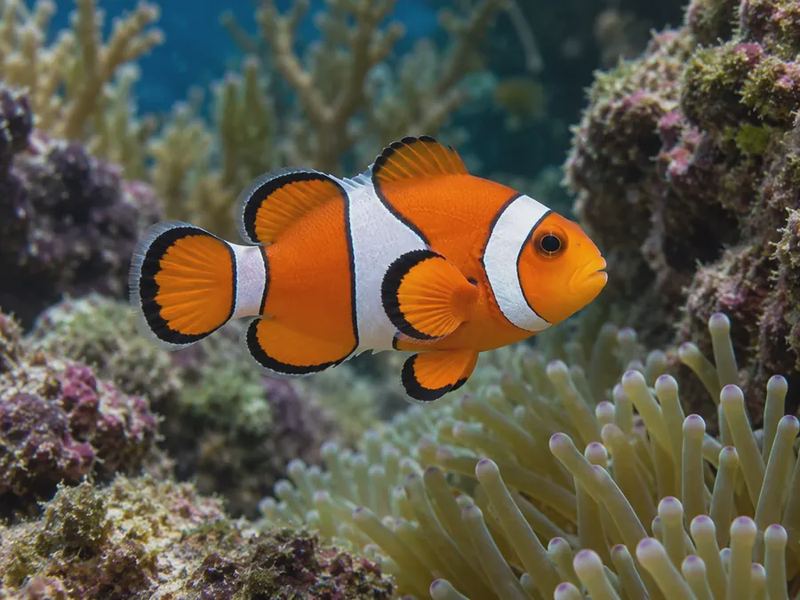
The Percula Clownfish is celebrated for its vivid, high-contrast coloration, consisting of a bright orange to deep burnt-orange base body color, intersected by three bold, white vertical bars. The first white bar is located immediately behind the eye, the second traverses the mid-body just behind the gill plate, and the third encircles the caudal peduncle, just anterior to the tail fin. Each white bar is outlined by a thin, yet distinct, black margin. In A. percula, these black borders are typically thicker and more pronounced than those seen in the closely related A. ocellaris, a key distinguishing feature. Additionally, the dorsal fin of A. percula typically has 9 to 10 dorsal spines, whereas A. ocellaris generally possesses 10 to 11, a subtle but reliable meristic difference.
All fins—including the pectoral, pelvic, anal, and caudal fins—are edged with the same black lining, giving the fish a crisp, painterly appearance. The irises of the eyes are a vivid orange, matching the body color, which helps the fish blend into the anemone tentacles when viewed from a distance. Juvenile specimens emerge from the egg with a more muted, translucent orange hue, and their white bars develop progressively over the first two to three weeks post-hatching. Interestingly, in some wild populations, particularly those from the northern Great Barrier Reef, individuals may exhibit a darker, almost chocolate-brown coloration due to the presence of specific anemone-derived pigments; this phenomenon is less common in aquarium specimens.
In terms of size, A. percula is a relatively small marine fish. Wild specimens typically reach a maximum standard length of approximately 8 centimeters (about 3.1 inches), though captive-bred individuals often plateau at around 6 to 7 centimeters. Females are invariably the larger sex in any given pair, a characteristic known as protandrous sequential hermaphroditism. A dominant female can be up to 20-30% longer and significantly deeper-bodied than her male counterpart. There is no discernible difference in color pattern between the sexes; size is the only reliable external indicator of gender. This species exhibits a stockier, more rounded body profile compared to A. ocellaris, which tends to have a slightly more elongated shape.
Diet & Feeding
In their natural reef habitat, Amphiprion percula are omnivorous with a distinct carnivorous bias. Their diet consists predominantly of zooplankton, including copepods, amphipods, fish larvae, and various pelagic tunicate larvae. They also consume filamentous macroalgae and detritus, particularly when animal prey is scarce. The symbiotic relationship with their host anemone provides an additional, albeit indirect, food source: the fish will consume leftover food particles and fecal matter produced by the anemone, and in turn, their own waste provides nitrogenous compounds that the anemone's symbiotic zooxanthellae utilize. This mutualistic feeding dynamic is crucial for understanding their nutritional needs in captivity.
In the aquarium, the Percula Clownfish is an enthusiastic and undemanding eater, readily accepting a wide variety of prepared foods. However, an evidence-based feeding regimen should prioritize high-quality, protein-rich marine pellets and frozen preparations. A varied diet is essential to maintain optimal health, coloration, and reproductive condition. Offering a mix of frozen mysis shrimp, finely chopped krill, cyclop-eeze, and high-grade marine flakes ensures adequate lipid and protein intake. It is critical to avoid feeding exclusively on beef heart or terrestrial meats, as these contain inappropriate fatty acids that can lead to hepatic lipidosis and long-term organ damage.
Feeding frequency should be adjusted based on the fish's age and metabolic demands. Adult Percula Clownfish should be fed two to three times daily, offering only what they can consume within two minutes per feeding. Overfeeding is a common husbandry error that leads to deteriorated water quality, particularly elevated phosphate and nitrate levels, which can inhibit spawning and promote algal blooms. For breeding pairs, a slightly increased frequency of three feedings per day, with a focus on nutrient-dense foods like enriched Artemia and rotifers (for conditioning), is recommended. Juveniles should receive four smaller feedings daily to support rapid growth. Since A. percula are not obligate reef-safe feeders, they will not nip at corals, but they may aggressively guard a specific feeding territory, so it is wise to distribute food across the tank to ensure all inhabitants receive adequate nutrition.
Aquarium Setup
When designing an aquarium for Amphiprion percula, the primary consideration is not necessarily tank volume, but rather the provision of stable water chemistry and a secure, low-stress environment. A single specimen or a mated pair can be maintained in a tank as small as 20 gallons (75 liters), but a larger system of 40 gallons (150 liters) or more is strongly recommended. Larger volumes provide greater thermal and chemical stability, which is paramount for this species. If the aquarist intends to keep the clownfish with a host anemone, a minimum tank size of 40 gallons is essential, as the magnificent sea anemone (Heteractis magnifica) can grow to over one meter in diameter and requires substantial space and intense lighting.
The substrate should consist of aragonite-based sand or crushed coral, which acts as a natural pH and alkalinity buffer. A depth of 2-3 centimeters (1 inch) is sufficient for biological filtration via denitrifying bacteria, provided there is adequate water flow to prevent dead zones. Live rock is the cornerstone of the biological filtration system and should be aquascaped to provide numerous caves, overhangs, and crevices. While A. percula are not secretive fish, they do require a designated "safe zone" where they can retreat if threatened, particularly during the initial acclimation period. The aquascape should also include a flat, vertical or slightly sloped surface near the anemone, as clownfish will often choose to lay their eggs on a smooth rock adjacent to the host.
Live plants are generally not a feature of marine clownfish systems, as true marine plants (Halophila spp., Caulerpa spp.) are either too delicate or grow too aggressively. Instead, the aquarist should focus on a robust population of beneficial microfauna within the live rock. Lighting requirements are dictated by the presence or absence of a host anemone. If keeping Entacmaea quadricolor or Heteractis magnifica, high-output LED or T5 fluorescent lighting capable of delivering 150-250 PAR (Photosynthetically Active Radiation) at the anemone's location is mandatory. Without an anemone, A. percula are indifferent to lighting intensity, and standard reef lighting of 50-100 PAR is sufficient for their well-being. Water movement should be moderate to high, with a total turnover rate of 10-20 times the tank volume per hour, using a combination of a return pump and powerheads to create varied, non-laminar flow.
Water Parameters
Maintaining pristine, stable water parameters is the single most critical factor in the long-term health of Amphiprion percula. As a tropical reef fish, it is adapted to remarkably consistent conditions. Rapid fluctuations in temperature or salinity are far more detrimental than slightly off-optimal absolute values. The species originates from oligotrophic waters with negligible nitrate and phosphate levels. Therefore, a robust protein skimmer and regular water changes are non-negotiable for replicating these conditions. The following table provides the recommended and acceptable ranges for key water parameters:
| Parameter | Recommended Range | Acceptable Range | Notes |
|---|---|---|---|
| Temperature | 25.5°C – 26.5°C (78°F – 80°F) | 24°C – 28°C (75°F – 82°F) | Stability is critical; avoid swings >1°C/day. |
| pH | 8.1 – 8.3 | 7.8 – 8.5 | Maintain via adequate alkalinity and gas exchange. |
| Salinity / Specific Gravity | 1.025 – 1.026 | 1.023 – 1.027 | Use a calibrated refractometer; match to quarantine tank. |
| Alkalinity (dKH) | 8 – 12 dKH | 7 – 14 dKH | Critical for overall system buffering capacity. |
| Calcium (Ca²⁺) | 420 – 450 ppm | 380 – 480 ppm | Only relevant if keeping anemones or corals. |
| Magnesium (Mg²⁺) | 1300 – 1400 ppm | 1200 – 1500 ppm | Maintains calcium/alkalinity balance. |
| Ammonia (NH₃) | 0 ppm | 0 ppm | Any detectable level is toxic. |
| Nitrite (NO₂⁻) | 0 ppm | 0 ppm | Should be undetectable in a cycled tank. |
| Nitrate (NO₃⁻) | < 10 ppm | < 20 ppm | Higher levels inhibit breeding and reduce longevity. |
| Phosphate (PO₄³⁻) | < 0.03 ppm | < 0.1 ppm | Elevated levels stress fish and promote algae. |
It is essential to note that A. percula does not tolerate copper-based medications well, and they are highly sensitive to dissolved oxygen saturation. Water should be well-aerated, and surface agitation should be sufficient to promote gas exchange. When performing water changes, the replacement water must be pre-mixed, heated, and aerated to match the display tank's parameters exactly. Sudden changes in specific gravity of more than 0.002 points can induce osmotic shock, leading to lethargy, loss of appetite, and increased susceptibility to Cryptocaryon irritans (marine ich).
Behavior & Compatibility
The behavioral repertoire of Amphiprion percula is characterized by a strict social hierarchy and territoriality, particularly when a host anemone is present. In the wild, a single anemone typically houses a breeding pair and several non-reproductive sub-adults. The largest individual is always the dominant female, the second largest is the breeding male, and the remaining fish are subordinate males. This hierarchical structure is mediated through aggressive displays and physical nipping. In the aquarium, this translates to a fish that is generally peaceful towards other species but can be pugnacious towards conspecifics and anemonefish of other genera. Keeping more than two A. percula in a small tank (under 75 gallons) often results in severe aggression, with the dominant pair relentlessly harassing subordinate individuals until they succumb to stress or injury.
Regarding interspecific compatibility, A. percula is an ideal resident for a peaceful to semi-aggressive community reef tank. They will ignore most other fish species, including dartfish, gobies, blennies, and most angelfish. However, they will actively defend the immediate vicinity of their host anemone, and any fish that ventures too close may be chased. This behavior is generally harmless but can stress shy or delicate tankmates. It is crucial to avoid housing them with large, predatory fish such as lionfish, groupers, or large triggerfish, which would view the clownfish as prey. Similarly, aggressive damselfish (e.g., Dascyllus spp.) can provoke constant conflict, leading to chronic stress for the clownfish.
Perhaps the most significant compatibility consideration is the addition of a host anemone. While A. percula will survive without one, the presence of Entacmaea quadricolor or Heteractis magnifica elicits natural hosting behavior that is fascinating to observe. It is important to note that not all clownfish will immediately accept an anemone; the acclimation process can take hours or days. The aquarist must ensure the anemone is healthy and well-established before introducing the clownfish. Furthermore, the anemone's stinging cells (nematocysts) do not harm the clownfish because the fish secretes a protective mucus layer that prevents nematocyst discharge. This mucus coating must be maintained; if the clownfish is stressed or its mucus layer is damaged (e.g., by rough handling), it may be stung. Therefore, suitable tankmates include peaceful wrasses, gobies, cardinalfish, and non-aggressive tangs, provided the tank is large enough (100+ gallons).
Breeding
Breeding Amphiprion percula in captivity is a well-documented and achievable endeavor, and captive-bred specimens now dominate the aquarium trade. The species is a protandrous hermaphrodite; every fish is born male. When the dominant female dies, the largest male undergoes a sex change to become the new female. This transition is irreversible. To establish a breeding pair, the aquarist should either purchase a known bonded pair or acquire a group of six juvenile fish and allow them to pair naturally. Once a pair forms, they will be inseparable, with the female growing noticeably larger.
The spawning process is initiated by the male, who will perform a series of "dances" and quivering displays to court the female. The pair will meticulously clean a flat, vertical surface near the base of the host anemone, often a piece of slate, a ceramic tile, or the glass side of the aquarium. The female will lay a clutch of 200 to 800 orange, cigar-shaped eggs, which the male immediately fertilizes. The male assumes the primary role of guardian, fanning the eggs with his pectoral fins to provide oxygenation and removing any infertile or fungus-infected eggs. The eggs develop rapidly, and at a temperature of 26°C (79°F), they will hatch in approximately 6 to 8 days.
Hatching typically occurs at night, 1 to 2 hours after the lights are turned off. The newly hatched larvae are minuscule (approximately 3-4 mm) and are positively phototactic, meaning they swim towards light. Rearing the larvae requires a separate fry tank with meticulous water quality. The larvae must be fed rotifers (Brachionus plicatilis) for the first 5-7 days, followed by a gradual transition to newly hatched Artemia nauplii. The survival rate of larvae is highly dependent on maintaining pristine water conditions and providing a suitable green-water microalgae environment (Nannochloropsis) to help the larvae find food and maintain water quality. Metamorphosis into juvenile coloration occurs around 10-14 days post-hatching, at which point they can be weaned onto finely crushed flake food. Successful breeding is a significant undertaking that requires dedication, but the reward of raising a new generation of these iconic fish is immense.
Common Diseases & Health
While captive-bred Amphiprion percula are generally hardy, they are susceptible to several common marine diseases, most of which are precipitated by stress or poor water quality. The most prevalent ailment is Cryptocaryon irritans, commonly known as marine ich or white spot disease. This protozoan parasite manifests as small, white, salt-like granules on the skin, fins, and gills. Infected fish will flash against rocks and exhibit rapid gill movement. Unlike freshwater ich, marine ich has a complex life cycle that requires the parasite to drop off the fish and encyst on the substrate. Treatment requires either a copper-based medication in a quarantine tank (never in a display tank with invertebrates) or the hyposalinity method, which involves gradually lowering specific gravity to 1.010-1.012 over several days. A. percula tolerate hyposalinity well, but it must be maintained for a minimum of 30 days to break the parasite's life cycle.
Brooklynella hostilis, or clownfish disease, is a specific and highly lethal parasite that primarily affects clownfish. It presents as a thick, milky, or excessive mucus production on the skin, often leading to rapid respiratory distress and lethargy. The disease progresses quickly and is often fatal within 24-48 hours if untreated. The most effective treatment is a formalin bath (e.g., 1 ml of 37% formalin per gallon of water for 30-60 minutes) in a quarantine tank. Prevention is far better than cure; ensuring introduced fish are quarantined for 30 days and are free of external parasites is critical.
Another common issue is Amyloodinium ocellatum, or marine velvet, which appears as a fine, golden-brown dust on the fish's body. Infected fish will scratch, breathe rapidly, and may isolate themselves. This parasite is often more aggressive than ich and requires prompt treatment with copper or chloroquine phosphate. Bacterial infections, such as fin rot or ulcerative skin lesions, are usually secondary to physical damage or parasitic infestations. Maintaining excellent water quality and providing a stress-free environment is the most effective prophylactic measure. Regular observation of the fish's behavior, appetite, and coloration is essential for early detection of any health issues. Quarantining all new arrivals for a minimum of 4-6 weeks is the gold standard for preventing disease introduction into a display tank.
FAQs
Question 1: What is the difference between a Percula Clownfish (Amphiprion percula) and an Ocellaris Clownfish (Amphiprion ocellaris)?
The two species are visually similar but distinct. The most reliable visual difference is the thickness of the black borders on the white bars and fins; A. percula has significantly thicker, more pronounced black margins, while A. ocellaris has very thin or absent black borders. Additionally, A. percula typically has 9-10 dorsal spines, whereas A. ocellaris has 10-11. Geographically, A. percula is restricted to the western Pacific (Great Barrier Reef, Solomon Islands), while A. ocellaris is widespread across the Indo-Pacific. In the aquarium trade, most "false percula" clownfish are actually A. ocellaris.
Question 2: Do Percula Clownfish require a host anemone to survive in an aquarium?
No, they do not. In fact, captive-bred A. percula often thrive without an anemone, as they have never encountered one. They will readily accept artificial host substitutes, such as a clay pot, a piece of PVC pipe, or a large coral skeleton. However, providing a natural host like Entacmaea quadricolor (bubble-tip anemone) is highly beneficial for their psychological well-being and encourages natural spawning behavior. If you do not provide an anemone, ensure the tank has ample rockwork and caves to provide security. The absence of an anemone does not cause any physiological harm.
Question 3: Can I keep two Percula Clownfish together in a small tank?
Yes, but they must be introduced simultaneously as juveniles, or you must purchase a proven bonded pair. If you add two small fish to a tank at the same time, they will typically form a pair, with one becoming female and the other male. However, if you add a new clownfish to an established one, the resident will almost certainly attack and kill the newcomer. They are highly territorial and will not accept an intruder. A pair can be kept in a 20-gallon tank, but a 30-40 gallon tank is preferable for water quality stability.
Question 4: Why is my Percula Clownfish "shaking" or twitching in front of the other clownfish?
This behavior is entirely normal and is a form of communication. Submissive or lower-ranking fish often perform a rapid, exaggerated "shimmy" or "jerk" in front of a dominant fish. This is a pacifying gesture that signals submission and reduces the likelihood of aggressive attacks. It is also used by males during courtship to attract the female to the spawning site. If the twitching is accompanied by scratching against rocks or sand, it may indicate a parasitic infection (like ich or velvet), but if it is directed at another clownfish, it is simply social behavior.
References
- Journal of Experimental Marine Biology
- Coral Reefs (Springer)
- NOAA Ocean Service