
How many fish per gallon can you keep in your aquarium?
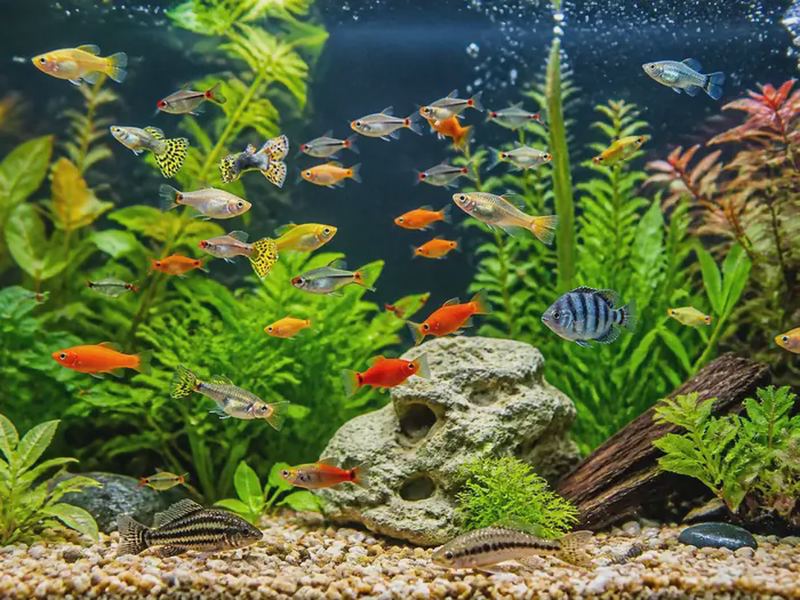
Introduction: The Enduring Myth of the “Inch Per Gallon” Rule
For decades, the default answer to “how many fish can I keep?” has been a simple, seemingly logical formula: one inch of fish per gallon of water. This rule, passed down through forums, pet store chatter, and even some outdated guidebooks, suggests that a 20-gallon tank can safely hold 20 inches of fish. While its simplicity is appealing, the rule is fundamentally flawed from an aquatic science perspective. It fails to account for the most critical variables in fishkeeping: the fish’s body mass (which determines bioload), its metabolic rate, its swimming behavior, and the biological filtration capacity of the system. A single 10-inch goldfish produces a fraction of the waste of ten 1-inch neon tetras, yet both would be considered “equal” under this archaic guideline. Furthermore, the rule ignores the three-dimensional space requirements of active swimmers versus sedentary species. This article will deconstruct the inch-per-gallon myth using established ichthyological and aquacultural research, replacing it with a more robust, biologically sound framework for stocking your aquarium.
Why Surface Area and Body Mass Trump Linear Inches
The primary flaw in the linear-inch rule is its disregard for the relationship between fish length and fish volume. As a fish grows, its body mass increases roughly cubically, while its surface area (through which it exchanges gases and ions) increases only quadratically. In practical terms, a fish that is twice the length of another is not twice as heavy—it is approximately eight times heavier. This exponential increase in mass directly correlates to metabolic waste production, specifically ammonia (NH₃) and carbon dioxide (CO₂). Research in aquaculture, such as the work published in the Journal of Fish Biology, has consistently demonstrated that metabolic rate scales with body mass to the power of approximately 0.8. Therefore, a 4-inch fish does not produce twice the waste of a 2-inch fish; it produces roughly 3.5 times more waste. This is why a 20-gallon tank can comfortably house a single 4-inch angelfish, but would struggle to maintain water quality with a single 8-inch oscar. The more relevant metric is the fish’s “wet weight” and its corresponding oxygen demand and ammonia output. Instead of measuring length, we should be calculating the fish’s cross-sectional area and volume to estimate its true impact on the aquatic environment.
Another critical factor often ignored by the linear rule is the available surface area for gas exchange—the interface between water and air. Oxygen dissolves into the water at this surface, and carbon dioxide off-gasses here. A tall, narrow 20-gallon “tower” tank has significantly less surface area than a standard 20-gallon long tank. Consequently, the tower tank has a lower maximum oxygen saturation capacity. Even with adequate filtration, a system with insufficient surface area will suffer from chronic hypoxia (low dissolved oxygen), stressing fish and reducing their immune function. A study by the American Fisheries Society highlighted that dissolved oxygen levels below 5 mg/L can induce sub-lethal stress in most freshwater species, leading to increased cortisol levels and susceptibility to disease. Therefore, when calculating stocking density, you must first measure the tank’s surface area (length x width) and not just its volume. A 30-inch by 12-inch footprint provides far more gas exchange and swimming room than a 24-inch by 12-inch footprint, even if the total gallonage is identical.
The Bioload: Nitrogen Cycle Dynamics and Filtration Capacity
Every fish you add to an aquarium introduces a continuous source of nitrogenous waste. The primary excretory product is ammonia, which is highly toxic to fish, causing gill damage and neurological impairment at concentrations above 0.02 mg/L (un-ionized NH₃). In a mature aquarium, beneficial bacteria—primarily Nitrosomonas and Nitrobacter species—colonize the filter media and substrate, converting ammonia to nitrite (NO₂⁻) and then to the far less toxic nitrate (NO₃⁻). This biological filtration has a finite capacity, which is directly proportional to the surface area of the filter media and the oxygen levels within the filter. The “stocking limit” of an aquarium is, in essence, the maximum daily ammonia load that the nitrifying bacterial colony can process without allowing detectable ammonia or nitrite spikes.
To estimate this, we look at the “feeding load” rather than the fish count. A robust rule of thumb used by professional aquaculturists is that you should not feed more than 1% of the total system water volume in dry food per day. For example, a 50-gallon tank (190 liters) should not receive more than 0.5 kg (about 1.1 lbs) of dry food daily, which is an enormous amount for a home aquarium. In reality, most hobbyists feed far less. A more practical metric is the “inch of fish per 10 gallons” for heavy waste producers (e.g., goldfish, cichlids) versus “inch per 2 gallons” for small, low-waste species (e.g., tetras, rasboras). However, even this needs adjustment for the fish’s diet. Carnivorous fish produce more ammonia per gram of food than omnivores or herbivores, as protein catabolism releases more nitrogen. For instance, a 3-inch dwarf cichlid (Apistogramma sp.) produces more waste than a 3-inch plecostomus, which primarily grazes on algae and plant matter. The key takeaway is to monitor your water parameters weekly. If nitrate levels consistently rise above 40 ppm between water changes, you are overstocked or overfeeding, regardless of what any chart says.
Behavioral and Spatial Requirements: The ‘Swimming Space’ Factor
Beyond water chemistry, the physical and psychological needs of fish dictate stocking limits. Many species are active, pelagic swimmers that require long, unobstructed horizontal swimming lanes. For example, danios (Danio rerio) and rainbowfish (Melanotaenia sp.) are naturally found in fast-flowing streams and rivers. In an aquarium, they will pace back and forth, and if the tank is too short, they exhibit chronic stress behaviors such as fin clamping and erratic darting. The minimum tank length for active schooling fish should be at least 6-8 times the adult body length of the fish. A 3-inch zebra danio therefore needs a tank at least 24 inches long, even if the volume is technically sufficient. Conversely, sedentary species like the African butterfly fish (Pantodon buchholzi) or the leaf fish (Monocirrhus polyacanthus) require minimal horizontal space but demand dense surface vegetation and hiding spots. They are ambush predators that rarely swim; their bioload is low, but their territorial requirements are specific.
Territorial aggression is another critical spatial factor. Cichlids, particularly Central American species like the convict cichlid (Amatitlania nigrofasciata), are highly territorial during breeding. In a 40-gallon tank, a single pair will claim the entire lower half of the substrate as their territory, attacking any intruders. Adding “just a few more” based on a gallon-per-inch calculation will result in severe aggression, physical injury, and likely death. The scientific principle here is the “minimum individual distance” (MID) required by each species. Research on fish aggression, published in Ethology, shows that reducing tank space below a species-specific threshold increases the frequency of aggressive interactions exponentially. For community tanks, a general guideline is to provide at least 10 gallons of water per territorial fish, and for large cichlids, 30-50 gallons per individual is often necessary. Always research the adult territorial behavior of your chosen species before calculating stocking numbers.
Real-World Species Examples and Their Specific Needs
Let us apply these principles to common aquarium species. The neon tetra (Paracheirodon innesi) reaches 1.5 inches, has a low bioload, and is a shoaling species that needs a group of at least 6-8 individuals. In a heavily planted 20-gallon long tank (30” x 12” footprint), you could safely keep 15-20 neon tetras because their combined mass is small, and the surface area supports adequate gas exchange. However, the same 20-gallon tank should house no more than two adult pearl gouramis (Trichopodus leerii), which reach 4 inches and have a much larger body mass and territorial requirement. Gouramis are labyrinth fish, meaning they breathe atmospheric air, but they still produce significant ammonia. A single fancy goldfish (Carassius auratus), which can reach 6-8 inches and live for 20 years, should not be kept in anything less than a 40-gallon breeder tank (36” x 18” footprint) because of its massive bioload and high oxygen demand. Goldfish are cold-water fish that produce more waste at higher temperatures, so a cool, well-filtered system is essential.
Conversely, a small shoal of pygmy corydoras (Corydoras pygmaeus), which reach 1 inch, can be kept in a 10-gallon nano tank, but only if the tank has a mature sponge filter and regular water changes. The issue with nano tanks is not the fish’s size but the water volume’s buffering capacity. In a 10-gallon tank, a single dead fish can cause an ammonia spike that kills the entire tank within hours. For this reason, a more conservative stocking guideline for tanks under 15 gallons is to limit total fish length to 1 inch per 2 gallons of water, regardless of species. This is not a scientific law but a practical safety margin that accommodates for the rapid temperature swings and pH fluctuations common in small water volumes.
A Practical Stocking Table Based on Body Mass and Activity
Based on the principles of metabolic scaling, surface area, and behavior, we can construct a more reliable stocking guide. This table assumes a standard “long” tank with a rectangular footprint, a mature biological filter, and regular water changes (25% weekly). It categorizes fish by their adult size and waste production level.
- Small, Low-Waste Species (e.g., Neon Tetra, Ember Tetra, Chili Rasbora, Pygmy Corydoras): Up to 1 inch of fish per 2 gallons of water. For a 20-gallon long, this means up to 10 inches of fish, typically 10-15 individuals, provided they are in a group.
- Medium, Moderate-Waste Species (e.g., Angelfish, Dwarf Gourami, Platy, Molly, Rainbowfish): Up to 1 inch of fish per 4 gallons of water. A 40-gallon breeder can house 10 inches of these fish, which translates to 2-3 angelfish or 5-6 platies.
- Large, High-Waste Species (e.g., Goldfish, Oscars, Large Cichlids, Silver Dollars): Up to 1 inch of fish per 10 gallons of water. A 75-gallon tank can house a single 6-inch Oscar, but not two, due to territorial aggression and mass.
- Bottom Dwellers (e.g., Corydoras, Loaches, Plecos): These are often overlooked. A 3-inch bristlenose pleco produces waste equivalent to a 6-inch mid-water fish. Count them as double their length when calculating bioload.
This table is not a substitute for observation. If you see fish gasping at the surface, hiding constantly, or if you measure ammonia above 0 ppm, you are overstocked. The only true measure of a tank’s capacity is its biological stability over time. A well-planted tank with a deep sand bed and a large sump filter can often support a higher stocking density than a bare-bottom tank with a small hang-on-back filter, because the plants and substrate provide additional biological filtration and oxygen production.
FAQ: Common Stocking Questions Answered
Q: Can I keep a betta fish with other fish in a 10-gallon tank?
A: A single male betta (Betta splendens) has a low bioload but aggressive tendencies. In a 10-gallon planted tank, you can add a small school of 6 pygmy corydoras or 5 ember tetras, but you must provide dense plant cover to break the betta’s line of sight. The betta’s long fins make it a poor swimmer, so avoid active, nippy fish like danios.
Q: How often should I change the water based on my stocking level?
A: As a general rule, if your nitrate level reads 20-40 ppm before a water change, you are at a healthy stocking level. If it reads 60 ppm or higher, you are overstocked or overfeeding, and you should increase water change frequency to 50% weekly. If it reads below 10 ppm, you could potentially add more fish, but always do so gradually.
Q: Is a bigger filter always better?
A: For biological filtration, yes, more media surface area is beneficial. However, excessive water flow can stress slow-moving fish like gouramis and angelfish. Choose a filter rated for at least 3-4 times your tank volume per hour, but use a spray bar or diffuser to soften the output. The filter’s biological capacity is the limiting factor, not its mechanical power.
Q: Do live plants help with stocking density?
A: Yes, significantly. Fast-growing stem plants like Hygrophila and Ceratophyllum (hornwort) absorb ammonia and nitrate directly, acting as a natural biofilter. A heavily planted tank can safely support 1.5 to 2 times the stocking density of a bare tank, provided there is adequate lighting and CO₂ for the plants to grow. However, plants consume oxygen at night, so do not overdo it without surface agitation.
Conclusion: The Dynamic Equilibrium of a Healthy Aquarium
The “inch per gallon” rule is a relic of early aquarium keeping, a heuristic that fails under the scrutiny of modern aquatic science. The true limit of your aquarium is not a static number but a dynamic equilibrium between fish biomass, waste production, filtration capacity, and available swimming space. By focusing on body mass, surface area, and species-specific behavior, you can create a thriving, stable ecosystem rather than a chronically stressed one. The most reliable approach is to start with a conservative stocking level—perhaps 50% of the maximum suggested in our table—and then monitor your water parameters for three weeks. If ammonia and nitrite remain at zero and nitrate stays below 40 ppm, you can cautiously add a few more fish. Remember that fish grow, and their waste production increases cubically with their length. A tank that looks empty today will look full in a year. Your goal is not to maximize the number of fish in a glass box, but to provide a habitat where each individual can express its natural behaviors without physiological stress. This is the essence of ethical fishkeeping, and it will reward you with vibrant colors, active swimming, and successful breeding—far more satisfying than simply “filling up” the tank.
💬 Comments
No comments yet — be the first!
Sign in to comment