
Guppy Fish Care: Tank, Water, and Breeding Basics
Introduction: The Ubiquitous Guppy as a Model Organism and Aquarium Staple
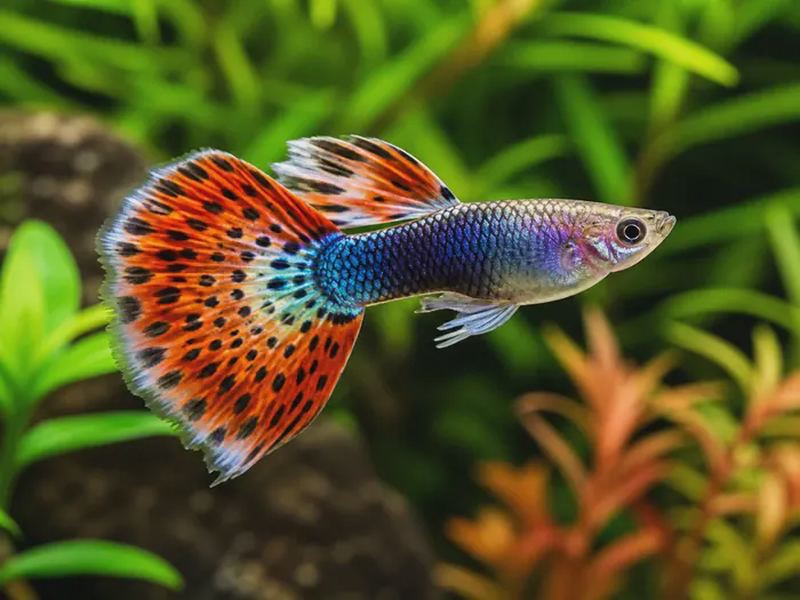
The guppy (Poecilia reticulata) is arguably the most recognized freshwater fish in the ornamental hobby, yet its ubiquity often masks a surprisingly complex biology shaped by decades of evolutionary research. Native to the clear, slow-moving streams of northeastern South America, particularly Trinidad and Tobago, the guppy has become a cornerstone of ecological and evolutionary study, most notably in the long-term field experiments by David Reznick and colleagues, which demonstrated rapid adaptive evolution in response to predation pressure. For the aquarist, this evolutionary history translates into a fish that is both remarkably adaptable and subtly demanding. While often marketed as a beginner’s fish, achieving optimal health, vibrant coloration, and consistent breeding requires a nuanced understanding of their native water chemistry, social dynamics, and metabolic needs. This guide moves beyond the generic “hardy fish” label, presenting an evidence-based approach to guppy care that respects their biological heritage while providing practical, actionable protocols for the home aquarium.
The common misconception that guppies thrive in any small bowl is a direct contradiction of their physiological requirements. In their natural habitat, guppies inhabit shallow, vegetation-rich pools with a constant influx of fresh water, which maintains high oxygen levels and a stable, slightly alkaline pH. They are poeciliids, meaning they are livebearers, a reproductive strategy that has profound implications for their stress levels, nutritional demands, and population management. Furthermore, the guppy genome has been fully sequenced, revealing specific gene families associated with pigmentation and immune response, which underscores that even the most common pet-store guppy carries the genetic legacy of a wild species finely tuned to specific ecological niches. Therefore, this article will dissect the core pillars of guppy husbandry—tank dimensions, water parameter stability, nutritional balance, and breeding dynamics—using peer-reviewed research and established aquatic science to ensure your guppies not only survive but exhibit species-appropriate behaviors and robust health.
Aquarium Size and Environmental Enrichment: Beyond the Gallon-Per-Inch Myth
The outdated “one inch of fish per gallon” rule is particularly detrimental to guppies, which are active, shoaling species that require horizontal swimming space. A single guppy can reach 2.5 inches in total length for males (though typically 1.5-2.0 inches), but they are highly social and must be kept in groups of at least six to establish a stable pecking order and reduce chronic stress. For a small group of six to eight guppies, a 20-gallon long aquarium (30 inches in length) is the absolute minimum, not the suggested 10-gallon tank often cited. Research on fish welfare consistently demonstrates that inadequate swimming space leads to elevated cortisol levels, fin nipping, and suppressed immune function. Specifically, a study published in Applied Animal Behaviour Science on P. reticulata found that increased tank length significantly reduced aggressive interactions and stereotypic swimming patterns compared to taller, shorter tanks of equal volume. Therefore, prioritize footprint over height; a 40-gallon breeder tank is ideal for a colony of 15-20 guppies.
Environmental enrichment is not merely aesthetic; it is a biological requirement. In the wild, guppies are heavily predated upon, and their survival depends on access to dense marginal vegetation and submerged root systems. In the aquarium, this translates to providing a heavily planted tank. Live plants such as Vallisneria, Java moss (Taxiphyllum barbieri), and floating species like Salvinia minima serve multiple critical functions. They provide refuge for fry, which is essential for any breeding attempt without constant removal. They also harbor microfauna, such as infusoria and copepods, which are a natural and highly nutritious first food for newborn guppies. Furthermore, plants help stabilize water quality by assimilating ammonia and nitrates, and they create shaded areas that reduce light stress. A bare-bottom tank with plastic plants is a known stressor, leading to a condition known as “shimmying,” a rapid, side-to-side movement indicating severe distress. The substrate should be fine sand or smooth gravel, as guppies do not dig, but a dark substrate (e.g., black sand) is recommended because it enhances their color perception and reduces reflective glare, which can cause chronic anxiety.
Water Chemistry and Thermodynamics: Replicating the Trinidadian Stream
Guppies are often described as “hardy” because they tolerate a wide range of pH (6.8 to 8.0), but tolerance is not the same as optimal health. Their native waters in Trinidad are typically alkaline, with a pH ranging from 7.2 to 8.2, and moderate to high hardness, with general hardness (GH) between 8 and 12 dGH and carbonate hardness (KH) between 6 and 10 dKH. This water chemistry is a direct result of the limestone-rich geology of the Northern Range mountains. Maintaining a pH below 7.0 is not only suboptimal but can lead to long-term osmoregulatory stress, making the fish susceptible to Ichthyophthirius multifiliis (Ich) and fungal infections. For breeding, the pH should be firmly in the 7.5-8.0 range. To achieve this, using crushed coral or aragonite sand as a substrate buffer is an effective, low-maintenance strategy, as these will slowly dissolve and stabilize both pH and KH.
Temperature is the most critical environmental variable for guppy metabolism. The optimal range for adult maintenance is 74°F to 78°F (23.3°C to 25.6°C). However, research indicates that temperature significantly influences sex determination and growth rates in poeciliids. While guppies do not have temperature-dependent sex determination like some reptiles, studies have shown that higher temperatures (above 80°F/26.7°C) accelerate metabolic rate, leading to faster growth but also a shortened lifespan and increased incidence of spinal deformities due to rapid calcium turnover. Conversely, temperatures below 72°F (22.2°C) slow their metabolism, suppress the immune system, and can trigger Pleistophora hyphessobryconis, a microsporidian parasite that causes severe muscle wasting. An aquarium heater set to a stable 77°F (25°C) is ideal. Furthermore, water movement should be gentle; guppies are not strong swimmers and prefer calm, slow-flowing water. A sponge filter or a hang-on-back filter with a spray bar directed at the glass is preferable to a strong powerhead, which can exhaust them and cause them to spend energy fighting the current instead of foraging.
Nutritional Science: The Need for Carotenoids and High-Fiber Plant Matter
Guppies are omnivorous with a strong lean towards insectivorous and herbivorous tendencies. In the wild, their diet consists of aquatic insect larvae, algae, and small crustaceans. This dietary diversity is reflected in their need for a high-protein diet (30-40% crude protein) for growth and reproduction, but critically, they also require a significant proportion of plant matter (fiber) for proper gut motility. A common error is feeding only flake food, which is often high in fillers and low in bioavailable nutrients. A premium pellet or flake food should list whole fish meal, krill meal, or spirulina as the first ingredients. However, the most scientifically robust approach involves supplementation with live and frozen foods.
The most critical dietary component for guppy coloration is carotenoids. Guppies cannot synthesize carotenoids; they must obtain them from their diet. These pigments are responsible for the orange, red, and yellow hues in males, which are directly used in female mate choice. A study in Evolution demonstrated that male guppies fed a diet rich in carotenoids (e.g., Daphnia, Artemia nauplii, and spirulina) exhibited significantly more intense orange spots and were preferred by females in behavioral trials. Conversely, a diet lacking these pigments results in dull, washed-out colors and reduced reproductive success. Feed a rotation of high-quality flake, frozen bloodworms (as a treat, not a staple), frozen Daphnia, and freshly hatched Artemia nauplii. Additionally, blanched zucchini or spinach should be offered twice a week to provide essential fiber. Overfeeding is a leading cause of water pollution and fatty liver disease in guppies; feed only what they can consume in 2 minutes, twice a day, and fast them one day per week to allow their digestive system to clear.
Breeding Dynamics: The Biology of Livebearing and Fry Survival
Guppies are prolific livebearers, a reproductive strategy that involves internal fertilization and the birth of free-swimming fry. A single mating can produce multiple broods over several months because females can store sperm in specialized ovarian folds for up to eight months. This means that a female purchased from a pet store is almost certainly already pregnant and will give birth repeatedly. The gestation period is typically 21-30 days, depending on temperature; warmer water accelerates gestation. A gravid female will exhibit a dark, triangular “gravid spot” near the anal fin, and her abdomen will become boxy in shape as the fry develop. To maximize fry survival, a breeding box or a heavily planted “fry trap” within the main tank is necessary, as adult guppies, including the mother, will consume their own young.
The science of fry development is precise. Newborn guppies are approximately 6-8 mm long and are immediately capable of swimming and feeding. They require micro-food, such as infusoria or commercially available liquid fry food, for the first 24 hours, transitioning to powdered flakes and freshly hatched brine shrimp by day two. Water quality in the fry tank must be pristine; a 20% water change every other day is recommended because fry are highly sensitive to ammonia and nitrite. Interestingly, research on guppy populations has shown that fry growth rate is density-dependent; overcrowding stunts growth due to the release of growth-inhibiting hormones (cortisol) into the water. Therefore, fry should be separated into larger containers as they grow, with a target density of no more than 1 fry per gallon of water. By 3-4 months, fry will begin to show sexual dimorphism, with males developing their gonopodium (a modified anal fin) and displaying color; at this point, they can be sexed and moved to adult tanks to prevent unwanted breeding.
Health Management and Common Pathogens: A Proactive Approach
Prevention is the cornerstone of guppy health. The most common diseases in guppies are directly linked to water quality and temperature stress. Fin rot, caused by Pseudomonas and Aeromonas bacteria, is almost exclusively a secondary infection following a primary stressor like low temperature or high ammonia. The treatment is to correct the water parameters first, not to add antibiotics immediately. A 50% water change, raising the temperature to 78°F, and adding aquarium salt (1 tablespoon per 5 gallons) is often sufficient to resolve mild fin rot. However, the most notorious guppy-specific pathogen is Gyrodactylus turnbulli, a monogenean ectoparasite that causes “flashing” and skin irritation, leading to secondary bacterial infections. This parasite is highly contagious and requires formalin or praziquantel treatment.
Another significant issue is Pleistophora, a microsporidian parasite that causes “guppy wasting disease,” characterized by a sunken belly and spinal curvature. This is incurable and highly contagious, requiring culling of all affected fish and a complete tank sterilization. To avoid such outbreaks, quarantine all new fish for a minimum of four weeks in a separate tank. During quarantine, observe for three days, then perform a prophylactic deworming with a broad-spectrum antiparasitic (e.g., Levamisole) and a bacterial treatment (e.g., erythromycin) if any signs of stress appear. Furthermore, avoid mixing guppies with known fin-nippers like tiger barbs or aggressive cichlids. Good tankmates include other peaceful livebearers like mollies and platies, small tetras like neon tetras, and bottom-dwelling corydoras catfish. The key to a healthy guppy tank is stability; sudden changes in pH, temperature, or hardness are far more lethal than gradual shifts.
Frequently Asked Questions: Practical Solutions for Common Challenges
- Why are my guppies’ tails clamped and fins not spreading? This is a primary indicator of stress, most often due to poor water quality (high ammonia or nitrite) or low temperature. Test your water immediately. If ammonia is above 0 ppm, perform a 50% water change and check your filter. Clamped fins are the fish’s way of reducing surface area to minimize osmoregulatory stress; it is a sign that the fish is fighting to maintain its internal salt balance.
- My female guppy has a large bulge but no fry after a month. What is happening? She may be experiencing a difficult birth, or she may be absorbing the fry due to stress. Check the temperature; if it is below 74°F, the gestation period extends significantly. Also, ensure she has dense plant cover; if she feels threatened, she will hold the fry. If she is still active and eating, give her time. If she is lethargic and breathing heavily, she may have a bacterial infection that requires a quarantine tank with a broad-spectrum antibiotic.
- Can I keep guppies in a vase with a peace lily? No. This is an animal welfare issue. Guppies require aeration, filtration, and horizontal swimming space. The root system of a peace lily will absorb some nitrates but cannot handle the ammonia load, and the vase has no surface area for gas exchange, leading to hypoxia. The fish will eventually suffocate or die from ammonia poisoning.
- Why are my male guppies chasing the female constantly? This is normal courtship behavior, but it can become pathological if the male-to-female ratio is wrong. Keep a ratio of at least 1 male to 2-3 females. This disperses the male’s attention and reduces stress on the females. If you see torn fins on the females, you need to add more females or remove some males.
- My guppy is swimming upside down at the surface. Is it dying? This is often a sign of swim bladder disorder, frequently caused by overfeeding or constipation. Fast the fish for 48 hours, then feed a single blanched, peeled pea (mashed). If the condition persists, it may be a congenital deformity or a bacterial infection of the swim bladder, which is difficult to treat. Isolate the fish to prevent stress on others.
Conclusion: The Ethical and Scientific Imperative of Proper Guppy Husbandry
The guppy is far more than a colorful, disposable “starter fish.” It is a living organism with an evolutionary history that has shaped its physiological needs, and we owe it a standard of care that respects those needs. By moving beyond the simplistic advice of the past and embracing the evidence from aquatic science, we can create environments where guppies not only survive but thrive, displaying the vibrant colors, complex social interactions, and natural reproductive behaviors that have made them a subject of scientific fascination for over a century. The foundation of this care is stability: stable water chemistry, stable temperature, and a stable social structure. This requires an investment in appropriate tank size, filtration, and nutrition, but the reward is a thriving, dynamic micro-ecosystem that offers daily insights into the beauty of evolutionary biology.
Remember that every guppy you purchase is a product of both natural and artificial selection. The wild-type guppies in Trinidad are under intense predation, and their coloration and behavior are finely tuned to that risk. The domestic guppies in your tank have been bred for color and finnage, but their metabolic and osmoregulatory systems are still fundamentally those of a stream-dwelling tropical fish. Therefore, provide them with the clean, alkaline, well-oxygenated water they crave, and they will reward you with generations of life. Regular water testing, consistent feeding schedules, and a proactive approach to health will prevent the vast majority of common problems. Ultimately, successful guppy keeping is not about luck; it is about applying the principles of aquatic ecology and physiology to a small glass box, and in doing so, we become better stewards of the aquatic world we bring into our homes.
💬 Comments
No comments yet — be the first!
Sign in to comment