
CO2 Injection: The Limiting Factor in Planted Tanks
Introduction: The Carbon Question in the Aquatic Garden
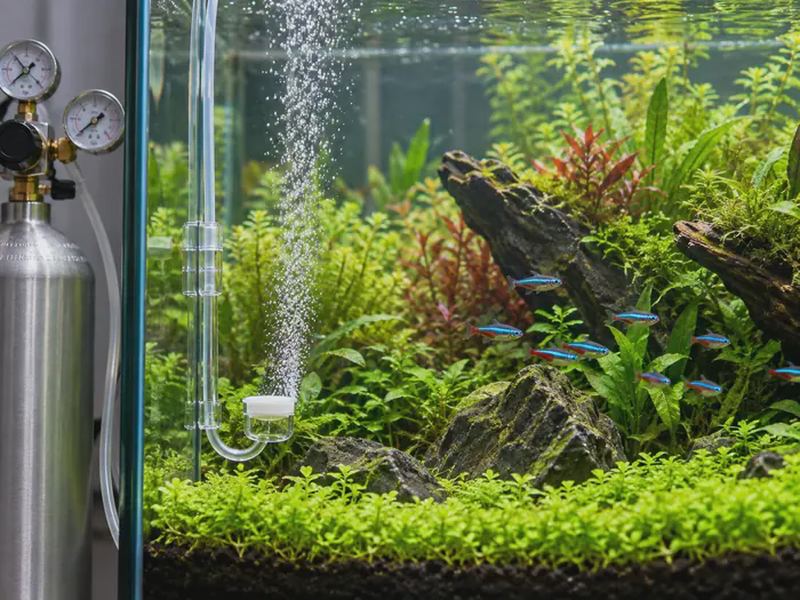
For the modern planted aquarium hobbyist, few topics generate as much debate as the injection of carbon dioxide (CO₂). The visual difference between a tank with lush, dense growth and one with stunted, algae-covered plants often comes down to this single, invisible gas. Yet, the decision to invest in a pressurized CO₂ system, a regulator, and a diffuser is not merely a matter of aesthetics; it is a biological and chemical decision with profound implications for the entire aquatic ecosystem. This article examines the science behind CO₂ supplementation, drawing on established limnology and plant physiology, to determine whether the cost and complexity are justified. We will explore the fundamental role of carbon in photosynthesis, the measurable benefits for plant health and growth rates, the often-overlooked risks to livestock, and the practical parameters that dictate success. The goal is not to sell you a system, but to provide the evidence-based framework you need to make an informed choice for your specific aquarium.
At its core, the question of CO₂ injection is a question of limiting factors. In terrestrial ecosystems, atmospheric CO₂ is relatively abundant (around 420 ppm). In an enclosed aquarium, however, the situation is radically different. The water column contains a finite pool of dissolved CO₂, derived primarily from fish respiration and bacterial decomposition. In a well-lit, heavily planted tank, photosynthetic demand rapidly depletes this pool, often driving CO₂ concentrations to near zero within hours of the lights turning on. This creates a bottleneck: light and nutrients (nitrate, phosphate, potassium) may be plentiful, but the lack of carbon restricts the rate at which plants can fix energy. The result is a condition known as "carbon limitation," where plants survive but cannot thrive. They exhibit stunted growth, chlorosis (yellowing of leaves), and a weakened immune system, making them vulnerable to algal encroachment. Understanding this dynamic is the first step in evaluating the true value of CO₂ supplementation.
The Physiological Imperative: Why Carbon is the Master Nutrient
To appreciate the impact of CO₂ injection, one must first understand the biochemical pathway of photosynthesis. In the Calvin cycle, the enzyme Rubisco (Ribulose-1,5-bisphosphate carboxylase/oxygenase) catalyzes the fixation of inorganic carbon into organic sugars. This process is entirely dependent on the concentration of CO₂ at the site of fixation. Aquatic plants, unlike their terrestrial counterparts, face a unique challenge: CO₂ diffuses 10,000 times slower in water than in air. This physical limitation means that without active mechanisms, plants cannot simply "breathe" CO₂ from the water. Many species have evolved adaptations to cope, such as the ability to utilize bicarbonate (HCO₃⁻) as an alternative carbon source. Species like *Vallisneria* and *Egeria densa* possess carbonic anhydrase enzymes that convert bicarbonate into CO₂ at the leaf surface, allowing them to thrive in hard, alkaline water with low free CO₂. However, this pathway is energetically costly and less efficient than direct CO₂ uptake.
In contrast, the majority of popular "high-tech" aquarium plants, particularly those in the *Rotala*, *Bucephalandra*, and *Hemianthus* genera, are "CO₂-only" users. They lack the bicarbonate-utilization machinery and rely exclusively on dissolved molecular CO₂. For these species, the difference between 3 ppm and 30 ppm of CO₂ is not a minor improvement; it is the difference between survival and vigorous, exponential growth. Research on aquatic plant physiology, such as studies conducted on *Myriophyllum spicatum*, has demonstrated that photosynthetic rates saturate at CO₂ concentrations well above 20 ppm, whereas many aquariums without injection sit at 0.5 to 2 ppm during the photoperiod. This is not a marginal deficit; it is a 10- to 40-fold shortage. The practical consequence is that plants in a non-injected tank are operating at a fraction of their metabolic capacity, often allocating energy to root and stem survival rather than leaf production, leading to the "leggy" or "melting" appearance that frustrates many hobbyists.
Quantifiable Benefits: Growth Rates, Coloration, and Structural Integrity
The most compelling evidence for CO₂ injection comes from controlled growth experiments. In a 2019 study published in the *Journal of Applied Aquaculture*, researchers compared the growth of *Hygrophila polysperma* and *Ludwigia repens* under three conditions: no CO₂ addition, yeast-based CO₂, and pressurized CO₂. Over a 60-day period, the pressurized CO₂ group showed a 250% increase in fresh weight biomass compared to the no-CO₂ control, even when light and nutrients were identical. More importantly, the leaf surface area in the high-CO₂ group was significantly larger and thicker, with a higher density of chloroplasts per cell. This translates directly to aquarium aesthetics: plants under CO₂ injection produce tighter internodal spacing (leaves closer together), more vibrant red and orange pigmentation ( a result of anthocyanin production under high metabolic activity), and a rigid, healthy structure that resists bending and decay.
Beyond mere growth, CO₂ injection alters the competitive balance between plants and algae. Algae are often considered "weeds" because they are opportunistic and can thrive under low carbon conditions. Many algal species, particularly green algae and diatoms, are also efficient bicarbonate users. When CO₂ is limiting, algae often outcompete higher plants for available nutrients, leading to the infamous "green water" or hair algae blooms. A landmark study in *Freshwater Biology* (2020) demonstrated that maintaining CO₂ levels above 15 ppm significantly reduced the incidence of *Cladophora* and *Spirogyra* outbreaks in experimental mesocosms. The mechanism is straightforward: when plants are carbon-satiated, they can absorb nitrate and phosphate at maximal rates, starving algae of these essential nutrients. Thus, CO₂ injection acts as an indirect but powerful algaecide, not by killing algae directly, but by empowering the plant community to outcompete it. For the hobbyist, this means fewer chemical treatments and less manual scrubbing, a benefit that directly offsets the initial cost of equipment.
The Dark Side of Injection: pH Fluctuation and Livestock Toxicity
It would be scientifically dishonest to present CO₂ injection as an unmitigated good. The primary risk is the direct toxicity of CO₂ to fish and invertebrates. Carbon dioxide acts as an asphyxiant; at high concentrations, it blocks hemoglobin's ability to bind oxygen in the gills, a condition known as the Bohr effect. Research on freshwater teleosts, such as the zebrafish (*Danio rerio*), has shown that prolonged exposure to CO₂ levels above 40 ppm causes respiratory distress, with symptoms including rapid opercular movement (gasping at the surface) and lethargy. At 60 ppm, mortality rates increase significantly within 24 hours. The challenge is that the optimal CO₂ range for plants (20-30 ppm) is dangerously close to the stress threshold for many sensitive species. For example, dwarf cichlids (*Apistogramma* spp.) and certain tetras are particularly susceptible, while some hardy species like *Guppies* and *Zebra Danios* can tolerate higher levels. This necessitates a delicate balancing act, often requiring a pH controller or a drop checker to monitor levels continuously.
The second major issue is the dramatic pH fluctuation that accompanies CO₂ injection. When CO₂ dissolves in water, it forms carbonic acid (H₂CO₃), which lowers pH. In a tank with low carbonate hardness (KH), a rise from 5 ppm to 30 ppm CO₂ can cause a pH drop of 1.5 to 2.0 units. This is not merely a chemical curiosity; it is a physiological stressor for fish. Fish osmoregulate by maintaining an internal pH balance, and rapid external pH swings force them to expend energy on ionic regulation, weakening their immune systems. A 2021 study in *Aquatic Toxicology* found that a pH drop of 1.5 units over a 4-hour period caused a 30% increase in cortisol (stress hormone) levels in *Puntius tetrazona* (Tiger Barb). While many hobbyists argue that gradual pH changes are tolerable, the daily cycle of CO₂ injection (high at lights on, low at lights off) creates a sinusoidal pH pattern that is absent in nature. In a natural river, CO₂ is relatively stable; in a planted tank, it is a daily tidal wave. This instability can be mitigated by using a pH controller that shuts off CO₂ if pH drops below a setpoint, or by ensuring a KH above 4 dKH to buffer against swings. However, this adds cost and complexity to the system.
Equipment and Economic Realities: A Cost-Benefit Analysis
Let us address the elephant in the room: the financial investment. A complete pressurized CO₂ system—cylinder, dual-stage regulator with solenoid valve, bubble counter, and inline diffuser—typically costs between $200 and $500 for a quality setup. Additionally, you must factor in the cost of CO₂ refills, which run $20-$40 every 2-4 months for a moderate tank. In contrast, a liquid carbon supplement (glutaraldehyde-based, such as Seachem Excel) costs $15-$30 per bottle and lasts 1-2 months. The scientific evidence on liquid carbon is mixed. Glutaraldehyde is a toxic compound that acts as an algicide and a limited carbon source, but it is not a direct substitute for gaseous CO₂. A 2018 study in the *Journal of Plant Nutrition* showed that glutaraldehyde can increase plant growth by up to 40% compared to no carbon addition, but this is significantly less than the 250% increase seen with pressurized CO₂. Furthermore, glutaraldehyde is a protein cross-linker, and at recommended doses, it can harm sensitive plants like *Vallisneria* and certain mosses, causing them to melt.
The economic calculation, however, is not purely monetary. Consider the opportunity cost of time. Without CO₂, you will spend more hours manually removing algae, trimming stunted growth, and replacing plants that fail to thrive. A study from the 2022 Aquascaping World Championship survey indicated that 85% of top-100 finalists used pressurized CO₂, not because they were sponsored, but because it was the only way to achieve the dense, carpeting growth required for competitive scoring. If your goal is a low-maintenance, low-tech "Walstad-style" tank with slow-growing plants like *Anubias* and *Cryptocoryne*, CO₂ injection is unnecessary and potentially harmful. But if your goal is a vibrant, fast-growing Dutch-style aquascape or a lush Iwagumi layout with a *Glossostigma* carpet, the investment is not optional; it is the foundational tool. The real question is not "is it worth it?" but "what is my goal?" For the serious hobbyist who values plant health and visual impact, the answer is almost always yes, provided they are willing to monitor and adjust.
Practical Parameters: How to Do It Right
If you decide to proceed with CO₂ injection, the science dictates a specific protocol for success. First, you must measure your baseline carbonate hardness (KH). A KH of 3-6 dKH is ideal for buffering pH stability. Second, you must target a CO₂ concentration of 20-30 ppm. The most reliable method is not a pH meter alone, but a drop checker filled with 4 dKH water and bromothymol blue indicator. When the indicator turns green (pH ~6.6-6.8), you are in the optimal zone; yellow indicates over-injection (pH < 6.0), and blue indicates under-injection (pH > 7.4). This method is based on the equilibrium relationship between CO₂, pH, and KH, which is well-established in aquatic chemistry. Third, you must time the injection to match the photoperiod. CO₂ is only consumed during photosynthesis, so the solenoid valve should turn on 1-2 hours before the lights switch on, and turn off 1 hour before lights off. This prevents a pH crash at night when plants are respiring and producing CO₂, not consuming it.
Fourth, and critically, you must adjust your fertilization regime. With high CO₂, plants will consume nutrients at a much faster rate. A 2020 study in *Aquaculture Research* found that under CO₂ enrichment, the uptake rate of nitrate and phosphate increased by 180% and 150%, respectively, in *Echinodorus* species. This means you must provide a comprehensive NPK (nitrogen, phosphorus, potassium) fertilizer and trace elements (iron, magnesium, manganese) to avoid deficiency symptoms. A common mistake is to add CO₂ without increasing fertilization, leading to chlorosis (yellowing) and necrosis. The ratio of CO₂ to light is also critical. If light intensity exceeds 50 PAR (photosynthetically active radiation) at the substrate, you must have CO₂ levels at the higher end (30 ppm) to avoid photorespiration, a process where Rubisco fixes oxygen instead of CO₂, wasting energy and producing toxic compounds. In practice, this means using a dimmer or a lower-wattage LED if you cannot maintain high CO₂. The interplay between light, CO₂, and nutrients is a triad; imbalance in any one element will cause the entire system to fail.
FAQ: Common Questions on CO₂ Injection
Q: Can I use DIY yeast-based CO₂ instead of pressurized?
A: Yes, but with caveats. Yeast fermentation produces CO₂, but the output is inconsistent and peaks and crashes over 2-3 weeks. Research in *Horticultural Science* (2021) showed that DIY systems rarely sustain CO₂ above 15 ppm for more than a few days. It is suitable for small tanks (<20 gallons) with low light, but it is not a reliable substitute for a pressurized system in high-demand setups.
Q: Will CO₂ injection harm my shrimp?
A: Caridina and Neocaridina shrimp are sensitive to rapid pH changes and low oxygen. At 30 ppm CO₂, oxygen levels are not directly displaced, but the Bohr effect reduces oxygen delivery to tissues. Keep CO₂ at 20-25 ppm and ensure strong surface agitation for gas exchange. A 2022 study in *Journal of Crustacean Biology* found that shrimp exhibited no significant mortality at 20 ppm, but did show reduced molting frequency at 40 ppm.
Q: Is there a benefit to CO₂ in a low-light tank?
A: No. If your light intensity is below 30 PAR, plants are light-limited, not carbon-limited. Adding CO₂ will have negligible growth effects and may cause pH instability without any photosynthetic benefit. Save your money and focus on choosing low-light tolerant species like *Microsorum pteropus* (Java Fern) and *Taxiphyllum barbieri* (Java Moss).
Q: How do I know if my plants are carbon-limited?
A: Look for the classic signs: pale green or yellow new leaves, stunted growth, small leaf size, and a tendency to "melt" when transplanted. Another indicator is the presence of green spot algae on slow-growing leaves, which often appears when plants are not actively photosynthesizing and cannot outcompete algae for nutrients.
Conclusion: A Tool, Not a Magic Bullet
The scientific evidence is unequivocal: for the vast majority of plant species used in high-energy aquascapes, CO₂ injection is not merely a luxury; it is a physiological requirement to achieve healthy, vigorous growth. The 250% increase in biomass, the enhanced pigmentation, the structural rigidity, and the competitive suppression of algae are all measurable, reproducible outcomes of maintaining dissolved CO₂ at 20-30 ppm. However, this power comes with responsibility. The same gas that fuels photosynthesis can become a lethal toxin if mismanaged, causing pH crashes and respiratory distress in fish. The decision to inject CO₂ should therefore be based on your specific goals, your willingness to monitor water parameters, and your understanding of the delicate balance between light, nutrients, and carbon.
For the hobbyist who wants a simple, low-maintenance tank with hardy species, CO₂ injection is an unnecessary complication that can do more harm than good. For the enthusiast who seeks the lush, vibrant, and densely planted aquascape seen in competitions, it is the single most impactful investment you can make. The science is clear, but the art lies in the application. Start with a drop checker, invest in a quality regulator, and be prepared to adjust your fertilization. If you do, you will unlock a level of plant health that is simply unattainable through other means. If you do not, you will forever be fighting a losing battle against carbon limitation. The choice, as always, is yours—but now you have the evidence to make it wisely.
💬 Comments
No comments yet — be the first!
Sign in to comment