
Planted Tank Fundamentals for Beginners
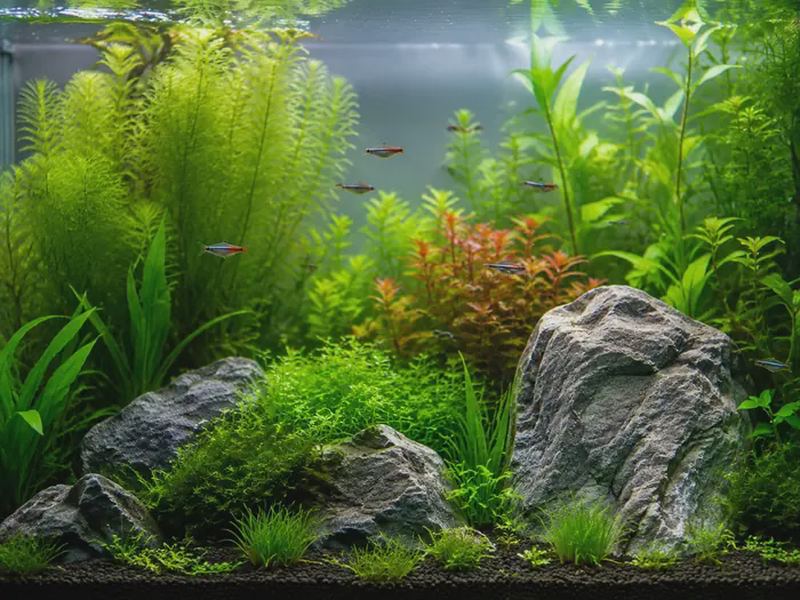
Introduction: The Living Ecosystem Paradigm
The planted aquarium represents a profound departure from the conventional fish tank. It is not merely a glass box containing water and ornamentation; it is a closed-loop, dynamic ecosystem where primary production (photosynthesis by aquatic macrophytes) drives nutrient cycling, oxygen dynamics, and biological filtration. For the beginner, the transition from a "fish bowl" mentality to an "ecosystem stewardship" mentality is the single most important conceptual leap. Research published in *Aquatic Botany* and the *Journal of Applied Phycology* has consistently demonstrated that dense plant communities outcompete nuisance algae for dissolved nitrogen and phosphorus, a phenomenon known as nutrient competition. When you establish a robust plant bed, you are not just decorating; you are constructing a biological buffer that stabilizes pH, consumes metabolic waste, and provides refuge for invertebrates and fry. This article synthesizes peer-reviewed limnology and practical horticulture to give you a science-based foundation for your first planted tank, avoiding the folklore and marketing hype that often misleads novices.
Lighting: The Photon Budget and Photosynthetic Photon Flux Density
Light is the engine of the planted aquarium, but more light is not automatically better. The relevant metric is Photosynthetic Photon Flux Density (PPFD), measured in micromoles of photons per square meter per second (µmol/m²/s). A common beginner error is purchasing a "bright" LED fixture with high lumens but low PPFD, or conversely, blasting a shallow tank with high-intensity light that causes photoinhibition and algae blooms. For a low-tech (no CO2 injection) tank with species like *Anubias barteri* or *Microsorum pteropus* (Java fern), a PPFD of 20-40 µmol/m²/s at the substrate is sufficient. For a high-tech tank with pressurized CO2 and demanding carpeting plants like *Hemianthus callitrichoides* (Dwarf Baby Tears), you need 80-150 µmol/m²/s. A 2019 study in *Frontiers in Plant Science* showed that red and blue wavelengths (660nm and 450nm) are most efficient for chlorophyll absorption, but white LEDs with a full spectrum are superior for visual rendering and deeper penetration. Crucially, photoperiod should not exceed 8 hours; longer photoperiods do not increase growth proportionally but do increase the risk of green water algae. Use a timer for consistency, and consider a "siesta" period (2 hours off mid-day) if you observe CO2 fluctuations, a technique documented in Dutch aquascaping literature to stabilize carbon dioxide levels.
Substrate: Cation Exchange Capacity and Nutrient Reservoirs
The substrate is not inert gravel; it is the root zone and a chemical exchange interface. Inert sand or gravel has a negligible Cation Exchange Capacity (CEC), meaning it cannot hold onto ammonium (NH4+) or potassium (K+), allowing these nutrients to leach into the water column. In contrast, clay-based aquasoils, such as those containing montmorillonite or zeolite, have a high CEC, buffering nutrient availability. For a beginner, a layered approach is scientifically sound: a bottom layer of nutrient-rich soil (e.g., ADA Amazonia or Fluval Stratum) capped with a 1-2 cm layer of fine gravel or sand to prevent anaerobic decay. The soil provides iron, manganese, and trace elements, while the cap prevents turbidity. Research from the University of Florida's IFAS Extension on aquatic plant nutrition highlights that root-feeding species like *Echinodorus* (Amazon swords) and *Cryptocoryne* spp. derive up to 80% of their phosphorus and potassium via root uptake, not foliar absorption. Therefore, neglecting the substrate is a primary cause of chlorosis (yellowing leaves) in these species. If you choose an inert substrate, you must use root tabs—slow-release fertilizer pellets placed directly under the root mass. Avoid disturbing the substrate after planting; uprooting plants releases ammonia and disrupts the microbial biofilm that has begun forming.
Water Chemistry: The Nitrogen Cycle, pH, and Carbonate Hardness
Water parameters are not arbitrary numbers; they dictate the bioavailability of nutrients and the toxicity of waste products. The nitrogen cycle—ammonia (NH3) to nitrite (NO2-) to nitrate (NO3-)—is mediated by chemolithotrophic bacteria (e.g., *Nitrosomonas* and *Nitrobacter*). In a planted tank, plants directly assimilate ammonium, which is actually their preferred nitrogen source, as it requires less energy to incorporate into amino acids than nitrate. A 2021 meta-analysis in *Water Research* found that planted systems remove 30-50% more total nitrogen than unplanted controls under identical loading rates. For beginners, the critical parameters are pH, General Hardness (GH), and Carbonate Hardness (KH). KH is the buffer against pH crashes; it represents bicarbonate (HCO3-) and carbonate (CO3²-) ions. If KH is below 3°dKH (degrees carbonate hardness), your pH can swing wildly, causing stress and death. Most aquatic plants prefer a pH between 6.0 and 7.5, and a GH between 4-8°dGH for micronutrient uptake. However, do not chase specific pH values; stability is more important than an arbitrary number. If your tap water is very hard (GH > 12°dGH), you will struggle with certain soft-water specialists like *Eriocaulon* spp., but you can excel with *Vallisneria* and *Sagittaria*, which tolerate hard water. Use a drop-test kit, not test strips, for accuracy; strips have a margin of error of ±1 pH unit, which is clinically significant.
Carbon Dioxide: The Limiting Factor and the Cost-Benefit Analysis
Carbon dioxide (CO2) is the primary limiting nutrient in most planted aquariums. The atmosphere contains roughly 420 ppm CO2, but in water, diffusion is slow, and the concentration is often below 10 ppm. Without supplemental CO2, plants rely on the slow diffusion of CO2 from the air-water interface, which is insufficient for rapid growth. In a low-tech tank, you must choose slow-growing plants that have adapted to low carbon availability (e.g., *Anubias*, *Bucephalandra*, *Ferns*). In a high-tech tank, pressurized CO2 injection (a regulator, solenoid valve, and diffuser) can maintain 20-30 ppm CO2, dramatically increasing photosynthetic rates. Research from the Journal of Experimental Botany has shown that at elevated CO2, plants allocate more biomass to roots and shoots, and they exhibit higher chlorophyll content. However, injecting CO2 without adequate light and nutrients is futile and can lead to a pH crash. The beginner should first master a low-tech tank for 6 months. If you want carpeting plants like *Glossostigma elatinoides*, you must invest in pressurized CO2; liquid carbon supplements (glutaraldehyde-based) are not a substitute and can be phytotoxic at high doses, as documented in a 2018 toxicity study on *Vallisneria*. The gas exchange equation is simple: CO2 + H2O → CH2O (carbohydrate) + O2. You are providing the carbon skeleton for all future plant tissue.
Fertilization: The Liebig Minimum Law and NPK Ratios
Fertilization in a planted tank follows Liebig's Law of the Minimum: plant growth is limited by the nutrient in the scarcest supply, not the total abundance. The macronutrients are Nitrogen (N), Phosphorus (P), and Potassium (K), alongside secondary nutrients like Magnesium (Mg) and Calcium (Ca). A 2020 study in *Aquaculture International* demonstrated that a balanced NPK ratio of approximately 10:1:20 (N:P:K) in the water column optimizes growth for stem plants like *Rotala rotundifolia* and *Ludwigia repens*. The most common beginner mistake is dosing only iron (Fe) while neglecting NPK, leading to stunted growth and yellowing older leaves (nitrogen deficiency). Conversely, overdosing phosphate (PO4) above 2 ppm can trigger algae, but zero phosphate is worse—it causes "old tank syndrome" where plants stop growing. For a low-tech tank, a weekly dose of a comprehensive liquid fertilizer (e.g., Seachem Flourish or Thrive) at half the recommended dose is a safe starting point. For a high-tech tank, you will likely need to dose daily a urea-based nitrogen source and potassium sulfate. Observe your plants: new growth that is pale or twisted indicates a micronutrient deficiency (often iron or boron); dark green but slow growth indicates nitrogen limitation. Do not dose "blindly"; test nitrate and phosphate weekly. The goal is to maintain nitrate at 10-20 ppm and phosphate at 0.5-1.0 ppm in a high-tech system, and near-zero in a low-tech system, where plants prefer ammonium from fish waste.
Plant Selection: Ecological Niches and Growth Forms
Not all plants are created equal for a beginner. Choose species that match your lighting and CO2 regime. Foreground carpeting plants (e.g., *Eleocharis parvula* - dwarf hairgrass) require high light and CO2; they are not beginner-friendly. Instead, use medium-height rosette plants like *Staurogyne repens* for the foreground, which tolerate moderate light. Midground plants include *Cryptocoryne wendtii* (which is notorious for "melt" when transplanted, but will regrow from the rhizome) and *Anubias nana* (which must be attached to wood or rock, never buried in substrate, as its rhizome will rot). Background stem plants like *Hygrophila polysperma* and *Limnophila sessiliflora* are fast-growing and excellent nutrient sinks, helping to outcompete algae. A 2017 study in *Ecological Engineering* found that fast-growing stem plants absorb nitrate at twice the rate of slow-growing ferns, making them invaluable for biological filtration. Also, consider floating plants like *Salvinia minima* or *Limnobium laevigatum*; they are exceptional at removing excess nutrients and provide shade, but they can block light if they cover more than 50% of the surface. Always quarantine new plants for 2 weeks in a separate container to prevent introducing snail eggs or parasitic hitchhikers like *Hydra*. When planting, use long tweezers to place stems in groups of 3-5 for a fuller appearance, and never trim roots aggressively—root hair cells are delicate and essential for uptake.
FAQ: Common Beginner Queries
Q: How long does a planted tank take to cycle? A: With plants, the cycle is different. Plants absorb ammonia directly, so you can add a few hardy fish (e.g., *Danio rerio*) after 2 weeks if ammonia and nitrite read zero. However, the bacterial biofilm will take 4-6 weeks to fully establish. Patience is key; do not add all fish at once.
Q: Why are my plant leaves turning transparent or full of holes? A: This is often potassium deficiency (holes) or magnesium deficiency (interveinal chlorosis). Check your fertilizer dosing. Also, check for *Amano shrimp* or snails, which can eat soft tissue. If leaves are melting, it is often a sudden change in water chemistry (pH or hardness) from the store to your tank.
Q: Do I need a heater? A: Most tropical plants prefer 22-28°C (72-82°F). Stable temperature is more important than a specific value. A 50-watt heater for a 20-gallon tank is usually sufficient. Avoid temperatures above 29°C, as this reduces oxygen solubility and increases plant respiration, leading to CO2 deficits.
Q: How do I control algae without chemicals? A: The first line of defense is manual removal and balancing light/CO2. Introduce fast-growing plants and a clean-up crew: *Otocinclus affinis* (otos) for diatoms, *Caridina multidentata* (Amano shrimp) for hair algae, and *Neritina* snails for green spot algae. Reduce photoperiod to 6 hours and perform 30% water changes twice weekly until the algae recedes.
Q: Can I use tap water? A: Yes, but you must dechlorinate it with a water conditioner (sodium thiosulfate). Be aware of your local water report; if it contains high copper (above 0.02 ppm), it is toxic to invertebrates. If your tap water has high nitrate (above 20 ppm), consider using reverse osmosis water mixed 50/50 with tap.
Conclusion: The Long Game of Aquatic Stewardship
Starting a planted tank is not a weekend project; it is a 3-6 month journey of observation, adjustment, and biological learning. The science is clear: successful planted tanks are those where light, CO2, and nutrients are in dynamic equilibrium, not excess. Begin with a low-tech setup, choose hardy species, and resist the urge to "tinker" daily. Test your water weekly, keep a journal of plant growth and algae appearance, and make incremental changes—never change more than one variable at a time. The rewards are substantial: a self-regulating microcosm that requires less maintenance than a barren tank, provides superior fish health, and offers a daily spectacle of photosynthetic life. As you gain experience, you can graduate to high-tech systems, but the fundamentals—patience, observation, and ecological understanding—remain immutable. Your first planted tank is a living classroom; let the plants be your teachers.
💬 Comments
No comments yet — be the first!
Sign in to comment