
Fish Memory and Cognition in the Literature
Introduction: The Goldfish Myth and the Science of Memory
The myth that fish have a three-second memory is one of the most persistent and damaging misconceptions in the aquarium hobby. It’s a convenient story, often used to justify keeping fish in barren tanks or dismissing their behavioral needs. But the reality, as revealed by decades of ethological and neurobiological research, is far more complex and fascinating. Fish do not possess a three-second memory; they possess sophisticated cognitive abilities that include long-term spatial memory, social recognition, and even the capacity for tool use and learning through observation. This article will dissect the scientific evidence behind fish memory, exploring what we know about how fish learn, remember, and navigate their environments. We will move beyond the myth to understand the practical implications for aquarium husbandry, from tank design to feeding schedules, all grounded in verifiable research.
The origin of the "three-second memory" myth is murky, but it likely stems from early 20th-century observations of goldfish that appeared to forget food locations quickly. However, those observations were flawed, often failing to account for the fish's sensory environment or the experimental setup. Modern science, using controlled laboratory conditions and advanced behavioral assays, has completely overturned this view. For instance, a landmark study by the University of Plymouth in 2003 demonstrated that goldfish (Carassius auratus) could be trained to push a lever to release food, and crucially, they remembered this association for at least three months. This single experiment shattered the three-second myth, but it was just the beginning. Subsequent research has delved into the neural mechanisms, the role of environmental enrichment, and the species-specific differences in memory that are critical for any serious aquarist to understand.
Long-Term Memory: Beyond the Three-Second Myth
The most compelling evidence against the short-memory myth comes from studies on spatial learning and long-term retention. Fish in the wild must remember the locations of food sources, safe hiding spots, and potential predators. This requires a robust spatial memory system. Research on the mangrove killifish (Kryptolebias marmoratus) has shown that these fish can learn and remember the layout of a complex maze for up to 40 days. More impressively, studies on the common goldfish have demonstrated that they can remember a specific feeding location for over five months after a single training session. This isn't just a simple conditioned response; it involves the formation of a cognitive map. The fish creates a mental representation of its environment, using visual landmarks, water currents, and even magnetic fields to orient itself.
This long-term memory is not a passive storage system. It is actively used for problem-solving. A 2016 study published in *Animal Cognition* found that freshwater stingrays (Potamotrygon motoro) could learn to open a container by sliding a lid, and they retained this skill for over a month. Even more telling, when the container was moved to a new location, the stingrays immediately applied their learned skill, demonstrating that they had abstracted the general principle of "lid-sliding" rather than just memorizing a specific motor sequence. For the aquarist, this means that fish are not simply reacting to stimuli in the present moment. They are building a working model of their tank, remembering where you place the food, where the strongest current flows, and which areas are safe. This is why moving a fish to a new tank causes stress—it’s not just a change in water chemistry, but the loss of a familiar cognitive map that takes time to rebuild.
Social Memory and Recognition: They Know Who You Are
Beyond spatial memory, fish exhibit remarkable social memory. Many species, particularly cichlids and livebearers, form complex social hierarchies. To maintain these structures, they must recognize individual conspecifics (members of the same species). Research on the African cichlid (Astatotilapia burtoni) has shown that males can recognize and remember the social status of other males they have previously interacted with, even after weeks of separation. This is not a simple recognition of a larger or smaller opponent; it’s a nuanced understanding of past interactions, dominance relationships, and even the outcome of specific fights. This memory allows them to avoid unnecessary aggression, conserving energy for foraging or spawning.
Even more relevant to the home aquarium is the evidence that fish can recognize their human caretakers. A study conducted by the University of Oxford in 2016 found that archerfish (Toxotes chatareus) could distinguish between the faces of different human volunteers with over 80% accuracy. The fish were trained to spit water at a specific face to receive a food reward, and they successfully identified that face among a set of novel ones. This demonstrates not only visual discrimination but also the capacity for cross-species facial recognition. While archerfish are exceptionally intelligent, this ability is not unique. Many aquarists report that their fish, especially cichlids and puffers, rush to the front of the glass when they approach, but hide when strangers do. This is not anthropomorphism; it’s a direct consequence of the fish’s ability to form long-term associative memories linking your appearance with feeding and safety.
The Role of Environmental Enrichment in Memory Formation
The quality of a fish's environment directly impacts its cognitive abilities. A barren tank with no plants, substrate, or decor provides no stimuli for memory formation. In contrast, a structurally complex environment promotes neurogenesis—the growth of new brain cells. A pivotal study published in *PLoS ONE* in 2013 examined the brains of rainbow trout (Oncorhynchus mykiss) raised in either barren or enriched tanks. The trout in the enriched environment (with rocks, plants, and variable water flow) had significantly larger telencephalons (the region of the fish brain associated with learning and memory) and performed better on spatial learning tasks than their barren-tank counterparts. This is a direct, measurable effect of environmental complexity on brain structure.
The practical implication is clear: a tank with plenty of live plants, driftwood, rock formations, and varied water flow is not just aesthetically pleasing; it is a cognitive workout for your fish. This enrichment allows them to establish reference points, create hiding spots, and explore new micro-habitats. Without this, fish can become cognitively stunted, showing signs of repetitive swimming patterns (stereotypy) and an inability to learn simple tasks. For the aquarist, this means that providing a naturalistic aquascape is an investment in the fish's mental well-being. It’s not enough to just keep them alive; we must provide an environment that allows their natural memory and learning abilities to function. This is particularly critical for intelligent species like oscars, arowanas, and large angelfish, which require significant cognitive stimulation to thrive in captivity.
Conditioned Responses and Training: The Science of Feeding Time
One of the most observable demonstrations of fish memory in the aquarium is the conditioned response to feeding time. This is not a simple reflex; it’s a learned association between a specific stimulus (the appearance of the aquarist, the sound of the lid opening, the presence of a food container) and a reward (food). This is a form of classical conditioning, first famously demonstrated by Ivan Pavlov with dogs, but it works equally well with fish. A study from the University of Tokyo in 2014 showed that medaka fish (Oryzias latipes) could be conditioned to associate a red light with feeding, and they would swim to a specific feeding zone when the light was turned on, even when no food was present.
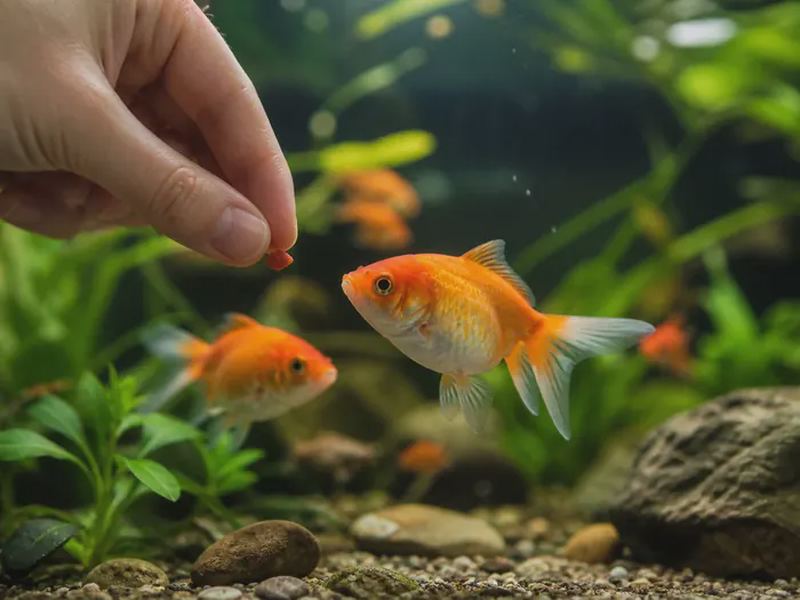
This conditioning is not limited to simple visual or auditory cues. Fish can learn complex operant behaviors. For example, many aquarists have successfully trained their fish to target feed—teaching them to touch a stick or a specific spot to receive food. This is a form of positive reinforcement training, where the fish learns that a specific action yields a specific reward. The fish’s ability to perform this task, and to remember it for days or weeks between sessions, is definitive evidence of a robust working memory. The key to successful training is consistency. If you feed your fish at the same time, in the same corner of the tank, they will quickly learn the routine. If you vary the location or time, you force them to use their memory to search, which is actually a beneficial cognitive exercise. This is why feeding from a different spot occasionally is a good enrichment strategy—it prevents the behavior from becoming too rigid and encourages active problem-solving.
Species-Specific Memory: Not All Fish Are Equal
It is crucial to understand that memory capacity and type vary significantly across species. While a goldfish can remember spatial locations for months, a neon tetra has a much shorter attention span and a different memory profile. This is a reflection of their ecological niches. A predatory fish like a pike (Esox lucius) relies on ambush hunting, requiring it to remember the locations of ambush points and the escape routes of prey. A schooling fish like a sardine relies on rapid, coordinated movement, requiring less individual spatial memory but excellent short-term reaction times.
Research on the cleaner wrasse (Labroides dimidiatus) provides a fascinating example of advanced social memory. These fish are known for their ability to remember the "client" fish they have previously cleaned, and they treat regular clients more favorably than new ones. They also remember which clients were aggressive and will avoid them in the future. This is a complex form of episodic-like memory, where the fish remembers a specific past event (a negative interaction) and uses that information to guide future behavior. In the home aquarium, this translates to observable differences. A betta fish will remember the layout of its tank and the location of its bubble nest, while a corydoras catfish will remember the exact spot where you always drop the sinking pellets. Understanding these species-specific differences is essential for tailoring your husbandry. For example, a tank with only fast-moving, short-attention-span species like danios may not benefit from complex training, but a tank with a single intelligent cichlid will thrive on it.
Practical Applications for the Aquarist: Putting Memory to Work
So, what does all this science mean for your daily aquarium routine? First, it means you should treat your fish as sentient beings with memories and expectations. Consistency is key. Feed them at the same time each day. This not only conditions them but also reduces stress, as they can anticipate the arrival of food. Second, use their memory to your advantage for health monitoring. If you train your fish to come to a specific feeding ring, you can easily observe them for signs of illness, such as a lack of appetite or unusual swimming behavior. A fish that suddenly doesn't come to the ring is showing a memory or motivation deficit, which is often the first sign of a health problem.
Third, and most importantly, redesign your tank to be a memory-friendly environment. Avoid drastic rescapes. If you must rearrange the decor, do it gradually, moving one piece at a time over several days. A sudden, complete rescape erases the fish's cognitive map, causing acute stress and disorientation. This is why fish often hide or refuse to eat after a major tank overhaul. Instead, provide a stable, enriched environment with clear zones: a feeding zone, a resting zone, a hiding zone. This allows your fish to build a detailed mental model of their world. Finally, consider adding puzzle feeders or training sessions. Simple tasks, like using a feeding stick or a floating ring, engage their memory and provide mental stimulation. This is not just a gimmick; it is a scientifically supported method for improving the welfare of your fish by allowing them to exercise their natural cognitive abilities.
FAQ: Common Questions About Fish Memory
Q: Do fish really have a 3-second memory?
A: Absolutely not. This is a myth with no scientific basis. Numerous controlled studies have demonstrated that fish can retain learned information for weeks, months, and in some cases, even years. Goldfish have been shown to remember tasks for at least three months, and archerfish can remember specific human faces. The three-second figure is a complete misrepresentation of fish cognition.
Q: Can fish recognize their owners?
A: Yes, many fish species can. Research has demonstrated that archerfish can distinguish between different human faces. In the aquarium, cichlids and other intelligent species routinely learn to associate their owner's appearance with feeding and will react differently to them compared to strangers. This is a form of associative memory, not just a reaction to movement.
Q: Does a bigger tank help with fish memory?
A: Not necessarily bigger, but more complex. A larger tank provides more space, but a smaller, heavily planted and decorated tank can offer more cognitive stimulation. The key is environmental enrichment—providing structures, plants, and hiding spots that create a rich spatial environment. A complex 50-gallon tank is better for fish cognition than a barren 200-gallon tank.
Q: How long does it take for a fish to learn a new feeding routine?
A: This varies by species and individual temperament, but most fish will learn a new feeding location or schedule within 1-2 weeks of consistent repetition. Some intelligent species like oscars or puffers can learn in just a few days. The key is to be consistent and use a clear, identifiable cue, such as tapping the glass or using a specific feeding ring.
Q: Will rescaping my tank stress my fish?
A: Yes, a major rescape can be highly stressful because it destroys the fish's cognitive map of its environment. This is a proven stressor. If you must rescape, do it gradually, moving only a few items at a time. This allows the fish to update their mental model without the shock of a completely unfamiliar environment.
Conclusion: Rethinking the Fish Brain
The scientific consensus is clear: fish are not simple, memoryless automatons. They are complex, cognitive beings with robust long-term memory, social recognition, and the ability to learn through conditioning and observation. The "three-second memory" myth is not only wrong, but it is also harmful, leading to poor husbandry practices and a profound underestimation of the animals we keep. By understanding the science of fish memory, we can become better aquarists. We can design environments that promote neurogenesis, establish routines that reduce stress, and engage in training that provides essential mental stimulation. The next time you look at your fish, remember that they are building a mental map of their world, remembering your face, and learning from every interaction. They are not just living in the present; they are carrying a complex history of experiences that shapes their behavior. Our job is to ensure that history is a rich and positive one.
💬 Comments
No comments yet — be the first!
Sign in to comment