
White Spot Disease (Ich): Symptoms, Treatment & Prevention
Introduction: The Ubiquitous Parasite
White Spot Disease, or Ichthyophthirius multifiliis (commonly called "Ich" or "ick"), is arguably the most prevalent and economically significant parasitic infection in freshwater aquaculture and the ornamental fish trade. For the home aquarist, it is often the first major health crisis encountered, a rite of passage that tests both observation skills and patience. The disease is caused by a large, ciliated protozoan that burrows into the epithelial layers of a fish’s skin, gills, and fins, resulting in the characteristic pinhead-sized white nodules that give the disease its common name. While often perceived as a simple stress response, Ich is a complex biological invasion with a life cycle that demands a thorough understanding for effective intervention. This article synthesizes peer-reviewed research and clinical observations to provide a comprehensive, evidence-based guide to recognizing, treating, and preventing this formidable pathogen.
The clinical significance of Ich extends beyond superficial blemishes. The parasite’s feeding activity causes severe epithelial hyperplasia, leading to respiratory distress, osmoregulatory dysfunction, and secondary bacterial infections. In a closed aquarium system, mortality rates can exceed 80% within a few days if left untreated, particularly in juvenile fish or sensitive species like scaleless catfish and loaches. Understanding the parasite’s obligate lifecycle—which includes a free-swimming infective stage—is the cornerstone of any successful treatment protocol. We will dissect this lifecycle, evaluate the scientific evidence behind various treatment modalities, and outline a systematic prevention framework that addresses the root causes of outbreaks, not just the symptoms.
The Life Cycle: A Four-Stage Biological Clock
To defeat Ich, one must think like the parasite. Ichthyophthirius multifiliis has a direct, monoxenous life cycle consisting of four distinct stages, each with varying susceptibility to treatment. The first stage is the trophont, the parasitic, feeding stage. The trophont matures beneath the fish’s skin, feeding on cellular debris and body fluids. Research by Matthews (2005) in the Journal of Fish Diseases demonstrated that trophonts mature in 3 to 7 days at 25°C (77°F), with temperature being the primary determinant of maturation speed. Crucially, the trophont is completely protected from chemical treatments because it is embedded within the host’s epithelium.
Once mature, the trophont exits the host, a process that causes significant tissue damage. This free-swimming stage, called the tomont, settles on the substrate, decorations, or glass. Here, it secretes a gelatinous cyst wall and begins rapid mitotic division. Within this cyst, the tomont divides into hundreds of daughter cells, known as theronts. This reproductive stage is the most dangerous in terms of environmental load. A single tomont can produce over 1,000 theronts, as quantified in a study by Ewing and Kocan (1992) in Parasitology Research. The theronts are the infective stage; they actively seek out a host using chemotaxis, detecting fish mucus and surface antigens. They have a limited window of viability—typically 24 to 48 hours—during which they must find a host or perish.
The final stage is the theront penetrating the fish’s skin, transforming into a trophont, and restarting the cycle. This entire process—from trophont exit to new trophont entry—takes approximately 3 to 6 days at 25°C. The critical implication for treatment is that most chemicals are only effective against the free-swimming theronts and, to a lesser extent, the dividing tomonts. Therefore, treatment strategies must be sustained over at least one full lifecycle to catch the theronts as they emerge from the tomont cysts, before they can burrow into a host again.
Clinical Symptoms and Differential Diagnosis
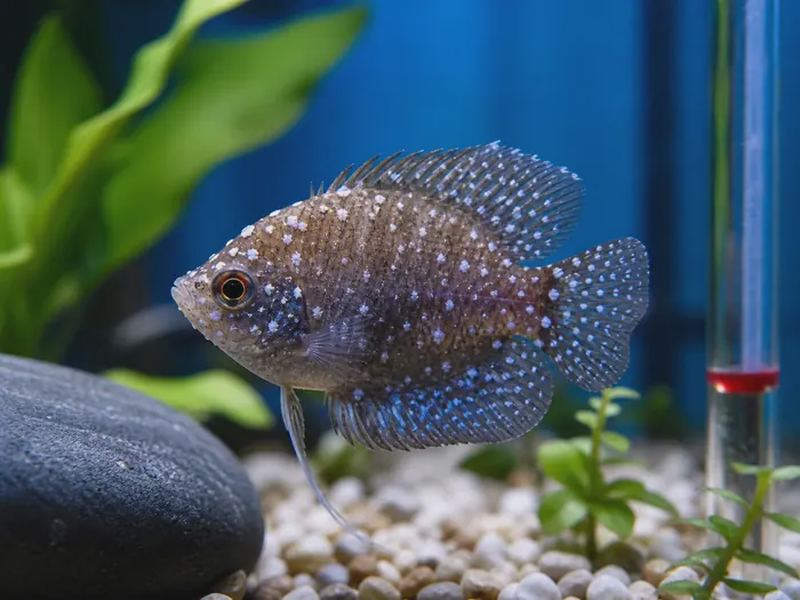
Accurate diagnosis is the first step toward effective treatment. The classic symptom is the presence of small, white, raised nodules—often described as "grains of salt" or "sand grains"—on the body, fins, and gills. These nodules are actually the trophonts themselves, encased in host epithelial cells. However, relying solely on visual identification can lead to misdiagnosis. Other conditions, such as Epistylis (a colonial ciliate), lymphocystis (a viral infection), or fungal granulomas, can present with similar white spots. A key differentiator is the distribution and appearance. Ich spots are typically uniform in size and distributed randomly, whereas Epistylis often appears as fuzzy, cotton-like tufts, and lymphocystis produces larger, cauliflower-like growths.
Behavioral changes often precede the visible spots by 24 to 48 hours. Infected fish exhibit flashing—rapid rubbing against hard surfaces—as an attempt to dislodge the irritating parasites. You may also observe clamped fins, where the fish holds its fins tightly against its body, and labored breathing, characterized by rapid gill movements or gasping at the water surface. This respiratory distress is a direct result of trophonts invading the gill epithelium, disrupting gas exchange. In severe infestations, the gill tissue becomes necrotic, leading to hypoxia even in well-oxygenated water.
For a definitive diagnosis, a skin scrape or gill biopsy examined under a microscope is the gold standard. The trophonts appear as large, round or pear-shaped ciliated cells, often with a distinct horseshoe-shaped macronucleus. However, for most hobbyists, a microscope is unavailable. In such cases, the combination of behavioral signs (flashing, lethargy) and the characteristic white spots, coupled with a recent stress event (e.g., temperature shock, new fish introduction), is sufficient for a presumptive diagnosis. It is also crucial to note that Ich can be present in the gills only, causing respiratory distress without visible skin spots, making it a silent killer in the early stages.
Treatment Strategies: Heat, Salt, and Chemical Intervention
Treatment efficacy hinges on targeting the free-swimming theront stage. Three primary approaches exist, often used in combination: elevated temperature, osmotic shock (salt), and chemotherapeutants. The temperature method is a non-chemical approach that exploits the parasite’s thermal sensitivity. The lifecycle of Ich accelerates with heat; at 30°C (86°F), the trophont matures and exits the host in 2 to 3 days, and the tomont divides and releases theronts in under 24 hours. However, the theronts are also less viable at higher temperatures. Research published in Aquaculture (Lom & Dyková, 1992) indicates that theront survival drops significantly above 30°C. By raising the tank temperature to 30-31°C (86-88°F) and maintaining it for 10-14 days, you force the parasite through its lifecycle quickly, while the free-swimming theronts die before finding a host. This method is highly effective but must be used with caution. It is unsuitable for cold-water species like goldfish (which can tolerate it, but stress is a factor) and is dangerous for tropical species that prefer cooler temperatures, such as hillstream loaches. Additionally, warmer water holds less dissolved oxygen, so aggressive aeration is mandatory.
The salt method involves adding aquarium salt (sodium chloride) to the water to create an osmotic imbalance that is lethal to theronts. The mechanism is based on osmoregulation; the parasite lacks the ability to regulate water influx in a hypertonic environment, causing it to swell and burst. A concentration of 1-3 teaspoons per gallon (0.1-0.3% salinity) is typically recommended. This is effective against theronts and also helps the fish by reducing osmotic stress on their own damaged gills and skin. However, salt is contraindicated for scaleless fish (e.g., catfish, loaches) and live plants, which are sensitive to salinity. Furthermore, salt does not penetrate tomont cysts, so it must be maintained for the full lifecycle duration.
For severe infestations, chemical treatments are often necessary. The most widely used and scientifically validated options include malachite green, formalin, and copper sulfate. Malachite green is a dye that disrupts the parasite’s cellular respiration. It is effective against theronts and tomonts but is toxic to fish with damaged gills and to invertebrates. Formalin (37% formaldehyde solution) is a potent protein denaturant, highly effective against theronts. It is often used in combination with malachite green (e.g., "Ich-X" or "Kordon Rid-Ich") to increase efficacy. Copper sulfate is another option, but it has a narrow therapeutic index—the difference between a therapeutic and toxic dose is small—and is highly toxic to invertebrates. A 2020 study in Veterinary Parasitology (Straus et al.) evaluated the efficacy of copper sulfate against Ich in channel catfish, finding that a continuous exposure of 0.5 mg/L copper ion was effective, but required careful monitoring of water hardness. The critical principle for all chemicals is to remove activated carbon from filtration and to dose precisely based on net water volume, not tank volume. Always follow label instructions and, if possible, use a quarantine tank for treatment.
Environmental Management and the Role of Stress
No treatment will be successful if the underlying environmental stressors are not addressed. Ich is often described as an "opportunistic" pathogen because healthy fish with robust immune systems can often resist infection. The parasite is present in many aquariums at sub-clinical levels, but it only proliferates when the host’s defenses are compromised. The primary stressors include: temperature shock (rapid changes >2°C per hour), poor water quality (high ammonia, nitrite, or nitrate), overcrowding, and inadequate nutrition. A study by Buchmann and Bresciani (2009) in Fish & Shellfish Immunology demonstrated that cortisol (the primary stress hormone) suppresses the fish’s innate immune response, specifically reducing the number of mucus-producing goblet cells, which are the first line of defense against theront penetration.
During an outbreak, water changes are essential but must be performed carefully. Large, sudden water changes can further stress fish. Instead, perform daily water changes of 25-30% using dechlorinated water matched to the tank’s temperature. This dilutes the concentration of theronts in the water column and removes organic waste that fuels bacterial growth. Vacuum the substrate thoroughly to remove tomonts that have settled on the gravel. However, do not remove the filter media or clean it aggressively, as this can disrupt the beneficial bacterial colony. The goal is to reduce the environmental load of the parasite while maintaining water quality stability.
Nutritional support is an often-overlooked aspect of treatment. Fish fighting an infection have increased metabolic demands. Offer high-quality, easily digestible foods, and consider supplementing with garlic extract. While garlic’s efficacy is debated in the scientific literature, some research (e.g., a 2013 study in Aquaculture Research) suggests that allicin, a compound in garlic, has antiparasitic properties and can stimulate appetite. More importantly, ensure the fish are eating, as anorexia is a common symptom. If they refuse food, do not force it; the primary focus should be on the antiparasitic treatment.
Prevention: Quarantine and Biosecurity Protocols
The adage "an ounce of prevention is worth a pound of cure" is nowhere more applicable than in aquarium fish health. The most effective way to prevent Ich is to prevent its introduction. The primary vector is the introduction of new fish, plants, or invertebrates. A strict quarantine protocol is non-negotiable. All new fish should be quarantined in a separate tank for a minimum of 4 weeks, ideally 6 weeks, at the fish’s preferred temperature. During this period, observe them daily for signs of flashing, spots, or behavioral changes. This timeframe covers at least two full lifecycles of Ich at typical tropical temperatures, ensuring that any latent infection manifests and is treated before the fish enters the main display tank.
Plants and invertebrates are also potential vectors. Plants can carry tomonts or theronts in the water they are shipped in. A dip in a dilute alum solution (1-2 teaspoons per gallon of water) for 15-20 minutes can kill parasites on plants, but it can also damage delicate species. A safer approach is to quarantine plants in a separate container for 2 weeks, changing the water daily. Invertebrates, such as snails and shrimp, cannot tolerate most chemical treatments, so they must be quarantined separately and observed closely. Never move water, nets, or equipment between tanks without sterilization. Use a separate net for the quarantine tank, or disinfect nets in a solution of 1 part bleach to 9 parts water, followed by thorough rinsing and dechlorination.
Maintaining a stress-free environment is the second pillar of prevention. This involves providing adequate space (research the adult size of your fish), maintaining stable water parameters (test weekly for ammonia, nitrite, nitrate, and pH), and providing a varied diet. Avoid sudden temperature fluctuations by using a reliable heater and checking it regularly. Consistent, routine maintenance—weekly water changes of 20-30%—is the single most effective way to keep water quality high and fish immune systems strong. By creating an environment where fish are not chronically stressed, you effectively make them resistant to theront invasion.
FAQ: Common Questions on Ich Management
Q: Can I treat Ich by just turning up the heat?
A: Yes, for tropical fish that can tolerate 30°C (86°F), the heat method is effective. However, it must be combined with aggressive aeration and daily substrate vacuuming. It is not suitable for cold-water or sensitive species. Monitor fish closely for signs of heat stress (e.g., rapid breathing, lethargy).
Q: How long does it take to cure Ich?
A: The treatment duration depends on the method and temperature. At 25°C (77°F), the lifecycle takes about 6 days. At 30°C (86°F), it takes about 3 days. You must continue treatment for at least 3-4 days after the last visible spot disappears to catch any remaining theronts. Total treatment time is typically 10-14 days.
Q: Will Ich die without a fish host?
A: The theronts can only survive 24-48 hours without a host. The tomonts, however, can remain dormant in the substrate for several days to weeks, depending on temperature. This is why a "fallow" period (leaving the tank fishless) of at least 2 weeks at elevated temperature, or 4-6 weeks at room temperature, is recommended to eradicate the parasite from an empty tank.
Q: Is Ich contagious to humans or other pets?
A: No. Ichthyophthirius multifiliis is highly host-specific to freshwater fish. It cannot survive on or infect mammals, birds, or reptiles. Handling infected fish is safe, though you should always wash your hands after any aquarium work.
Q: Can I use a UV sterilizer to treat Ich?
A: UV sterilizers can kill free-swimming theronts as they pass through the unit, but they do not affect trophonts or tomonts. They are a useful adjunct to treatment, but not a standalone cure. They are more effective as a preventive measure to reduce the environmental load of pathogens.
Conclusion: A Holistic Approach to Parasite Control
White Spot Disease is a formidable adversary, but it is not invincible. The key to success lies in a scientific understanding of its lifecycle and a disciplined approach to environmental management. The evidence is clear: treatments are most effective when targeting the free-swimming theront stage, and this requires sustained application over a full lifecycle. However, chemical or thermal intervention is only one part of the equation. The underlying cause—stress—must be addressed to prevent recurrence. A fish in optimal health, with a robust mucous layer and a functional immune system, is remarkably resistant to Ich.
The most profound lesson from studying Ichthyophthirius multifiliis is that disease is rarely a random event; it is a symptom of an ecological imbalance within the aquarium. By prioritizing biosecurity (quarantine), water quality, and nutritional health, you create a system that is resilient to pathogenic invasion. When an outbreak does occur, view it not as a failure, but as a diagnostic signal. It tells you that something in the environment is suboptimal. Treat the fish, but also correct the root cause. In doing so, you transition from a reactive hobbyist to a proactive aquatic steward, capable of maintaining a thriving, healthy ecosystem. The fight against Ich is won not in a single dose of medication, but in the daily, consistent practices that keep the water pristine and the fish unstressed.
💬 Comments
No comments yet — be the first!
Sign in to comment