
Neon Tetra Care: Tank Size, Water & Schooling Guide
Introduction: The Enduring Appeal of Paracheirodon in the Modern Aquarium
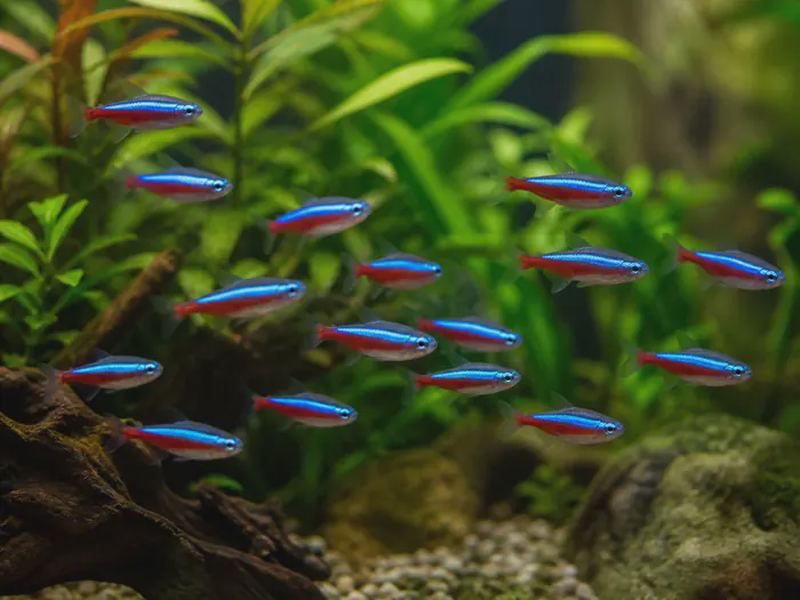
The neon tetra (Paracheirodon innesi) remains one of the most recognizable and frequently imported freshwater ornamental fish in the global aquarium trade, with annual export figures from its native Amazon basin consistently exceeding 20 million individuals. This popularity is not without justification; the species offers a striking iridescent blue-red lateral stripe that results from structural color production via coherent scattering of light by guanine crystals in their chromatophores, a phenomenon studied extensively by researchers like N. I. Zakhidov in the context of photonic crystals in biological systems. However, the very ubiquity of neon tetras in pet store display tanks, often maintained in bare, artificially lit systems, masks a biological reality that frequently leads to premature mortality in home aquaria. A robust scientific understanding of their ecological niche, social structure, and physiological tolerances is essential for achieving the 5- to 8-year lifespan that is biologically possible for this species, rather than the all-too-common 6-month decline observed in suboptimal conditions.
Native to the blackwater tributaries of the Rio Negro and the Solimões River in Brazil, Colombia, and Peru, neon tetras inhabit environments characterized by extreme water softness, negligible conductivity, and a pH that often dips below 5.0. The water in these habitats is stained a deep tea-color by humic substances and tannins leached from decaying leaf litter, which not only reduces visibility for predators but also serves as a natural antimicrobial and antifungal agent. This ecological specificity means that the standard "neutral pH 7.0, moderate hardness" tap water used in many municipal systems is, from the fish’s perspective, a chemically stressful environment. Consequently, successful long-term care is less about replicating a generic tropical fish setup and more about recreating the specific physicochemical parameters of a blackwater ecosystem. This article synthesizes current ichthyological research and practical aquarium science to provide evidence-based guidance on tank sizing, water chemistry, social grouping, and disease prevention for this beloved characin.
Optimal Tank Dimensions: Beyond the "One Inch Per Gallon" Fallacy
The oft-repeated adage of "one inch of fish per gallon of water" is a grossly inadequate metric for neon tetras, as it fails to account for the fish’s need for horizontal swimming space, shoaling behavior, and the biological load dynamics of a densely planted community. While a 10-gallon (38-liter) tank can technically house a small group of six neon tetras, research on characin swimming performance, such as studies on critical swimming speed (Ucrit) in related species like the black skirt tetra (Gymnocorymbus ternetzi), indicates that these fish are continuous cruisers that require unobstructed linear swimming lanes. A standard 20-gallon high (61 x 41 x 30 cm) provides poor horizontal dimension; a 20-gallon long (76 x 31 x 30 cm) or a 29-gallon (76 x 31 x 38 cm) is far superior. The recommended minimum for a biologically stable shoal of 10-12 individuals is a 20-gallon long footprint, with a 40-gallon breeder (90 x 41 x 40 cm) being the optimal "forever home" size.
Why is tank size so critical beyond mere volume? The primary reason is the nitrogen cycle. A larger water volume provides a greater buffer against ammonia and nitrite spikes resulting from the metabolic waste of a shoaling group. In a small tank, the bacterial colony responsible for nitrification (Nitrosomonas and Nitrobacter) is easily overwhelmed by even minor overfeeding. Furthermore, neon tetras exhibit a distinct stress response to confinement, characterized by elevated cortisol levels that suppress immune function. A study published in Journal of Fish Biology demonstrated that overcrowded characins show increased susceptibility to Ichthyophthirius multifiliis (ich) due to this cortisol-mediated immunosuppression. Therefore, providing a tank that allows for a clear "flight zone"—an open area of at least 45 cm in length where the fish can dart without turning—is not a luxury but a physiological requirement. The tank’s height is less critical, as neon tetras are mid-water dwellers, but a depth of at least 30 cm allows for the creation of a shaded canopy with floating plants, which mimics their natural cover.
Water Chemistry: Recreating the Blackwater Paradox
Neon tetras are classified as acidophilic, softwater specialists. Their native waters in the Rio Negro basin typically exhibit a pH range of 4.0 to 6.0, with general hardness (GH) of less than 2 dGH and carbonate hardness (KH) of less than 1 dKH. The conductivity in these habitats is astonishingly low, often measuring between 10 and 30 µS/cm. For the home aquarist, this presents a paradox: while the fish are hardy enough to survive in neutral pH, their long-term health and reproductive viability depend on soft, acidic conditions. The primary reason for this is osmoregulatory efficiency. In hard, alkaline water, neon tetras must constantly expend energy actively excreting excess ions (calcium and magnesium) through their gills and kidneys. This chronic osmotic stress accelerates metabolic aging and makes the fish more vulnerable to bacterial infections, particularly Columnaris (cotton wool disease) caused by Flavobacterium columnare, which thrives in higher pH environments.
To replicate their natural habitat, the aquarist should aim for a pH of 5.5 to 6.5, with a GH of 3-6 dGH and KH of 1-3 dKH. Achieving this requires a deliberate approach. Using reverse osmosis (RO) or deionized (DI) water mixed with tap water is the most reliable method. A 50:50 blend of RO and soft tap water will typically yield a pH around 6.5 and GH of 4-5 dGH. However, the crucial element is the addition of natural tannins. Introducing Indian almond leaves (Terminalia capparidensis), alder cones, or a commercial blackwater extract releases humic acids and polyphenols that not only lower pH but also chelate heavy metals and inhibit the growth of pathogenic fungi and bacteria. Research by T. Meinelt and colleagues on the use of humic substances in aquaculture has shown that these compounds significantly increase the resistance of fish to environmental stress and reduce the toxicity of ammonia. The water should appear a light amber color, not a dark brown tea; clarity is maintained through adequate filtration, but the chemical signature of the tannins must be present.
Thermal Requirements and the "Neon Tetra Disease" Nexus
Temperature is a critical, often misunderstood, parameter for neon tetra health. The optimal range is 72°F to 78°F (22°C to 26°C), with 75°F (24°C) being the ideal metabolic setpoint. While many community tanks are run at 80°F (27°C) to suit discus or angelfish, this is detrimental to neon tetras in two ways. Firstly, elevated temperature increases their metabolic rate, leading to a shorter lifespan and faster aging. Secondly, and more critically, higher temperatures accelerate the life cycle of Pleistophora hyphessobryconis, the microsporidian parasite responsible for "Neon Tetra Disease" (NTD). This parasite is the bane of neon tetra keeping, as it is incurable and highly contagious within a shoal. The parasite’s spores are released when an infected fish dies and are then ingested by healthy fish through scavenging or cannibalism. Research indicates that the proliferation of P. hyphessobryconis within muscle tissue is temperature-dependent, with faster replication at 80°F compared to 74°F.
Therefore, maintaining a stable temperature at the lower end of the range—around 73-75°F—serves a dual purpose: it conserves the fish’s energy and slows the progression of any potential parasitic infection. It is also crucial to avoid temperature fluctuations. Sudden drops of more than 2-3°F can trigger "shimmies" (a neurological disorder often linked to osmotic shock) and make the fish susceptible to ich. A high-quality, adjustable heater with a thermostat and a reliable thermometer are non-negotiable equipment. Furthermore, the interaction between temperature and dissolved oxygen (DO) is significant. Warmer water holds less oxygen, and neon tetras, being high-oxygen-demand fish from fast-flowing blackwater streams, require DO levels above 6 mg/L. A gentle surface agitation or a low-flow sponge filter can ensure adequate gas exchange without creating strong currents that stress the fish.
Shoaling Dynamics: The Science of the "School"
Neon tetras are a shoaling species, not a schooling species in the strictest sense. While they form loose aggregations for social interaction and predator avoidance, they do not exhibit the synchronized, polarized swimming patterns seen in true schooling fish like sardines. However, the social group is essential for their psychological well-being. Research on shoaling behavior in characins, particularly work by J. Krause and colleagues, has demonstrated that fish in larger groups exhibit reduced "startle response" latency and lower baseline cortisol levels compared to solitary or small-group individuals. A group of fewer than six neon tetras will often show signs of chronic stress, including faded coloration, fin clamping, and skittish hiding behavior. The minimum recommended shoal size is 10 individuals, but 15-20 is optimal for observing natural behavior, which includes hierarchical sorting and synchronized foraging.
Interestingly, the neon tetra’s bright blue stripe serves a dual function: it is a species-recognition signal for shoal cohesion and a "predator confusion" mechanism. When a shoal moves erratically, the flashing blue and red stripes create a "flicker fusion" effect that makes it difficult for a predator to lock onto a single target. In the aquarium, this means that a larger shoal will appear more vibrant and active, as the fish are constantly responding to each other’s movements. It is also worth noting that neon tetras will often shoal with other small, peaceful characins, such as ember tetras (Hyphessobrycon amandae) or cardinal tetras (Paracheirodon axelrodi), but they should not be kept with larger, aggressive species. Tankmates like angelfish (Pterophyllum scalare) or gouramis will view neon tetras as prey, as their natural size makes them an ideal mouthful. The aquarium layout should support shoaling behavior: a mid-water open area flanked by dense vegetation or driftwood, allowing the fish to feel secure while maintaining visual contact with the group.
Dietary Requirements and Nutritional Immunity
In the wild, neon tetras are micro-predators and omnivores, consuming a diet of small aquatic invertebrates, insect larvae, and zooplankton, including copepods and daphnia. Their digestive tracts are short and adapted for frequent, small meals of protein-rich foods. In the aquarium, a common mistake is feeding a diet of only flake food, which is often high in plant matter and low in animal protein. This leads to poor nutritional condition, reduced coloration, and increased susceptibility to disease. A scientific approach to feeding neon tetras involves a varied diet that mimics their natural prey. A high-quality micro-pellet or flake food should serve as the staple, but it must be supplemented with live or frozen foods at least three times per week.
Live foods such as baby brine shrimp (Artemia nauplii), microworms (Panagrellus redivivus), and vinegar eels (Turbatrix aceti) are particularly beneficial, as they provide essential fatty acids (EFAs) like EPA and DHA, which are critical for cell membrane integrity and immune function. Frozen foods like cyclops and daphnia are excellent alternatives. Research on nutritional immunology in fish has shown that dietary deficiencies in omega-3 fatty acids can impair the fish’s ability to mount an inflammatory response against pathogens. Furthermore, overfeeding is a significant cause of water quality deterioration. Neon tetras have small stomachs and should be fed small amounts two to three times daily, with all food consumed within 2-3 minutes. Fasting one day per week allows their digestive system to clear and prevents the buildup of organic waste in the substrate. A varied, protein-rich diet not only enhances the intensity of their iridescent colors—which are influenced by the deposition of pteridine pigments from dietary carotenoids—but also strengthens their resilience against common diseases.
Common Pathologies and Evidence-Based Prevention
Beyond NTD, neon tetras are susceptible to several other diseases, most of which are preventable through proper water chemistry and quarantine protocols. The most common is ich (Ichthyophthirius multifiliis), a ciliated protozoan that manifests as white salt-like granules on the skin and gills. The life cycle of ich is temperature-dependent; at 74°F, the tomont stage encysts on the substrate for 3-5 days, making treatment with heat (raising to 86°F) and salt ineffective for softwater species. A safer, evidence-based approach is the use of copper-based medications, but these are toxic to invertebrates and some plants. Prevention through quarantine of all new fish for 4-6 weeks in a separate tank is the gold standard.
Columnaris (fin rot and mouth fungus) is another major threat, particularly when fish are kept in water with a pH above 7.0. This bacterial infection is often secondary to stress from poor water quality or temperature shock. Treatment requires antibiotics like kanamycin or nitrofurazone, but these are ineffective in hard, alkaline water. The best prevention is maintaining a pH below 6.5, as F. columnare has reduced virulence in acidic conditions. Finally, "neon tetra disease" itself (Pleistophorosis) presents as a fading of the blue stripe, restlessness, and a curved spine. There is no cure; the only responsible action is to remove and euthanize affected fish immediately, as they will release spores upon death. Quarantining new additions for several weeks is the only effective prevention. By maintaining stable, acidic, soft water and a stress-free environment, the aquarist can effectively eliminate the vast majority of disease outbreaks.
FAQ: Addressing Critical Care Questions
- Can I keep neon tetras in a 5-gallon nano tank?
No. A 5-gallon tank is too small to maintain stable water chemistry and provide adequate swimming space for a shoal. Even a group of 6 in a 5-gallon will suffer from stunted growth and high mortality due to ammonia fluctuations. The absolute minimum is a 10-gallon for a temporary quarantine, but a 20-gallon long is the recommended permanent home. - Why are my neon tetras losing their red color?
Color loss is a primary indicator of chronic stress, usually due to poor water quality (high nitrates), low temperature, or inadequate diet. Test your water for nitrates (should be below 20 ppm), ensure the temperature is stable at 75°F, and increase the frequency of live/frozen food feedings. - Can I keep neon tetras with cherry shrimp?
Yes, adult cherry shrimp are generally safe, as neon tetras are too small to prey on them. However, the shrimp will consume the same micro-organisms, and the tetras may eat shrimplets. The soft, acidic water required by tetras is also suitable for neocaridina shrimp, though the shrimp prefer slightly harder water for molting. - How long do neon tetras actually live?
In optimal conditions—soft acidic water, cool stable temperatures, and a protein-rich diet—neon tetras can live for 5 to 8 years. In suboptimal conditions, they often die within 6-12 months due to osmotic stress and disease. The 8-year lifespan is achievable but requires rigorous attention to water parameters. - Is it safe to use tap water if I add a water conditioner?
Only if your tap water is naturally soft and acidic. If your tap water has a GH above 10 dGH or a pH above 7.5, a conditioner alone will not suffice. You must dilute with RO/DI water to achieve the target parameters. Conditioners only neutralize chlorine and heavy metals; they do not alter hardness or alkalinity.
Conclusion: The Art of Replication, Not Domestication
The successful husbandry of neon tetras is a testament to the principle that we do not domesticate wild fish; we replicate their wild ecosystems within our glass enclosures. The evidence is unequivocal: neon tetras are not "hardy" fish in the sense of tolerating a wide range of conditions; rather, they are "resilient" within a narrow, specific range of soft, acidic, tannin-rich water. The distinction is crucial. By providing a tank of adequate size, with a stable temperature in the low 70s°F, water softness measured in single-digit dGH, and a large, active shoal, the aquarist unlocks the fish’s full biological potential. The reward is not merely survival, but the observation of a complex social structure, the iridescent flash of structural coloration, and the serene activity of a species living without chronic stress. The science of neon tetra care is, at its core, the science of humility—accepting that our role is to provide a habitat, not to force a fish to adapt to ours. When this is achieved, the neon tetra is not just a colorful addition to a tank; it is a thriving ambassador of the Amazon’s blackwater realms, a living testament to the power of precise environmental fidelity. For the aquarist willing to embrace the discipline of water chemistry, the neon tetra will reward you with nearly a decade of vibrant life.
💬 Comments
No comments yet — be the first!
Sign in to comment