
Can Fish See Color? Fish Vision Explained
Introduction: A World Painted in Light
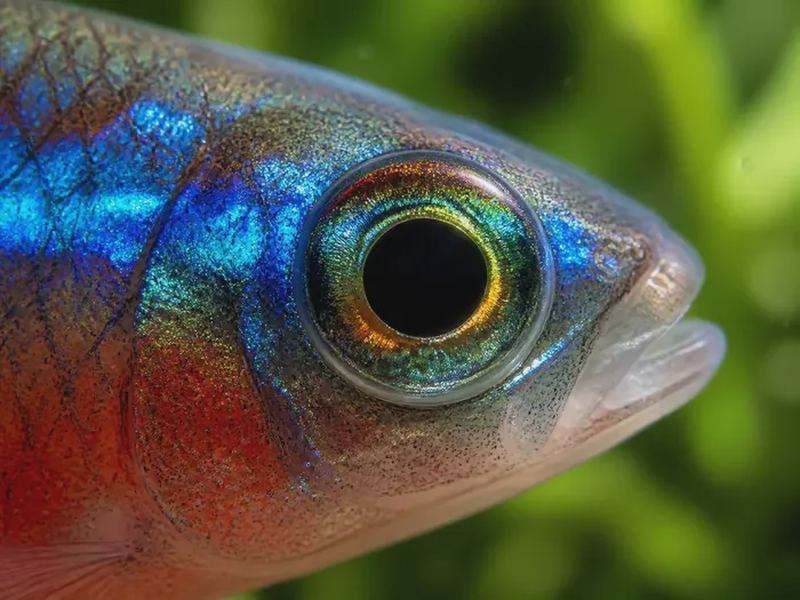
When you gaze into an aquarium, you see a shimmering world of blues, reds, and greens. But does your neon tetra see the same rainbow? The question can fish see color has fascinated aquarists and scientists alike. The short answer is yes, but the full story is far more complex and beautiful. Fish vision is a marvel of evolutionary adaptation, shaped by the unique physics of underwater light. In this article, we will explore the science behind fish color vision, from the anatomy of their eyes to the surprising ways they perceive ultraviolet light.
Understanding how fish see is not just a curiosity; it influences how we set up our tanks, choose tank mates, and even feed them. For example, many fish rely on color cues to identify food, mates, or predators. This knowledge can help you create a more natural and less stressful environment for your aquatic pets.
Let's start by looking at the basic biology of a fish eye and how it compares to our own.
The Vertebrate Eye: A Shared Blueprint
Fish eyes share a common vertebrate plan with human eyes. Light enters through the cornea, passes through the pupil (controlled by the iris), and is focused by the lens onto the retina. The retina contains two main types of photoreceptor cells: rods, which handle low-light vision, and cones, which are responsible for color vision. The number and types of cones determine an animal's color perception.
However, fish eyes have key differences. The lens of a fish is spherical, not flattened like ours, because water has a different refractive index than air. This spherical lens provides a wider field of view. Also, fish lack a true eyelid and instead have a transparent protective layer called the cornea. Most importantly, many fish have a tapetum lucidum, a reflective layer behind the retina that bounces light back through the photoreceptors, enhancing vision in dim water. This is why some fish eyes seem to glow in the dark.
The diversity of fish vision is staggering. Some species have evolved to see in near-total darkness, while others have color vision that rivals or exceeds our own. But to understand color vision specifically, we need to look at the cones.
The Science of Cone Cells: How Fish See Color
Color vision depends on cone cells in the retina. Each cone contains a photopigment that is sensitive to a specific range of wavelengths. Humans are trichromatic: we have three types of cones sensitive to red, green, and blue light. This allows us to see millions of colors by mixing these three signals.
Fish, however, can be trichromatic, tetrachromatic, or even pentachromatic. Many freshwater fish, including tetras and cichlids, have four types of cones. The fourth cone is often sensitive to ultraviolet (UV) light. This means they can see colors that are invisible to us, including UV patterns on other fish or in their environment.
Research by Dr. Ronald H. H. Kröger and others has shown that the spectral sensitivity of fish cones is tuned to the light conditions of their habitat. For example, fish living in clear, shallow water have cones sensitive to red, green, and blue, similar to humans. Deep-sea fish, where red light is quickly absorbed, often lack red-sensitive cones entirely and may only see blue-green light.
One famous study by Dr. Justin Marshall on the mantis shrimp (not a fish, but a crustacean) revealed 12 to 16 types of photoreceptors, but fish are not far behind in some cases. For instance, the goldfish (Carassius auratus) has four cone types and can see into the UV range.
Below is a comparison of human and typical fish cone types:
| Feature | Humans | Typical Freshwater Fish (e.g., Tetra) |
|---|---|---|
| Number of cone types | 3 | 4 (sometimes 3 or 5) |
| UV sensitivity | No (lens blocks UV) | Often yes |
| Color space | RGB (red, green, blue) | RGBC (red, green, blue, UV) or more |
| Peak sensitivity | ~560 nm (red), ~530 nm (green), ~420 nm (blue) | Varies; often includes ~380 nm (UV) |
| Example species | Homo sapiens | Paracheirodon innesi (neon tetra) |
This extra cone type gives fish a richer visual world. For example, the bright blue stripe of a neon tetra is not just for show; it reflects UV light and may be used for communication that is invisible to predators.
UV Vision and the Hidden World
Many fish, especially those in shallow, clear waters, can see ultraviolet light. This is a superpower that humans lack because our lenses filter out UV. In fish, the lens and cornea are transparent to UV, allowing it to reach the retina.
UV vision serves several functions. First, it helps with foraging. Many plankton and small invertebrates have UV-absorbing or reflecting patterns. Fish can spot these prey items more easily. Second, it plays a role in social signaling. The scales of some fish have UV-reflecting pigments that are invisible to us but highly visible to other fish. This is common in cichlids and tetras.
Dr. Ulrike Siebeck's research on damselfish has shown that they use UV patterns to recognize individuals and signal aggression. Similarly, the neon tetra (Paracheirodon innesi) has a UV-reflective stripe that may help them school together in dim light.
From experience, I have noticed that my neon tetras become more active and display brighter colors when I use a full-spectrum LED light that includes UV wavelengths. While this is anecdotal, it aligns with the science: they are responding to a visual world we cannot see.
Rods and Night Vision: Seeing in the Dark
While cones handle color, rods are for low-light vision. Fish that live in murky waters or are nocturnal have a high density of rods. Some deep-sea fish have a retina composed almost entirely of rods, allowing them to detect the faintest bioluminescent flashes.
But here is where it gets interesting: some fish can switch between rod and cone dominance depending on light levels. This is called retinal movement. In bright light, the cones move closer to the surface of the retina, and the rods withdraw into a deeper layer. At night, the opposite happens. This adaptation is seen in many bony fish, including goldfish and tetras.
However, there is a trade-off. Rods are extremely sensitive but do not detect color. So, a fish using its rods sees a monochrome world. This is why your fish may seem less colorful in the dark; they are effectively colorblind.
Another fascinating adaptation is the lateral line system, which is not vision but a sense that complements it. The lateral line detects water movements and pressure changes, helping fish navigate in darkness or murky water. In a way, it is like a sense of touch at a distance. For more on sensory systems, see our guide on betta fish care, which touches on their unique labyrinth organ and sensory needs.
Color Vision in Different Habitats: From Coral Reefs to Deep Seas
Fish vision is exquisitely tuned to their environment. Let's compare three habitats:
| Habitat | Light conditions | Typical cone types | Example species |
|---|---|---|---|
| Shallow, clear freshwater | Broad spectrum, including UV | 4 (including UV) | Neon tetra, cichlid |
| Murky or stained water (e.g., Amazon) | Red light is absorbed quickly; blue/green dominates | 2-3 (blue, green, sometimes red) | Angelfish, discus |
| Deep sea (below 200 m) | Only blue bioluminescence | 1 (blue-sensitive) or rods only | Lanternfish, dragonfish |
In the Amazon basin, the water is often tea-colored due to tannins. This filters out red light, so many fish there have lost their red-sensitive cones. Instead, they have enhanced sensitivity to blue and green. This is why many Amazon fish, like the cardinal tetra, have bright blue stripes that stand out in their environment.
In contrast, coral reef fish live in clear, sunlit water. They often have excellent color vision with multiple cone types, which helps them identify mates, rivals, and food among the colorful corals. Dr. N. Justin Marshall has extensively studied reef fish vision and found that many species have UV-sensitive cones.
Deep-sea fish are a different story. With no sunlight, color vision is largely useless. Instead, they rely on rods and bioluminescence. Some deep-sea fish produce their own red or blue light and have eyes that are sensitive only to those wavelengths, creating a private communication channel. For example, the dragonfish (Malacosteus niger) produces red bioluminescence and has a red-sensitive photopigment, allowing it to see prey that cannot see red light.
From experience, I have kept both Amazon tetras and reef fish. The tetras in my blackwater tank were always more subdued in color, but when I added a blue light, they shimmered. The reef fish, under full spectrum, were a riot of color. This is not just lighting; it is their visual system at work.
How Fish Use Color Vision: Foraging, Mating, and Survival
Color vision is not just for beauty; it is a survival tool. Here are three key uses:
- Foraging: Many fish use color to find food. For example, cichlids can distinguish between different types of algae based on their color. Predatory fish may use color to spot prey against a background. The three-spined stickleback is a classic example: it prefers to eat red-colored prey, which makes them easier to find.
- Mating and social signaling: Color is a major signal in fish. Male guppies have bright orange spots that females prefer. The intensity of the color indicates health and genetic quality. In cichlids, color patterns are used to recognize individuals and establish dominance. UV patterns, as mentioned, are also crucial.
- Camouflage and predator avoidance: Some fish use color to blend in, while others use bright colors to warn predators of toxicity. The clownfish uses its orange and white stripes to disrupt its outline, making it harder to see against the anemone.
For a deeper look at how color vision affects tank dynamics, check out our guide on neon tetra care, which discusses their schooling behavior and color-based communication.
Comparative Table: Fish Vision vs. Human Vision
| Aspect | Humans | Fish (typical freshwater species) |
|---|---|---|
| Color vision type | Trichromatic | Often tetrachromatic |
| UV sensitivity | No | Yes, in many species |
| Visual acuity | High (20/20) | Lower, but varies by species |
| Field of view | ~180 degrees | ~360 degrees (due to spherical lens and eye position) |
| Night vision | Poor (few rods) | Excellent (many rods, tapetum lucidum) |
| Color constancy | Yes (brain adjusts) | Limited; more dependent on ambient light |
This table highlights that while fish may have superior color range and night vision, their visual acuity is often lower. They see the world in less detail but with more color channels. This trade-off is a result of evolutionary pressure in their specific environments.
Fish Vision and Aquarium Lighting: Practical Implications
Understanding fish color vision can improve your aquarium setup. Since many fish see UV and have four cone types, using full-spectrum lighting that includes UV can bring out natural colors and behaviors. However, be careful: too much UV can promote algae growth or stress some fish. A balanced approach is best.
Also, consider the background color of your tank. Many fish feel safer against a dark background because it mimics their natural habitat. But if you want to see their colors pop, a light substrate may work better. Just remember that what you see is not exactly what they see.
For more on water quality and how it affects fish health, see our guide on the nitrogen cycle. Clean water is essential for clear vision and overall well-being.
If you notice your fish losing color or behaving oddly, it could be a sign of stress or disease. Check our article on white spot ich to rule out common parasites.
Conclusion: The Colorful Truth
So, can fish see color? Absolutely. Most fish have color vision that is as good as, and often better than, our own. They see a world rich in UV, with more color channels, and they use this vision for everything from finding food to choosing a mate. The next time you look at your aquarium, remember that the fish are seeing a different, more vibrant world than you are.
This knowledge should inspire you to create a habitat that respects their visual needs. Whether you are keeping fancy goldfish or neon tetras, understanding their vision helps you be a better aquarist. For a comprehensive look at different breeds, check out our fancy goldfish breeds guide.
💬 Comments
No comments yet — be the first!
Sign in to comment