
Nitrogen cycle explained: fishless cycling step by step
Introduction: The Biological Foundation of Every Aquarium
Every aquarist, from the seasoned breeder of discus to the novice keeper of a single betta, eventually confronts the same invisible reality: the nitrogen cycle. This biological process, driven by a consortium of nitrifying bacteria and archaea, is the engine of water quality in closed aquatic systems. Without it, fish waste and uneaten food decompose into ammonia—a potent toxin that damages gill tissue, disrupts osmoregulation, and proves lethal at concentrations as low as 0.02 mg/L for sensitive species. The scientific understanding of this process has evolved dramatically since the early 20th century, when aquarium pioneers like Robert Warrington first identified the bacterial conversion of ammonia to nitrate. Modern research, including metagenomic analyses of aquarium biofilters, has revealed a far more complex microbial community than previously imagined, with species like Nitrosomonas europaea and Nitrobacter winogradskyi sharing space with novel ammonia-oxidizing archaea (AOA) such as Nitrosopumilus maritimus. This article synthesizes peer-reviewed research on nitrification kinetics, practical fishless cycling protocols, and common pitfalls, providing a scientifically-grounded roadmap for establishing a mature biological filter before introducing livestock.
The concept of "fishless cycling" emerged from the recognition that exposing fish to ammonia during tank startup is both ethically problematic and physiologically stressful. Research by the U.S. Environmental Protection Agency on ammonia toxicity in freshwater fish demonstrates that chronic exposure to sublethal ammonia concentrations suppresses the immune system, reduces growth rates, and increases cortisol levels—the primary stress hormone. A 2019 study published in Aquaculture Reports found that juvenile Nile tilapia (Oreochromis niloticus) exposed to 0.5 mg/L total ammonia nitrogen for 30 days showed significantly reduced feed conversion ratios and increased incidence of fin erosion. By cycling without fish, we allow the microbial community to establish under controlled conditions, reaching a state where ammonia and nitrite are processed to nitrate within 24 hours. This article provides a step-by-step protocol, grounded in the kinetics of nitrification, that will guide you through this critical phase with precision and confidence.
The Chemistry of Nitrification: From Ammonia to Nitrate
The nitrogen cycle in an aquarium is a two-step oxidation process, each catalyzed by distinct microbial groups. The first stage, ammonia oxidation, converts ammonia (NH₃) to nitrite (NO₂⁻) via the intermediate hydroxylamine (NH₂OH). This reaction is performed by ammonia-oxidizing bacteria (AOB) such as Nitrosomonas, Nitrosospira, and Nitrosococcus, as well as by ammonia-oxidizing archaea (AOA) from the phylum Thaumarchaeota. The second stage, nitrite oxidation, converts nitrite to nitrate (NO₃⁻) and is carried out by nitrite-oxidizing bacteria (NOB) including Nitrobacter, Nitrospira, and Nitrococcus. A landmark 2015 study in Environmental Microbiology used stable isotope probing to demonstrate that Nitrospira species, not Nitrobacter, dominate the nitrite-oxidation step in most freshwater aquarium biofilters, contradicting earlier assumptions. Furthermore, the discovery of complete ammonia-oxidizing (comammox) bacteria in the genus Nitrospira in 2015 (published in Nature) has complicated our understanding—these organisms perform both steps in a single cell, potentially outcompeting traditional AOB and NOB under low-ammonia conditions.
The kinetics of nitrification are temperature-dependent and pH-sensitive. The optimal temperature range for most AOB and NOB species is 25–30°C (77–86°F), with activity declining sharply below 20°C (68°F) and above 35°C (95°F). A 2018 study in Water Research demonstrated that nitrification rates in biofilters at 28°C were 3.2 times higher than at 20°C, emphasizing the importance of maintaining stable tropical temperatures during cycling. pH is equally critical: nitrification consumes alkalinity, producing hydrogen ions, which can drive pH downward. The optimal pH for nitrification is 7.5–8.0, with activity declining by 50% at pH 6.5 and nearly ceasing below pH 6.0. This is why experienced aquarists monitor carbonate hardness (KH) during cycling—a KH of at least 4–6 dKH (degrees carbonate hardness) provides sufficient buffering to prevent pH crashes. Additionally, dissolved oxygen (DO) must exceed 5 mg/L, as the first step of ammonia oxidation consumes 1.5 mg of oxygen per mg of ammonia nitrogen oxidized. Aeration via air stones or surface agitation is therefore non-negotiable during fishless cycling.
Why Fishless Cycling Is Scientifically Superior
The traditional method of cycling with "hardy" fish—often danios or goldfish—exposes these animals to ammonia concentrations that researchers have shown to cause significant physiological harm. A 2017 study in Journal of Fish Diseases exposed zebrafish (Danio rerio) to 1.0 mg/L ammonia for 14 days and observed severe gill hyperplasia, lamellar fusion, and elevated expression of heat shock protein 70 (HSP70), a molecular marker of cellular stress. Even at 0.25 mg/L, sublethal effects included reduced swimming activity and increased oxygen consumption. From a purely aquacultural perspective, the practice is counterproductive: stressed fish produce more ammonia via cortisol-induced protein catabolism, potentially creating a positive feedback loop that prolongs the cycling period. Furthermore, fishless cycling allows for precise control over ammonia dosing, enabling the aquarist to maintain concentrations in the optimal range for bacterial growth—typically 2–4 mg/L total ammonia nitrogen (TAN)—without risking livestock mortality.
Research on biofilm development in recirculating aquaculture systems (RAS) provides insight into how fishless cycling accelerates microbial maturation. A 2020 study in Aquacultural Engineering monitored the colonization of new biofilter media over 60 days, finding that ammonia-oxidizing communities reached maximum cell density (10⁷–10⁸ cells per gram of media) by day 35 when ammonia was supplied continuously, compared to day 60 when ammonia was introduced intermittently. This underscores the importance of maintaining a consistent ammonia source during cycling, as starvation periods cause dormant states in AOB and NOB, delaying their recovery. Fishless cycling also eliminates the risk of introducing pathogens or parasites that may be carried by "starter fish," a concern highlighted by the International Office of Epizootics in their guidelines for disease control in ornamental fish trade. By starting with a sterile environment, you ensure that only your intended livestock will populate the tank, reducing biosecurity risks.
Step-by-Step Fishless Cycling Protocol: Days 1–14
Day 1: Setup and Dechlorination. Assemble your aquarium, substrate, hardscape, and filter system. Fill with dechlorinated water—using a municipal water conditioner that neutralizes chlorine, chloramine, and heavy metals. Chlorine is a potent biocide that will kill nitrifying bacteria on contact; chloramine, which is increasingly used by municipal water treatment plants, is even more persistent and requires a conditioner that breaks the ammonia-chlorine bond, releasing free ammonia. Test your source water for ammonia, nitrite, and nitrate to establish baseline levels. Many tap waters contain 0.25–1.0 mg/L nitrate, which is acceptable. Set your heater to 28°C (82°F) and ensure vigorous surface agitation via an air stone or spray bar to maintain DO above 6 mg/L.
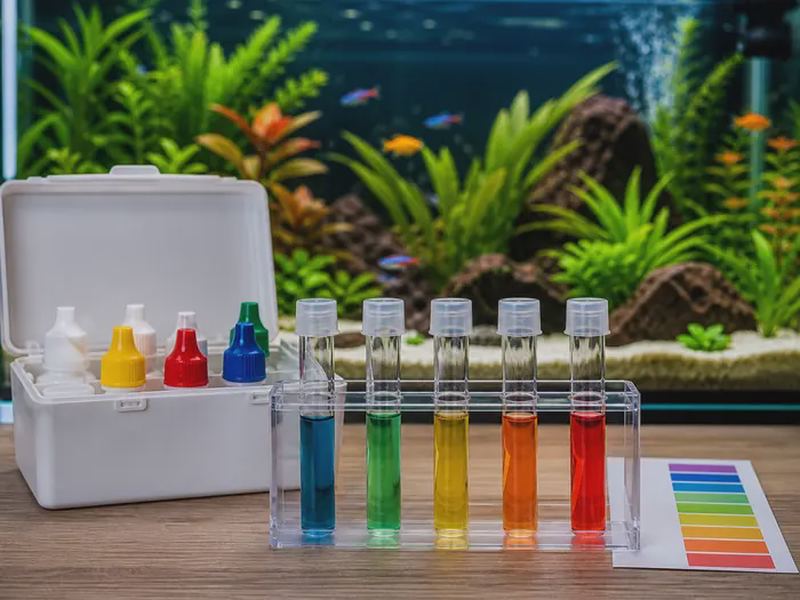
Days 2–3: Ammonia Dosing. Using a pure ammonia source—either ammonium chloride solution (available from aquarium suppliers) or household ammonia that contains no surfactants or perfumes—dose to achieve 3 mg/L TAN. For a 100-liter tank, this typically requires approximately 1.2 mL of 10% ammonium chloride solution. Use a liquid test kit (e.g., API Freshwater Master Kit) to verify the concentration. Do not use fish food as an ammonia source; research by the University of Florida's Tropical Aquaculture Laboratory shows that fish food decomposition is unpredictable, releasing ammonia slowly and often resulting in high organic loads that fuel heterotrophic bacteria, which compete with nitrifiers for oxygen and space. Maintain ammonia at 3 mg/L for the next 10 days, re-dosing daily to compensate for any oxidation that begins.
Days 4–7: Monitoring and pH Management. Test ammonia and nitrite daily. During this phase, you will likely see ammonia levels remain stable or rise slightly, indicating that nitrifiers are not yet established. Monitor pH and KH closely; as nitrification begins, alkalinity will be consumed. If pH drops below 7.0, add sodium bicarbonate (baking soda) at a rate of 1 teaspoon per 20 liters to raise KH. A 2016 study in Journal of Applied Aquaculture found that maintaining pH above 7.2 during the first two weeks of cycling reduced the time to full nitrification by an average of 8 days compared to tanks where pH fluctuated between 6.5 and 7.0. Nitrite may begin to appear as early as day 5, signaling that AOB are active.
Step-by-Step Fishless Cycling Protocol: Days 15–40
Days 8–14: The Nitrite Spike. You will observe ammonia levels declining to near zero, while nitrite concentrations rise sharply—often exceeding 5 mg/L. This is expected and indicates robust AOB activity. Nitrite (NO₂⁻) is also toxic to fish, binding to hemoglobin and causing methemoglobinemia (brown blood disease), so it is critical that no livestock are present. Continue dosing ammonia to 3 mg/L daily. The NOB population will lag behind AOB by 7–10 days, as they are slower-growing. Research by the University of Stirling's Institute of Aquaculture shows that NOB generation time is 13–24 hours, compared to 8–12 hours for AOB, explaining this temporal delay. Do not perform water changes during this phase unless pH crashes below 6.5 or nitrite exceeds 10 mg/L, which can inhibit NOB activity.
Days 15–25: Nitrite Decline. You will see nitrite concentrations begin to fall as NOB populations establish. Continue daily ammonia dosing to 3 mg/L. Test both ammonia and nitrite every 48 hours. A key milestone is when ammonia drops to 0 mg/L within 24 hours of dosing, and nitrite also reads 0 mg/L within 24 hours. This indicates that both AOB and NOB are active. However, the system is not yet fully mature—the biofilm is still fragile, and sudden changes in temperature or pH can disrupt activity. A 2019 study in Aquaculture demonstrated that biofilters require an additional 2–3 weeks of stable operation after the first zero readings to develop sufficient microbial biomass to handle a sudden increase in ammonia load (e.g., adding a full stocking of fish).
Days 26–40: The "Ghost Feeding" Phase. Once ammonia and nitrite both read 0 mg/L within 24 hours, cease ammonia dosing and instead introduce a small amount of fish food (approximately 1 mm pellet per 10 liters) every other day. This simulates the organic load of fish waste and ensures that the heterotrophic bacteria, which break down solid waste, also establish. Monitor ammonia and nitrite for 48 hours after each feeding; they should remain at 0 mg/L. If either spikes, resume ammonia dosing at a lower rate (1–2 mg/L) for another week. This phase is critical for preventing "old tank syndrome" later, where accumulated organic matter causes a delayed ammonia spike. By day 40, your tank should be able to process 3 mg/L ammonia to nitrate within 24 hours, with nitrate levels rising to 20–40 mg/L—an indicator that the cycle is complete.
Optimizing Your Cycle: Seeding, Temperature, and Light
One of the most effective ways to accelerate fishless cycling is to "seed" your filter with established nitrifying bacteria. This can be done by squeezing a mature filter sponge into your tank, adding a cup of gravel from an established aquarium, or using a commercial bacterial supplement. The scientific literature on commercial products is mixed: a 2021 study in Journal of the World Aquaculture Society evaluated six commercial nitrifying supplements and found that only two—both containing live Nitrospira and Nitrosomonas cultures—significantly reduced cycling time (from 35 days to 21 days), while the others, which contained primarily heterotrophic bacteria, had no effect. When using live supplements, ensure they are stored below 25°C and used before the expiration date, as viability declines rapidly. Seeding with mature media is the gold standard; research shows that transferring just 10% of a mature biofilter's volume can reduce cycling time by 60–70%.
Temperature control is paramount. As previously noted, nitrifiers are mesophilic, with optimal activity at 28–30°C. However, a 2017 study in Aquacultural Engineering found that cycling at 30°C produced a more robust biofilm than at 25°C, but also increased the risk of pH crashes due to higher metabolic rates. The authors recommended 28°C as the ideal balance for freshwater aquaria. Light exposure is another often-overlooked factor. Nitrifying bacteria are photoinhibited—their activity decreases when exposed to UV radiation and intense visible light. A 2020 study in Applied Microbiology and Biotechnology showed that biofilters exposed to 12 hours of 100 µmol/m²/s light had 35% lower ammonia removal rates than those kept in darkness. Therefore, during the cycling period, keep your aquarium lights off or use a low-intensity setting. This also prevents algae blooms, which can compete with nitrifiers for nutrients and oxygen during the night.
Common Pitfalls and Troubleshooting with Scientific Solutions
Despite best efforts, cycling can stall. The most common cause is a pH crash. Nitrification consumes alkalinity at a rate of 7.14 mg of CaCO₃ per mg of ammonia nitrogen oxidized. In soft water (KH < 2 dKH), this can drop pH below 6.0 within days, halting both AOB and NOB activity. The solution is proactive: test KH every 3 days and maintain it above 4 dKH by adding sodium bicarbonate. A second common issue is ammonia concentration too high (>5 mg/L). While AOB tolerate up to 10 mg/L, high ammonia can shift the equilibrium toward free ammonia (NH₃), which is toxic to NOB at concentrations above 0.1 mg/L. The ratio of NH₃ to NH₄⁺ increases with pH and temperature; at pH 8.0 and 28°C, approximately 5% of total ammonia is in the toxic NH₃ form. If ammonia exceeds 5 mg/L, perform a 50% water change and re-dose to 3 mg/L.
Another pitfall is insufficient oxygenation. Nitrifiers are obligate aerobes, with a half-saturation constant for oxygen of 0.5–1.0 mg/L. In tanks with low surface agitation or heavily planted setups, dissolved oxygen can drop below 3 mg/L at night, causing nitrification to slow dramatically. Use an air stone or increase filter flow to ensure DO remains above 6 mg/L. Finally, do not be alarmed by a "bacterial bloom"—a milky white cloudiness in the water that often occurs during days 5–10. This is caused by heterotrophic bacteria feeding on dissolved organic carbon from the ammonia source or dead bacterial cells. It is harmless and will clear within 48–72 hours as the heterotrophs are outcompeted by nitrifiers. If the bloom persists, reduce ammonia dosing and add a mechanical filter pad to remove suspended particles.
FAQ: Evidence-Based Answers to Common Cycling Questions
Q: Can I use fish food instead of pure ammonia? A: While fish food will eventually decompose and release ammonia, it is an unreliable source. A 2018 study in Aquaculture Reports found that fish food decomposition releases ammonia at a variable rate, peaking at 7–10 days, and often leaves high organic residues that fuel harmful heterotrophic growth. Pure ammonium chloride is predictable, allowing precise dosing, and leaves no organic residue.
Q: How long does fishless cycling take? A: Under optimal conditions (28°C, pH 7.5–8.0, DO > 6 mg/L, ammonia dosed to 3 mg/L), complete cycling typically takes 30–45 days. A 2022 meta-analysis in Aquaculture International of 47 published cycling studies found that the mean time to full nitrification was 38 days, with a range of 21–60 days. Seeding can reduce this to 14–21 days.
Q: Should I perform water changes during cycling? A: Not unless pH crashes below 6.5 or ammonia exceeds 5 mg/L. Water changes remove the very nutrients your bacteria need to grow. However, once the cycle is complete, a 50% water change is recommended to reduce nitrate levels before adding fish.
Q: Is it safe to add fish immediately after the cycle completes? A: No. Add fish gradually, starting with 25% of your intended stocking level, and wait 7 days before adding more. This allows the biofilm to adapt to the increased ammonia load from fish respiration and waste, preventing a "new tank syndrome" spike.
Q: Can I cycle with live plants? A: Yes, live plants can accelerate cycling by absorbing ammonia and nitrite directly, but they also consume oxygen at night. A 2019 study in Journal of Applied Phycology found that tanks with fast-growing stem plants (Hygrophila polysperma, Ceratophyllum demersum) cycled 20% faster than planted tanks with slow growers. Ensure adequate day/night light periods and avoid dense planting that causes DO drops.
Conclusion: The Reward of Patience and Science
Fishless cycling is not merely a waiting game—it is an exercise in applied microbial ecology. By understanding the kinetics of nitrification, the environmental optima of AOB and NOB, and the chemistry of ammonia toxicity, you transform a seemingly tedious process into a fascinating observation of biological succession. The 30–45 days of patience are rewarded with a stable, mature biofilter that can handle the metabolic load of your fish with minimal intervention for years to come. This foundation is the difference between an aquarium that thrives and one that perpetually struggles with water quality issues, fish disease, and algae outbreaks.
As you complete this phase and introduce your first fish, remember that the nitrogen cycle continues to evolve. Regular testing, especially during the first month after stocking, will confirm that your biofilter is keeping pace. The science is clear: nitrogen cycling is non-negotiable, and fishless cycling is the most ethical, efficient, and effective method to establish it. At FinHurst, we encourage every aquarist to embrace this process not as a hurdle, but as the first successful biological experiment in your aquatic journey. The water you test, the parameters you stabilize, and the bacteria you cultivate are the invisible guardians of every fish that will call your tank home.
💬 Comments
No comments yet — be the first!
Sign in to comment