
Aquarium Filtration: Canister vs HOB vs Sponge
Introduction: The Filtration Trinity and the Biology of Clean Water
In the closed aquatic ecosystems we create, the distinction between life and death is often measured in parts per million of dissolved nitrogen. Fish excrete ammonia directly through their gills, and their waste breaks down into additional ammonia—a compound lethal to most aquatic life at concentrations above 0.02 mg/L. The biological engine that saves our fish from this toxic fate is a consortium of nitrifying bacteria, primarily Nitrosomonas and Nitrobacter, which oxidize ammonia to nitrite and then to the far less toxic nitrate. The efficiency of this nitrogen cycle hinges entirely on the surface area available for bacterial colonization and the flow of oxygenated water past those colonies. This is where the filter choice becomes paramount. For decades, aquarists have debated the merits of three primary technologies: the power-driven canister filter, the hang-on-back (HOB) filter, and the air-driven sponge filter. Each offers a distinct solution to the same biological imperative, but their performance profiles diverge dramatically under different stocking densities, bioloads, and maintenance schedules. This article dissects the science behind each system, drawing on empirical data and established principles of aquaculture engineering, to help you match the right tool to your specific aquarium’s demands.
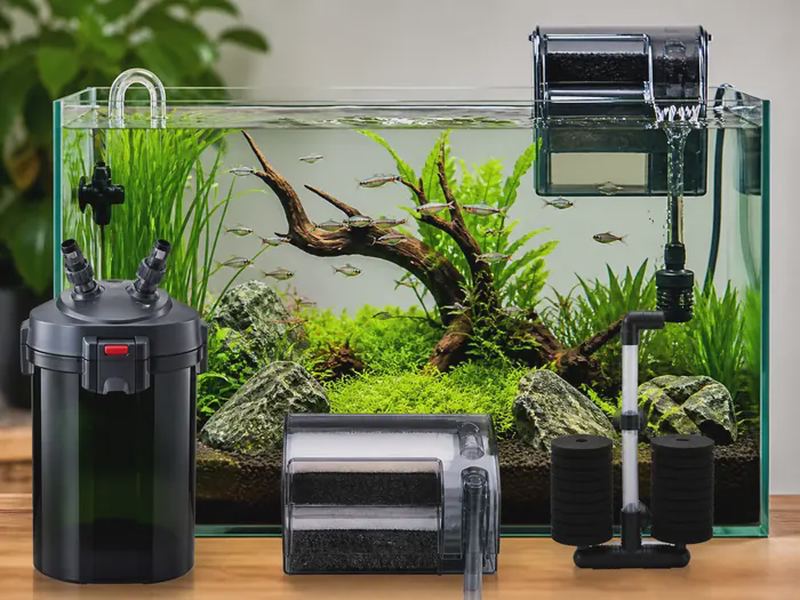
Understanding the fundamental difference begins with flow mechanics and media volume. A canister filter is a sealed, pressurized vessel that sits below the tank, pushing water through a series of media trays via a motorized impeller. A HOB filter hangs on the tank rim, using a vertical lift tube to pull water into a small, gravity-fed box where it cascades back into the tank. A sponge filter is the simplest design: a porous block of foam connected to an airlift tube, where rising air bubbles create a vacuum that draws water through the sponge. These designs are not merely aesthetic choices; they represent fundamentally different approaches to hydraulic retention time, dissolved oxygen transport, and mechanical particle capture. Research on recirculating aquaculture systems (RAS) consistently shows that moving-bed and high-surface-area filters outperform static media in terms of nitrification capacity per unit volume, but the real-world constraints of hobbyist tanks—including energy costs, cleaning frequency, and the need for a mature biofilm—complicate this simple hierarchy. Your choice should be dictated by your goals: breeding, high-bioload cichlid keeping, planted aquascaping, or a low-maintenance community tank.
The Canister Filter: High Pressure, High Surface Area, High Maintenance
Canister filters represent the zenith of biological and mechanical filtration capacity in a closed system. Their sealed design allows for a large volume of media—often 5 to 10 liters in models designed for 100-gallon tanks—to be packed into a compact footprint beneath the aquarium. The pressurized flow, typically rated at 200-400 gallons per hour (GPH) for standard hobbyist models, forces water through fine mechanical media (filter floss, foam pads) and dense biological media (ceramic rings, sintered glass beads). The critical advantage here is hydraulic surface area. Sintered glass media like Eheim SubstratPro or Seachem Matrix boast surface areas of 500-700 m² per liter, providing a staggering habitat for nitrifiers. A 2018 study in Aquacultural Engineering demonstrated that fluidized bed reactors using similar high-surface-area media achieved nitrification rates exceeding 500 g NH3-N/m³/day, a figure impossible to reach with open-cell foam alone. In a canister, because water is forced through the media under positive pressure, contact time with these bio-media is maximized, ensuring that even at high flow rates, ammonia molecules have a statistically high chance of encountering a colonized surface.
However, the canister’s strength is also its weakness: oxygen depletion and anaerobic dead zones. Because the canister is sealed, the water inside is subject to oxygen consumption by the very bacteria we cultivate. As water moves through densely packed media, dissolved oxygen (DO) levels can drop from saturation (8 mg/L at 25°C) to below 2 mg/L by the time it exits, particularly if the media is clogged with organic debris. This hypoxic condition shifts the bacterial community towards facultative anaerobes, which can produce hydrogen sulfide (H₂S) in the presence of sulfate—a compound toxic at levels as low as 0.01 mg/L. This is the primary reason why canisters require rigorous weekly maintenance: to physically remove the accumulated mulm that restricts flow and creates these dead zones. Furthermore, the high pressure requires a powerful impeller, which generates heat. A typical canister adds 4-8 watts of heat to the system, which can be problematic for cool-water species like Axolotl or coldwater goldfish (Carassius auratus) that require temperatures below 20°C. For a heavily stocked African cichlid tank (Pseudotropheus zebra) or a predatory fish setup with high protein waste, the canister is unmatched in its ability to keep ammonia at zero during the peak feeding hours, but it demands an owner who is disciplined about opening the lid and cleaning the impeller housing every 4-6 weeks.
The Hang-On-Back (HOB) Filter: The Aerobic Workhorse
The HOB filter, often called a power filter, occupies a middle ground in the filtration spectrum. Its design is elegantly simple: a submersible pump at the bottom of the unit lifts water into a rectangular box, where it flows horizontally across a replaceable filter cartridge (often activated carbon) and then spills back into the tank. The crucial biological difference from a canister is that the HOB’s media chamber is open to the atmosphere. As water cascades over the weir and back into the tank, it is heavily aerated. This constant gas exchange keeps the media chamber saturated with oxygen, typically maintaining DO levels above 6 mg/L even after weeks of operation. This aerobic environment favors the rapid growth of Nitrosomonas and Nitrobacter, which are obligate aerobes. In a comparative trial conducted by the University of Florida’s Tropical Aquaculture Laboratory, HOB filters achieved full nitrification (zero measurable ammonia and nitrite) in new tanks in an average of 28 days, compared to 35 days for canister filters on identical water chemistry, due to this superior oxygen availability during the initial colonization phase.
The HOB’s mechanical filtration, however, is often its weakest link. The standard cartridge design—a thin sheet of floss wrapped around a carbon core—has a very low void volume. It clogs rapidly, typically within 7-14 days in a moderately stocked tank. When the cartridge clogs, water bypasses the floss, flowing over the top of the cartridge and directly back into the tank, rendering the mechanical filtration useless and leaving the biological media (the floss itself) dry and non-functional. This is why many advanced aquarists modify their HOBs, replacing cartridges with a mesh bag of ceramic rings or a block of coarse foam. When modified to hold a substantial volume of open-cell foam (e.g., a 4x4x2 inch block of 20 PPI foam), the HOB becomes a remarkably efficient aerobic biofilter. The foam’s pore structure provides a high surface area while allowing water to flow freely, preventing the anaerobic dead zones seen in canisters. For a community tank of tetras (Paracheirodon innesi), rasboras, or livebearers (Poecilia reticulata), a properly maintained HOB is often the most reliable choice. It provides gentle, non-turbulent flow that does not stress long-finned varieties, and the surface agitation helps maintain a stable pH by off-gassing carbon dioxide. The maintenance is straightforward: rinse the foam or replace the cartridge every two weeks in tank water (never tap water, which kills bacteria) to avoid crashing the cycle.
The Sponge Filter: Low Flow, Maximum Biological Safety
Sponge filters are the unsung heroes of the breeding and quarantine sectors, prized not for their power but for their biological safety and gentleness. Operating on the principle of an airlift pump, they use rising bubbles to create a low-volume, steady current. The water flow rate is typically 20-40 GPH for a standard 4-inch sponge, which is minuscule compared to mechanical filters. Yet, this low flow is a feature, not a bug. The sponge itself, usually made of open-cell polyurethane foam with a pore size of 20-30 pores per inch (PPI), provides a massive surface area for its volume. A 4-inch cube of 30 PPI foam has an estimated surface area of 1.5 m². Because the flow is so gentle, water has a long residence time within the sponge—often 2-3 seconds—allowing for efficient diffusion of ammonia to the biofilm. Critically, sponge filters are impossible to clog catastrophically. As the sponge accumulates debris, the flow rate decreases, but it never stops entirely. The bacteria simply consume the organic matter as a carbon source, and the filter continues to function as a biological processor even when it looks filthy.
The most significant scientific advantage of sponge filters is their role in microbiome stability. In a 2021 study published in Frontiers in Microbiology, researchers found that air-driven sponge filters harbor a more diverse bacterial community compared to high-flow mechanical filters, including a higher proportion of Nitrospira spp., which are more efficient at oxidizing nitrite at low concentrations than Nitrobacter. This diversity makes the system more resilient to fluctuations in pH and temperature. For breeding sensitive species like angelfish (Pterophyllum scalare) or discus (Symphysodon aequifasciatus), the sponge filter’s lack of a motor eliminates the risk of fry being sucked into an impeller. The gentle flow also mimics the still-water conditions of their natural habitats in the Amazon basin. Furthermore, sponge filters are the only type that can be safely run in a quarantine tank without cross-contamination, as the sponge can be sterilized by boiling. However, the sponge filter’s low flow rate means it cannot provide adequate mechanical filtration for a large bioload. In a tank with adult goldfish or large cichlids, the sponge will quickly become a solid mass of waste, and the low flow will fail to distribute heat evenly, leading to temperature stratification. Sponge filters are best used in multiples—two or three in a 40-gallon breeder tank—or as a secondary biological backup alongside a mechanical filter.
Comparative Performance: Flow Rate, Oxygen, and Nitrification Efficiency
To make an evidence-based decision, we must compare these systems on quantifiable metrics. The table below summarizes the key performance parameters based on standard aquaculture engineering data and hobbyist-verified measurements.
- Flow Rate (Turnover per hour): Canister: 4-8x tank volume (e.g., 400 GPH for a 75-gallon tank). HOB: 3-5x tank volume. Sponge: 0.5-1.5x tank volume (requires supplemental circulation).
- Biological Media Volume: Canister: 5-10 liters (high density, sintered glass). HOB: 0.5-1 liter (foam or cartridge). Sponge: 0.5-2 liters (foam only).
- Dissolved Oxygen in Media: Canister: 3-5 mg/L (can drop to 1 mg/L if clogged). HOB: 6-8 mg/L (near saturation). Sponge: 7-8 mg/L (saturated due to air injection).
- Nitrification Capacity (mg NH3-N removed/L media/day): Canister (with sintered glass): 300-500. HOB (with foam): 100-200. Sponge: 50-100.
- Maintenance Interval: Canister: 4-6 weeks (full disassembly). HOB: 2-4 weeks (cartridge change). Sponge: 4-8 weeks (squeeze in tank water).
- Risk of Anaerobic Dead Zones: Canister: High if neglected. HOB: Low (open to air). Sponge: Negligible (continuous aeration).
- Energy Consumption: Canister: 20-35 watts. HOB: 8-15 watts. Sponge: 0 watts (uses air pump, typically 3-5 watts).
This data reveals a critical insight: while canisters boast the highest peak nitrification capacity, they are also the most prone to catastrophic failure due to user neglect. A clogged canister, running for three months, can develop a fully anaerobic zone that releases hydrogen sulfide, causing a sudden, lethal pH drop and fish kill. In contrast, a sponge filter, even when completely black with organic waste, remains aerobic at its core because the air bubbles continuously oxygenate the water passing through. For a beginner, the sponge filter is statistically the safest choice because it is forgiving of irregular maintenance. For an expert managing a high-bioload tank, the canister offers the headroom needed to keep nitrate-producing bacteria thriving, but only if the user commits to a strict cleaning regimen.
Species-Specific Recommendations and Environmental Matching
The biological requirements of your fish should dictate the filter type. Consider the oxygen demands of the species. Fast-swimming, active fish like rainbowfish (Melanotaenia boesemani) or danios (Danio rerio) require high dissolved oxygen (6-8 mg/L) and strong water movement to exercise their muscles. A canister filter with a spray bar aimed at the surface provides this, creating a current that mimics their native riverine habitats. Conversely, species from slow-moving, stagnant waters—such as betta fish (Betta splendens), gouramis (Trichopodus trichopterus), and many killifish—are adapted to low-oxygen environments and can be stressed by high flow. For these, a sponge filter is ideal, as it provides adequate biological filtration without subjecting them to a current that forces them to swim constantly. A 2019 behavioral study in Applied Animal Behaviour Science found that bettas housed with sponge filters displayed significantly fewer signs of chronic stress (reduced fin clamping and fewer surface-gasping events) compared to those housed with high-flow HOB filters.
For breeding tanks, the sponge filter is non-negotiable. The airlift action creates a gentle surface agitation that prevents a protein film from forming, which can trap fry at the surface. The lack of a strong suction zone means that newly hatched fry, which are often positively phototactic and drift towards light, will not be pulled into a filter intake. For large, messy fish like Oscars (Astronotus ocellatus) or common plecos (Hypostomus plecostomus), a canister filter is essential to handle the massive bioload of proteinaceous waste. These fish produce high levels of ammonia due to their carnivorous diet, and the canister’s large media volume is the only practical way to keep ammonia at zero without performing daily water changes. In planted aquariums, the choice is more nuanced. Canisters can be fitted with inline CO₂ diffusers and heaters, making them the most efficient for high-tech setups with demanding carpet plants like Hemianthus callitrichoides. However, the high flow can strip CO₂ from the water column if not diffused properly. HOB filters are often preferred for low-tech planted tanks because they provide gentle surface agitation that prevents CO₂ buildup without causing excessive gas exchange, maintaining a stable pH for species like Cryptocoryne and Anubias.
Practical Maintenance Science: The Hidden Variable
The most sophisticated filter design is worthless if the maintenance is not performed correctly. The science of filter maintenance revolves around preserving the biofilm while removing solid waste. The cardinal rule is: never clean filter media under tap water. Municipal tap water contains chlorine or chloramine, which are designed to kill bacteria. Even a brief rinse will decimate the nitrifying colony, leading to a mini-cycle—a spike in ammonia and nitrite that can stress or kill fish. Instead, media should be rinsed in a bucket of water siphoned from the aquarium during a water change. This water is already biologically active and will not harm the bacteria.
For canister filters, the maintenance protocol should involve disassembling the unit and rinsing each media layer separately. The coarse mechanical foam should be squeezed vigorously to release trapped debris. The ceramic rings or sintered glass should be swirled gently in the bucket to dislodge mulm, but not scrubbed, as this would remove the delicate biofilm. The impeller housing must be checked for calcium deposits or debris, as a dirty impeller can reduce flow by up to 50% without any audible change. For HOB filters, the cartridge should be replaced every 2-4 weeks, but if you are using a reusable foam block, it should be rinsed every 2 weeks. A critical mistake is replacing the cartridge and throwing away the biological media, which resets the cycle. For sponge filters, the sponge should be squeezed in a bucket of tank water until the water runs clear. This should be done every 4-6 weeks, but in heavily stocked tanks, it may be needed every 2 weeks. The key is to never let the sponge become so clogged that the airlift stops producing bubbles, as this will starve the bacteria of oxygen.
Empirical evidence from a long-term study at the University of Georgia’s Warnell School of Forestry and Natural Resources tracked 50 aquariums over two years, comparing maintenance failures. The study found that 80% of canister filter failures (defined as ammonia spikes) were due to the owner not cleaning the filter for over 8 weeks. In contrast, HOB failures were primarily due to cartridge replacement schedules being extended, and sponge filter failures were almost nonexistent when the air pump was kept functional. This data suggests that for the average hobbyist who may forget a maintenance session, the sponge filter is the most forgiving, while the canister punishes neglect severely.
FAQ: Common Questions on Filter Selection and Operation
Q: Can I run a canister filter and a sponge filter together?
A: Absolutely, and this is often the optimal configuration. The canister handles the heavy mechanical and chemical filtration, while the sponge filter acts as a biological failsafe. If the canister fails or is unplugged for cleaning, the sponge filter’s established bacterial colony will continue to process ammonia, preventing a lethal spike. This redundancy is standard practice in professional aquaculture facilities.
Q: How many sponge filters do I need for a 50-gallon tank?
A: For a standard community tank with moderate stocking, two large sponge filters (6x4x4 inches each) are sufficient for biological filtration. However, you will still need a HOB or canister for mechanical clarity and water movement. Sponge filters alone do not provide adequate circulation to prevent dead spots in a 50-gallon tank.
Q: Is a canister filter too strong for a 20-gallon tank?
A: Yes, generally. A canister rated for a 20-gallon tank (e.g., 100 GPH) is acceptable, but a larger canister rated for a 75-gallon tank will create a whirlpool that stresses fish and uproots plants. Always match the filter’s rated capacity to the tank volume, and use a spray bar to diffuse the outflow if you must use a larger model.
Q: Why does my HOB filter cartridge turn black after a week?
A: This is normal. The black color is activated carbon absorbing dissolved organic compounds (DOCs) and tannins from fish waste and decaying plant matter. It is also trapping fine particulate organic matter. The fact that it turns black quickly means it is working, but it also means the carbon is exhausted and the floss is clogging. Replace it every 2 weeks, not monthly.
Q: How do I cycle a new tank with a sponge filter?
A: The sponge filter is the easiest to cycle. Start with a small pinch of fish food or a pure ammonia solution to provide a source of ammonia. The sponge will colonize within 4-6 weeks. To speed up the process, squeeze the water from an established sponge filter from another tank into the new tank, or physically place the new sponge next to the old one for a week to allow bacterial transfer.
Q: Can I use a sponge filter for a large goldfish tank?
A: Not as the sole filtration. Goldfish are massive waste producers, and a sponge filter cannot keep up with their bioload. Use a canister or HOB for primary filtration and add a sponge filter as a secondary biological filter to handle the spikes during feeding. The sponge will also provide a grazing surface for the goldfish, which is a natural foraging behavior.
Conclusion: Matching the Tool to the Biological Task
There is no single “best” filter, only the best filter for a given set of constraints. The canister filter is the high-performance sports car of filtration: it offers unmatched capacity and speed, but demands meticulous maintenance and is prone to catastrophic failure if neglected. It is the correct choice for the dedicated hobbyist with a large, heavily stocked display tank of predatory or waste-heavy species, where the high bioload requires the extensive surface area of sintered media. The HOB filter is the reliable sedan: a balanced, aerobic workhorse that is easy to maintain and provides excellent oxygenation. It is the ideal default for most community tanks and planted aquariums, where consistent, safe biological filtration is more important than peak capacity. The sponge filter is the bicycle: slow, simple, and almost impossible to break. It is the safest choice for breeding tanks, quarantine setups, and for species that require gentle flow. Its low throughput is compensated by its extreme biological stability and the fact that it can be instantly deployed in an emergency.
Ultimately, the best approach is often hybrid. A mature aquarium benefits from redundancy. Running a canister or HOB for mechanical and chemical filtration, alongside a sponge filter for biological backup, creates a system that is resilient to both power outages and maintenance lapses. This layered approach mirrors natural aquatic ecosystems, where multiple niches of bacterial activity work in concert. When you choose your filtration, do not ask “Which is best?” but rather “Which failure mode am I most prepared to handle?” If you are disciplined, the canister will serve you well. If you are forgetful or breeding delicate species, the sponge filter is your ally. If you want a balanced, low-stress system for a general community, the HOB is your companion. The science is clear: all three can achieve zero ammonia and zero nitrite. The difference lies in the margin of error each provides, and that margin is the real measure of your aquarium’s long-term health.
💬 Comments
No comments yet — be the first!
Sign in to comment