
Cycling a New Aquarium: The Nitrogen Cycle
Introduction: The Biological Imperative of the Nitrogen Cycle
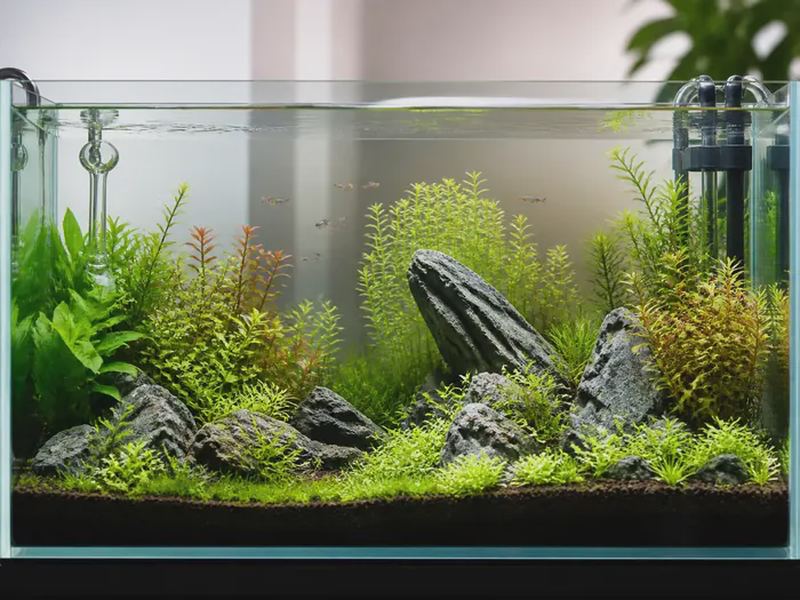
Every new aquarium is, at its inception, a sterile glass box. The water may be clear, the substrate pristine, and the hardscape arranged with aesthetic precision, but biologically, it is a desert. The moment you introduce fish, you are not just adding animals; you are introducing a continuous source of ammonia, a highly toxic byproduct of protein metabolism. In the wild, this waste is diluted across vast volumes of water, but in the closed system of an aquarium, it accumulates with lethal efficiency. The process of cycling, therefore, is not a mere suggestion or a quarantine step—it is the fundamental transformation of your tank from a toxic holding vessel into a functioning, self-sustaining ecosystem. It is the establishment of a microbial workforce that will, for the lifetime of the aquarium, convert your fish’s waste into far less harmful compounds. Skipping this step is the single most common cause of new fish mortality, a fact supported by decades of hobbyist observation and the foundational principles of aquatic microbiology.
The science is elegant in its simplicity. Heterotrophic bacteria begin the process by breaking down uneaten food and decaying organic matter into ammonia (NH₃). This is the first dangerous peak. Then, a specialized group of chemolithotrophic bacteria, primarily from the genus Nitrosomonas, oxidize ammonia into nitrite (NO₂⁻). Nitrite is also highly toxic to fish, binding to hemoglobin and causing brown blood disease, which suffocates the fish from the inside. Finally, a second group of bacteria, predominantly Nitrospira (not Nitrobacter, as historically mislabeled in many older guides), oxidize nitrite into nitrate (NO₃⁻). Nitrate is far less toxic and is removed through regular water changes or taken up by live plants. Understanding this two-step oxidation is crucial, but the real-world application is where most aquarists falter. The goal is not to simply wait for the water to clear, but to measure, monitor, and manage the specific biochemical milestones that indicate your microbial colony is mature and stable.
This guide will walk you through the entire process, from the initial setup to the final, triumphant introduction of your first fish. We will delve into the specific parameters you need to test for, the different cycling methods available, and the common pitfalls that turn a simple process into a frustrating exercise in patience. We will ground our advice in the observable biology of nitrification, ensuring that you understand not just what to do, but why you are doing it. By the end, you will possess the knowledge to cycle any aquarium with confidence, speed, and, most importantly, safety for the animals under your care.
Understanding the Players: Nitrosomonas and Nitrospira
For decades, hobbyist literature taught that Nitrosomonas europaea and Nitrobacter winogradskyi were the sole workers in the aquarium nitrogen cycle. Modern molecular biology, specifically using 16S rRNA gene sequencing, has overturned this simplistic view. Extensive research on biofilter communities, such as studies examining municipal wastewater treatment systems and, more recently, aquarium biofilters, has consistently shown that Nitrosomonas species are indeed present and dominate ammonia oxidation. However, the nitrite-oxidizing stage is almost exclusively driven by Nitrospira species, not Nitrobacter. This distinction matters significantly for the aquarist. Nitrospira are known as K-strategists, meaning they have a lower maximum growth rate but a much higher affinity for nitrite. They thrive in the low-nitrite environments typical of a well-maintained aquarium, whereas Nitrobacter are r-strategists that would only outcompete Nitrospira in high-nitrite environments, a condition we aim to avoid.
The practical implication of this microbial ecology is that your filter’s colonization is a slow, deliberate process. Nitrospira can take significantly longer to establish than Nitrosomonas, which is why you will often observe a spike in nitrite that persists long after ammonia has dropped to zero. This is not a malfunction; it is simply the second bacterial colony catching up. Patience is not just a virtue here; it is a biological requirement. Furthermore, these bacteria are obligate aerobes, requiring dissolved oxygen to perform their metabolic functions. This is why a well-oxygenated filter and water column are critical. A heavily stocked tank with low surface agitation can suffer from oxygen depletion, which will slow or even halt the nitrification process entirely, leading to a dangerous build-up of ammonia and nitrite. Therefore, ensuring adequate aeration, either through filter outflow, an air stone, or a powerhead, is not optional—it is a prerequisite for a healthy cycle.
Another critical factor is temperature and pH. Nitrifying bacteria are metabolically active but have optimal performance ranges. Research indicates that nitrification rates peak between 25°C and 30°C (77°F – 86°F). At temperatures below 20°C (68°F), the metabolic activity of Nitrospira slows dramatically, extending the cycling time significantly. Similarly, pH plays a critical role. The bacteria consume alkalinity (bicarbonate) as a carbon source, and they function best in a pH range of 7.5 to 8.5. In a soft, acidic aquarium (pH below 6.5), nitrification can stall almost completely. This is a common issue in Amazonian biotope setups where aquarists use peat or driftwood to lower pH. If you are cycling a tank for discus or other soft-water species, you must be prepared for a longer cycle and consider using a separate sponge filter to seed a new tank, or use chemical buffers to maintain a stable pH during the cycling process before gradually lowering it to the target range for the fish.
Method 1: Fish-In Cycling (The Traditional, Risky Approach)
Historically, the standard advice was to add a few hardy "sacrificial" fish, often zebra danios (Danio rerio) or goldfish, to provide the ammonia source. This method, known as fish-in cycling, is now widely condemned by ethical aquarists and many veterinary professionals. The premise is simple: the fish produce ammonia, which feeds the bacteria. The reality is that you are deliberately exposing living vertebrates to toxic concentrations of ammonia and nitrite, which can cause severe gill damage, organ failure, and chronic stress that suppresses their immune system. While some hardy species can survive this ordeal, it is a cruel and unnecessary risk. The ammonia concentration during a fish-in cycle can easily reach 2-4 ppm, which is far above the 0.02 ppm that is considered safe for long-term exposure. Even if the fish do not die, they will suffer from sub-lethal effects, including reduced growth rates and increased susceptibility to diseases like ich (Ichthyophthirius multifiliis).
If you find yourself with fish already in an uncycled tank, the protocol demands immediate and aggressive action. You must perform daily water changes of 50-75% to keep ammonia and nitrite below 1 ppm. You should also use a high-quality water conditioner that detoxifies ammonia and nitrite, such as those containing sodium thiosulfate and proprietary additives like Seachem Prime, which bind ammonia into a less toxic, but still bioavailable, form for the bacteria. You must test the water twice daily, and be prepared for a cycling period that can last 6-8 weeks. The constant water changes will slow the bacterial colonization because you are removing the food source, but it is the only safe way to proceed. You are essentially running a race against time, trying to grow a bacterial colony while simultaneously protecting the fish from the very waste that colony is meant to consume. It is a stressful, labor-intensive process that should be avoided at all costs by the planning aquarist.
The only scenario where fish-in cycling is arguably justifiable is when you are dealing with an emergency, such as rescuing fish with no other option. In such cases, the priority is the immediate survival of the fish, and the cycling process becomes a secondary, managed concern. The key is to use a very low stocking density—one small fish in a 20-gallon tank, for example—to minimize the ammonia load. You must also be scrupulously diligent with testing and water changes, often changing water twice daily to keep toxins at undetectable levels. This method is not a "how-to" but a "how-to-survive" scenario. For any new setup, the fishless method is the only scientifically sound and ethically responsible choice.
Method 2: Fishless Cycling with Pure Ammonia (The Gold Standard)
Fishless cycling is the scientifically preferred method because it allows you to control the ammonia source precisely, without harming any living creatures. The process involves adding a pure, additive-free ammonia solution (typically ammonium hydroxide, often sold as "Janitorial Strength" or "Clear Ammonia" in hardware stores) to the aquarium water to simulate the waste load of fish. The key is to ensure the ammonia contains no surfactants, perfumes, or dyes, as these will be toxic. A simple test is to shake the bottle; if it produces a persistent foam, it contains detergents and is unusable. The target concentration is typically 2-4 ppm of ammonia. This level is high enough to rapidly establish a robust bacterial colony but low enough to prevent pH crashes that can occur from excessive nitrification.
The procedure is methodical. First, set up your tank completely—substrate, hardscape, filter, heater—and dechlorinate the water. Then, add your ammonia source to reach the target concentration. Test the water daily for ammonia, nitrite, and pH. For the first few days, you will see ammonia remain stable. Then, as Nitrosomonas colonies grow, you will observe a drop in ammonia and a corresponding rise in nitrite. At this point, you must continue to add ammonia daily to maintain the 2-4 ppm level, ensuring the bacteria have a constant food supply. This is the "feeding" phase. You will notice that the amount of ammonia required to reach your target will decrease daily as the bacteria consume it faster. Eventually, you will reach a point where you add ammonia and, within 24 hours, both ammonia and nitrite read zero. This is the moment of maturation.
This process typically takes 4 to 6 weeks, but several factors can influence the duration. Using a biological supplement, like a bottled bacteria starter containing live Nitrospira and Nitrosomonas (e.g., FritzZyme TurboStart or Dr. Tim's One and Only), can dramatically shorten the cycle to 1-2 weeks. These products contain live, dormant bacteria that, when introduced to a food source, rapidly colonize. However, their efficacy depends on the bacteria being alive and the water conditions being suitable. Another accelerant is "seeding" the new filter with media from an established, healthy aquarium. This transfers a mature bacterial community instantly, effectively bypassing the long lag phase of bacterial growth. This is the most effective and natural method, as the bacteria are already adapted to aquarium conditions. Simply place a sponge or ceramic media from an existing filter into your new filter, and you have a head start of weeks.
Once the cycle is complete, you must perform a large water change—often 90-100%—to remove the accumulated nitrates and any residual ammonia. Then, you can add your fish. However, do not add your entire stocking list at once. Add a small number of fish, wait a week, test the water, and then add another group. This allows the bacterial colony to adjust to the increased bioload without spiking. A cycled tank is not a license for overstocking; it is a dynamic equilibrium that requires gradual adjustment.
Method 3: The Silent Cycle (Using Live Plants)
An alternative, increasingly popular method is the "silent cycle" or "planted cycle," which leverages the nitrogen uptake capabilities of fast-growing aquatic plants. Plants are voracious consumers of ammonia and nitrate, often outcompeting bacteria for these nutrients. Species like Hygrophila polysperma, Ceratophyllum demersum (hornwort), Egeria densa (anacharis), and floating plants like Lemna minor (duckweed) or Salvinia minima grow rapidly and absorb ammonia directly through their leaves. In a densely planted tank, the plants can consume the ammonia as fast as it is produced, effectively preventing the toxic spikes from ever occurring. This allows you to add fish immediately, provided the plant biomass is high enough and the fish load is low.
The science behind this is sound. Research on constructed wetlands for wastewater treatment has demonstrated the high efficiency of aquatic macrophytes in nitrogen removal. In an aquarium, this means that a heavily planted tank can be cycled without ever seeing a measurable ammonia or nitrite spike. The nitrogen is incorporated into plant biomass, which you later prune and remove. This method is not only safer for fish but also creates a more natural, stable environment. However, it requires a significant initial investment in plants and adequate lighting and nutrient supplementation (e.g., iron, potassium) to keep the plants growing vigorously. If the plants are starved or dying, they will release ammonia, turning the silent cycle into a crash.
It is important to note that the silent cycle does not eliminate the need for a biological filter. The filter will still eventually become colonized with nitrifying bacteria, but the plants act as a buffer, preventing the toxic intermediate products from harming the fish. This method is particularly effective for shrimp tanks or nano tanks where the bioload is minimal. For a heavily stocked community tank, relying solely on plants is risky. A more robust approach is to combine the silent cycle with a fishless ammonia method: add plants, add a small amount of ammonia to start the bacterial filter, and let the plants help consume the excess. This dual approach provides redundancy and ensures a faster, more stable maturation. The key takeaway is that plants are not just decoration; they are biological filtration systems in their own right.
Monitoring Your Progress: The Essential Test Kits
Accurate testing is the cornerstone of successful cycling. You cannot rely on visual cues like water clarity; a tank can be crystal clear and yet lethal. You need a liquid test kit that measures ammonia (NH₃/NH₄⁺), nitrite (NO₂⁻), and nitrate (NO₃⁻). The API Freshwater Master Test Kit is the industry standard, offering accurate, colorimetric tests for all three, plus pH. Test strips are convenient but notoriously inaccurate, especially for ammonia and nitrite, and are not recommended for cycling. You must be able to distinguish between 0.25 ppm and 0.50 ppm of ammonia, which is a critical difference during the cycle. Liquid reagents offer this precision.
During the cycling process, you should test daily. Record your results in a log. The pattern you are looking for is a classic succession. Day 1-3: Ammonia rises to your target. Day 4-7: Ammonia begins to drop, and nitrite appears. Day 8-14: Nitrite rises sharply, possibly to 5 ppm or higher, while ammonia may read zero. This is the "nitrite lockout" phase. Day 15-21: Nitrite begins to fall as Nitrospira colonies mature. Day 21-28: Both ammonia and nitrite read zero, and nitrate begins to accumulate. This is your signal that the cycle is complete. If you are using a bottled bacteria starter, this timeline is compressed to 7-14 days, but the pattern remains the same.
It is also wise to monitor pH and carbonate hardness (KH). Nitrification consumes alkalinity, which can cause the pH to drop, especially in soft water. A pH crash below 6.0 can stall the cycle entirely. If you see your pH dropping, you can add a small amount of baking soda (sodium bicarbonate) to raise the KH and stabilize the pH, or perform a water change. The goal is to maintain a stable pH in the 7.0-8.0 range during cycling. Once the cycle is established, you can adjust the pH to the preferred range for your target fish species, but doing so during the cycling phase is counterproductive. Remember, you are growing bacteria, not fish, at this stage.
Common Pitfalls and Troubleshooting a Stalled Cycle
One of the most frustrating experiences is a cycle that refuses to complete. The most common cause is a lack of a proper ammonia source. If you are using a bottled bacteria starter, many of them require an initial ammonia dose to "wake up" the bacteria. If you add the bacteria to pristine water with no ammonia, they will go dormant or die. Always add ammonia first, to a concentration of 2 ppm, and then add the bacteria. Another common issue is using a water conditioner that contains a detoxifying agent that binds ammonia, such as those that claim to "detoxify" ammonia. While these are excellent for fish-in cycling, they can make it impossible to measure free ammonia, and some research suggests they may temporarily inhibit the bacteria's ability to uptake it. If you are fishless cycling, use a simple dechlorinator (sodium thiosulfate) that does not have these additives.
Another frequent problem is a pH crash. As mentioned, nitrification consumes alkalinity. If your water is soft (low KH), the pH can plummet, halting the bacteria. Test your pH and KH daily. If pH drops below 6.5, perform a 50% water change and add a buffer. Alternatively, you can increase aeration, as higher dissolved oxygen levels can help mitigate pH swings. A stalled cycle can also be caused by a filter that is too clean. You must never clean your biological filter media with tap water, as the chlorine will kill the bacteria. Rinse it in a bucket of dechlorinated aquarium water during a water change. Finally, be aware of medications. Many fish medications, especially antibiotics, are toxic to nitrifying bacteria. If you are treating fish in a cycled tank, you may need to monitor ammonia and nitrite closely and be prepared to do water changes to prevent a mini-cycle.
If your cycle is stuck, do not panic. The first step is to test for ammonia and nitrite. If both are high, your bacteria are not keeping up. Increase the temperature to 28°C (82°F) to boost their metabolism. Ensure your filter is adequately oxygenated. If you have been using a detoxifying conditioner, stop and switch to a simple dechlorinator. If you have been adding ammonia daily, stop and let the bacteria consume what is there. Sometimes, the cycle stalls because the bacteria have exhausted the available phosphorus or other trace nutrients. A small water change with dechlorinated water can replenish these. Patience is key; a cycle can take 8 weeks in some cases. Do not be tempted to add more fish or more bacteria. Let the system find its equilibrium.
FAQ: Rapid-Fire Answers to Critical Questions
Q: How long does a fishless cycle take?
A: Typically 4-6 weeks. Using a high-quality bottled bacteria starter can reduce this to 7-14 days. Seeding with media from an established tank can make it nearly instantaneous.
Q: Can I use tap water for the initial fill?
A: Yes, but you must treat it with a dechlorinator to remove chlorine and chloramine. Chloramine is particularly problematic as it does not evaporate and is toxic to bacteria.
Q: My water tests show 0 ammonia, 0 nitrite, but high nitrate. Is my tank cycled?
A: Yes. This is the exact profile of a fully cycled tank. The nitrate is the end product and is removed via water changes.
Q: Do I need to do water changes during the cycle?
A: During a fishless cycle, only if pH drops below 6.5 or if ammonia/nitrite exceed 5 ppm. Otherwise, let the bacteria do their work. During a fish-in cycle, you must do water changes daily to protect the fish.
Q: Should I run my light during the cycle?
A: A short photoperiod (6-8 hours) is fine, especially if you have plants. However, excessive light can promote algae growth, which will compete with bacteria for nutrients but will not harm the cycle.
Q: Can I add snails or shrimp during the cycle?
A: Snails are very hardy and can be added early to help clean up any organic matter. Shrimp are more sensitive to ammonia and nitrite and should be added only after the cycle is complete and the water has been changed.
Q: What is the ideal temperature for cycling?
A: 25-30°C (77-86°F). A higher temperature within this range will speed up the bacterial metabolism.
Conclusion: The Reward of Patience
Cycling a new aquarium is not a chore to be rushed; it is a fundamental investment in the health and longevity of your aquatic ecosystem. By understanding the microbial processes at work, you transform from a passive observer into an active manager of a complex biological system. The initial weeks of testing and waiting are a small price to pay for the years of stable, thriving aquarium life that follow. A properly cycled tank is resilient, forgiving, and a joy to observe. It is a self-cleaning, self-regulating microcosm that, once established, requires only minimal intervention from you.
We strongly encourage you to embrace the fishless method. It is the most ethical, precise, and scientifically sound approach. The satisfaction of seeing your first fish swim into a tank where the water parameters are perfect, where you know the invisible workforce is already hard at work, is far greater than the fleeting thrill of adding fish on day one and hoping for the best. The nitrogen cycle is the heart of your aquarium; a heart that must be nurtured, protected, and understood. Armed with the knowledge from this guide, you are now ready to build that heart, to create a thriving, healthy environment for your aquatic companions. Welcome to the patient, rewarding world of responsible fishkeeping.
💬 Comments
No comments yet — be the first!
Sign in to comment