
Betta Fish Care: Complete Tank Setup & Health Guide
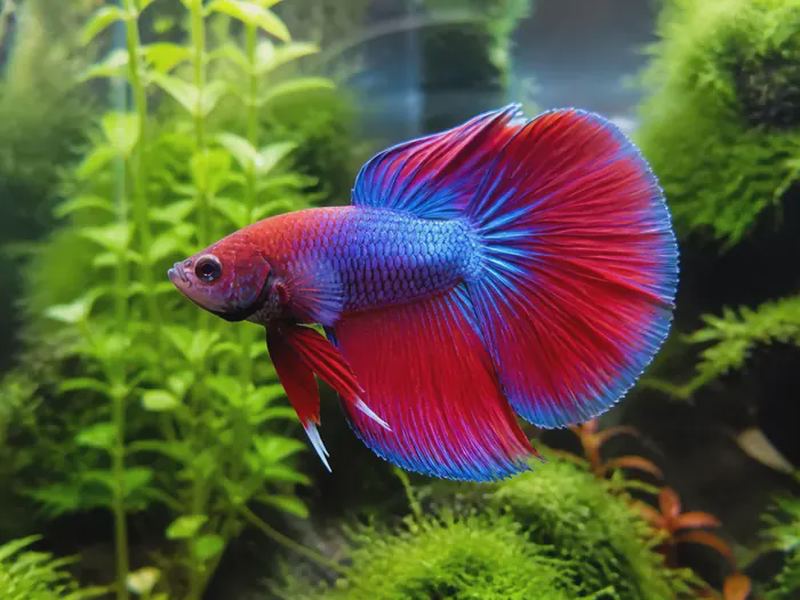
# Betta Fish Care: The Complete Guide
Betta fish (Betta splendens), also known as Siamese fighting fish, are the most popular freshwater aquarium fish in the world — with over 2 million monthly searches for betta care alone. Their flowing fins, vivid colors, and individual personalities make them irresistible. But here is the truth most new owners learn too late: bettas are not low-maintenance bowl fish. They are tropical fish with specific needs, and a healthy betta kept properly lives 3-5 years instead of the 6-12 months seen in bowls.
This guide covers everything: tank size, water parameters, heating, filtration, diet, common diseases, and the mistakes that kill bettas fastest. Every number here matches what aquatic veterinarians and established breeders actually recommend.
The Single Most Important Fact: Bettas Are Tropical Fish
Betta splendens comes from the slow-moving, warm rice paddies and floodplains of Thailand, Cambodia, and Vietnam. Water temperatures there hover around 80°F (26.7°C) year-round. A betta's metabolism, immune system, and digestion all function properly only in that range.
The minimum temperature for a betta is 75°F (24°C), and the ideal range is 78-80°F (25.5-26.7°C). Below 75°F, a betta's immune system suppresses, making them vulnerable to ich, fin rot, and velvet. Most "sudden" betta deaths in bowls are really slow deaths from being kept at 68-72°F room temperature.
You need a heater. Every single betta needs a heater. A 25-watt adjustable heater works for 5-10 gallon tanks. Set it to 79°F and check with a separate thermometer — built-in dials drift.
Minimum Tank Size: 5 Gallons, Not a Bowl
The old image of a betta in a vase or bowl is the single biggest cause of premature death. Here is why bowls fail:
| Problem | Bowl (0.5-1 gallon) | 5-gallon tank |
|---|---|---|
| Water volume | Tiny — toxins spike fast | 5x dilution power |
| Ammonia/nitrite control | Spikes within 24-48h | Filter processes it |
| Temperature stability | Swings 5-10°F daily | Stable with heater |
| Swimming space | Barely 1 body length | 20+ body lengths |
| Fins | Rub on curved walls | Healthy fin growth |
Minimum: 5 gallons (19 liters). A 10-gallon is better and barely more work. Bigger tanks are actually easier to keep stable — more water means slower chemical and temperature swings.
The tank must have a lid. Bettas are labyrinth fish — they breathe atmospheric air at the surface — and they are known jumpers. A betta that jumps out of an open tank is a classic avoidable tragedy.
Water Parameters: The Numbers That Matter
| Parameter | Ideal range | Danger zone |
|---|---|---|
| Temperature | 78-80°F (25.5-26.7°C) | Below 75°F or above 84°F |
| pH | 6.5-7.5 | Below 6.0 or above 8.0 |
| Ammonia (NH3) | 0 ppm | Any detectable amount |
| Nitrite (NO2) | 0 ppm | Any detectable amount |
| Nitrate (NO3) | Below 20 ppm | Above 40 ppm |
| Hardness (GH) | 4-12 dGH | Extreme either way |
The nitrogen cycle is non-negotiable. A new tank must be cycled before the betta goes in — fishless cycling with ammonia takes 4-6 weeks. Putting a betta in an uncycled tank exposes it to ammonia poisoning, which damages gills and internal organs permanently. If you already have the fish, do a fish-in cycle with daily water changes and Seachem Prime to bind ammonia. See our nitrogen cycle guide for the full protocol.
Water conditioner is required — tap water chlorine and chloramine burn gills. Add a dechlorinator (Seachem Prime, API Stress Coat) to every bucket of new water.
Filtration: Gentle but Essential
Bettas do not need strong flow — in fact they hate it. Their long fins make swimming against current exhausting. Choose:
Whatever you choose, the filter must be cycled (seeded with beneficial bacteria). Never wash filter media in tap water — rinse in tank water during water changes to preserve the bacteria colony.
Substrate and Decor: Betta-Safe Setup
| Item | Safe choices | Avoid |
|---|---|---|
| Substrate | Smooth gravel, sand, aquasoil | Sharp gravel (fin tears) |
| Plants | Anubias, Java fern, moss, floaters | Plastic with sharp edges |
| Hardscape | Driftwood, smooth rocks, caves | Anything with sharp points |
| Hides | Betta log, leaf hammock, caves | Decor with small openings (trapping) |
Live plants are worth it — they absorb nitrates, provide resting spots near the surface, and replicate the betta's natural habitat. Anubias and Java fern grow in any light and need no CO2. A betta leaf hammock near the surface is beloved — bettas rest on it like a bed.
No sharp decor. Bettas tear fins on plastic plants with sharp edges and rough rocks. The "silk or live only" rule for plants prevents most fin injuries.
Diet: What and How Much to Feed
Bettas are carnivorous insectivores. Their natural diet is insects, larvae, and small crustaceans. High-quality betta pellets (fluval bug bites, Hikari Betta Bio-Gold) should be the staple, supplemented with:
| Food | Frequency | Notes |
|---|---|---|
| Betta pellets | 2-3 pellets, 1-2x daily | Soak 5 min first (prevents bloat) |
| Frozen bloodworms | 2-3x per week | Treat — high protein |
| Frozen brine shrimp | 2-3x per week | Good variety |
| Live daphnia | Treat | Natural laxative for constipation |
| Freeze-dried foods | Rarely | Soak first; can cause bloat |
The #1 feeding mistake is overfeeding. A betta's stomach is about the size of its eye. Feed only what the fish eats in 2 minutes, 1-2 times per day. One fasting day per week improves digestion and prevents bloating and constipation — bettas are prone to both.
Common Diseases: Identify and Treat Fast
Bettas are hardy when kept warm and clean, but these diseases account for most vet visits:
Fin Rot
Torn, ragged, black-tipped fins. Caused by poor water quality and stress. Treatment: water changes, temperature 80°F, aquarium salt; antibiotic if it spreads to the body.
Ich (White Spot Disease)
Tiny white salt-like grains all over body and fins. Caused by stress + temperature swings. Treatment: raise temperature to 82-86°F gradually, add Ich-X or malachite green, treat for 7-14 days. See our white spot guide.
Velvet
Fine gold/rust-colored dust on the body, fish rubs against decor. Treatment: dim lights, raise temp to 82°F, copper-based treatment (keep bettas on lower dose — they are sensitive to copper).
Dropsy
Severe bloating with raised scales (pinecone look). Internal bacterial infection — usually fatal. Treatment: quarantine, Epsom salt baths, antibiotics (kanamycin); prognosis is poor.
Constipation
Swollen belly, no feces, stringy white feces. Treatment: fast 3 days, feed a blanched pea or daphnia.
Swim Bladder Disorder
Floating at surface or sinking, unable to stay upright. Common in bettas (especially overfed ones). Treatment: fast 2-3 days, then feed daphnia; check water temp; often resolves in 3-5 days. See our swim bladder guide for similar cases.
Weekly Care Routine
A betta tank takes 20 minutes a week:
| Day | Task |
|---|---|
| Daily | Feed 1-2x, check temp, watch behavior |
| Weekly | 25-30% water change (gravel vacuum), wipe algae, rinse filter in tank water |
| Weekly | Test ammonia/nitrite/nitrate |
| Monthly | Replace filter media if clogged, trim plants |
| As needed | Test pH, trim fins if damaged (rare) |
Betta Tank Size Cheat Sheet
| Tank size | What it supports |
|---|---|
| 2.5 gallons | Emergency/quarantine only — too small long-term |
| 5 gallons | Minimum for one betta |
| 10 gallons | One betta + peaceful tank mates (tetras, corydoras) |
| 20 gallons | Community tank with betta centerpiece |
Common Mistakes That Kill Bettas
2. No heater — immune system failure, ich, fin rot
3. Uncycled tank — ammonia burns
4. Overfeeding — bloat, constipation, swim bladder issues, water fouling
5. Too much water flow — stress, exhaustion, fin damage
6. Sharp decor — torn fins that become infected
7. Tap water without conditioner — chlorine burns on gills
Bottom Line
A betta is a 3-5 year commitment that needs: a 5+ gallon heated (78-80°F) filtered tank, a cycled filter, a species-appropriate carnivore diet, and weekly water changes. Get those four things right and you will have one of the most rewarding, personality-filled fish in the hobby. Skip any of them and you are gambling with the fish's life.
From experience: the bettas that thrive are the ones whose owners did the research first. Take the extra week to cycle the tank, spend the $20 on a proper heater, and your betta will reward you with years of bubble-nest-building, food-begging, hand-recognizing personality.
💬 Comments
No comments yet — be the first!
Sign in to comment