
Betta Tank Size: Minimum, Ideal & Best Tank Mates
Why Betta Tank Size Matters More Than You Think
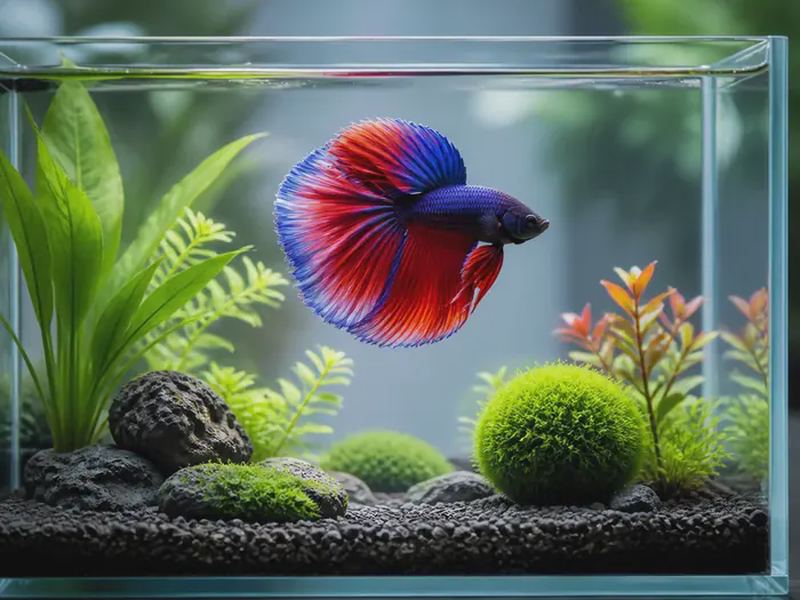
Choosing the right betta tank size is the single most important decision you can make for your fish's health and longevity. Bettas (Betta splendens) are often sold in tiny cups or bowls, but these conditions lead to stress, stunted growth, and disease. In a properly sized tank, your betta can exhibit natural behaviors like exploring, building bubble nests, and swimming freely. A larger volume of water also dilutes waste, making it easier to maintain stable water parameters.
From experience, I have seen countless bettas bounce back from fin rot and lethargy simply by moving them from a 1-gallon bowl to a 5-gallon filtered tank. The transformation is dramatic: colors brighten, fins unfurl, and the fish becomes active and curious. The evidence is clear: tank size directly impacts welfare.
Minimum Betta Tank Size: 5 Gallons Is the Baseline
The absolute minimum betta tank size for a single adult betta is 5 gallons (19 liters). This is not a suggestion; it is a scientifically supported minimum to allow for adequate swimming space, stable water chemistry, and proper filtration. Tanks smaller than 5 gallons experience rapid ammonia spikes and temperature swings that can kill a betta within days.
A 5-gallon tank provides enough room for a gentle filter (sponge or low-flow HOB), a small heater, and a few live plants or decorations. It also allows for a partial water change of 25% once a week without disturbing the biological filter. Anything smaller, like a 2.5-gallon or 1-gallon bowl, is unsuitable for long-term care.
Important: While a 5-gallon tank is the minimum, larger tanks (10 gallons or more) are always better. They offer more stable water parameters and more enrichment options.
Ideal Betta Tank Size: 10 Gallons for Peak Health
For most keepers, the ideal betta tank size is 10 gallons (38 liters). This size offers a perfect balance of space, cost, and maintenance effort. In a 10-gallon tank, you can create a heavily planted environment with driftwood and hiding spots, which mimics the betta's natural habitat of shallow, slow-moving waters in Southeast Asia.
A 10-gallon tank also opens the door to safe tank mates (discussed below) and allows for a more robust nitrogen cycle. Water changes can be reduced to 20% weekly, and nitrate levels stay lower for longer. The extra horizontal swimming space (longer tanks are better than tall ones) encourages exercise and prevents obesity, a common issue in bettas kept in undersized enclosures.
If you have the space and budget, a 20-gallon long (30 inches long) is even better. It provides ample territory for a betta and a small community of peaceful fish.
Comparison of Tank Sizes for Betta Fish
| Tank Size | Suitability | Gallons (Liters) | Dimensions (L x W x H) | Recommended For |
|---|---|---|---|---|
| 1-2.5 gallons | Not suitable | 1-2.5 (3.8-9.5 L) | Varies | Temporary quarantine only |
| 5 gallons | Minimum | 5 (19 L) | 16 x 8 x 10 in | Single betta, no tank mates |
| 10 gallons | Ideal | 10 (38 L) | 20 x 10 x 12 in | Single betta + invertebrates or small fish |
| 20 gallons long | Premium | 20 (76 L) | 30 x 12 x 12 in | Betta + community of peaceful fish |
Ideal Water Parameters for Betta Tanks
Water quality is non-negotiable. Even in the correct betta tank size, poor water chemistry will kill your fish. Below are the target parameters for a healthy betta tank.
| Parameter | Ideal Range | Notes |
|---|---|---|
| Temperature | 78-80°F (25.5-26.7°C) | Stable heater required; fluctuations cause stress |
| pH | 6.5-7.5 | Slightly acidic to neutral; avoid sudden changes |
| Ammonia (NH3) | 0 ppm | Toxic even at low levels; must be 0 |
| Nitrite (NO2-) | 0 ppm | Also highly toxic; must be 0 |
| Nitrate (NO3-) | <20-40 ppm | Keep below 20 ppm for best health; <40 ppm is acceptable |
| General Hardness (GH) | 5-20 dGH | Moderately soft to moderately hard |
| Carbonate Hardness (KH) | 3-8 dKH | Buffers pH stability |
Before adding any fish, you must complete the nitrogen cycle. This process typically takes 4-6 weeks. For a full guide, see our Nitrogen Cycle Guide.
Safe Betta Tank Mates: Who Can Share the Tank?
Bettas are territorial, especially males. However, in a tank of 10 gallons or larger, you can introduce certain peaceful tank mates. The key is to avoid fish that are fin-nippers, too active, or similar in appearance to another betta. Always add tank mates after the betta is established and monitor for aggression.
Invertebrates (Safe for 5+ Gallons)
- Cherry shrimp (Neocaridina davidi): Temperature range 65-80°F (18-27°C). They are small, peaceful, and clean up algae. Bettas may eat baby shrimp, but adults usually survive if plenty of hiding spots exist.
- Nerite snails: Excellent algae eaters. They are harmless and ignored by bettas.
Fish Tank Mates (Safe for 10+ Gallons)
- Neon tetras (Paracheirodon innesi): Temperature range 72-78°F (22-25.5°C). Keep in a school of 6+. They are fast and stay out of the betta's way. Avoid if your betta is aggressive.
- Guppies (Poecilia reticulata): Temperature range 72-82°F (22-28°C). Only keep female guppies (males have flashy tails that may trigger aggression).
- Corydoras catfish: Peaceful bottom-dwellers. A group of 3-4 in a 10-gallon works well.
Fish to Avoid
- Goldfish: Temperature range 68-75°F (20-24°C). They require cool water and produce massive waste. They are incompatible with bettas.
- Other male bettas: Never house two males together. They will fight to the death.
- Fin-nippers (e.g., tiger barbs, serpae tetras): They will harass and injure the betta's long fins.
For more details on community planning, see our Aquarium Stocking Guide.
Setting Up the Perfect Betta Tank: Step by Step
Step 1: Choose the Right Tank
Select a 10-gallon (or 5-gallon minimum) tank with a lid. Bettas are jumpers. A rectangular tank with a longer footprint is better than a tall, narrow one.
Step 2: Install Filtration and Heating
Use a gentle sponge filter or a low-flow hang-on-back filter. Bettas dislike strong currents. Set a heater to 78-80°F (25.5-26.7°C) and use a thermometer to verify.
Step 3: Cycle the Tank
Cycle the tank for 4-6 weeks before adding fish. Dose ammonia to 2-4 ppm and test until you see 0 ammonia and 0 nitrite with some nitrate. This establishes beneficial bacteria.
Step 4: Add Plants and Decor
Add live plants like Java fern, Anubias, and floating plants (e.g., frogbit). Provide caves or driftwood for hiding. Avoid sharp plastic plants that can tear fins.
Step 5: Introduce Your Betta
Acclimate your betta by floating the bag for 15 minutes, then adding small amounts of tank water every 5 minutes for another 15 minutes. Release gently.
Feeding Your Betta in the Correct Tank Size
Bettas are carnivorous. Feed a high-quality betta pellet (2-3 pellets twice a day) supplemented with frozen or live foods like bloodworms or brine shrimp once or twice a week. Overfeeding is a common cause of bloating and poor water quality. In a 5-gallon tank, waste accumulates faster, so stick to a strict schedule. See our Aquarium Fish Feeding Guide for more tips.
Common Diseases and Prevention
A proper betta tank size with stable water parameters is your best defense against disease. However, even in ideal conditions, bettas can get sick.
- Ich (White Spot Disease): Caused by protozoan parasites. Symptoms: white spots on body and fins. Treat with heat (86°F for 3 days) and medication. See our White Spot Ich Guide.
- Fin rot: Usually bacterial, triggered by poor water quality. Improve water changes and consider antibacterial treatment.
- Swim bladder disorder: Often from overfeeding or constipation. Fast for 2-3 days, then feed a blanched pea (only as a last resort; daphnia is better).
From experience, I have seen fin rot clear up in 5-gallon tanks simply by performing daily 20% water changes for a week. Never medicate without first addressing water quality.
Maintenance Schedule for Betta Tanks
| Task | 5-Gallon Tank | 10-Gallon Tank |
|---|---|---|
| Water change (weekly) | 25% (1.25 gallons) | 20% (2 gallons) |
| Filter cleaning (monthly) | Rinse sponge in old tank water | Rinse sponge in old tank water |
| Test water (weekly) | Ammonia, nitrite, nitrate, pH | Ammonia, nitrite, nitrate, pH |
| Gravel vacuum (weekly) | Light vacuum of visible debris | Light vacuum of visible debris |
| Heater check (daily) | Verify temperature 78-80°F | Verify temperature 78-80°F |
Final Thoughts on Betta Tank Size
Selecting the correct betta tank size is not just about following rules; it is about giving your fish a life worth living. A 5-gallon tank is the bare minimum, but a 10-gallon setup will reward you with a more active, colorful, and long-lived pet. Always prioritize stable water parameters, gentle filtration, and appropriate tank mates. For complete betta care, refer to our Betta Fish Care Guide.
💬 Comments
No comments yet — be the first!
Sign in to comment