
Why Do Fish School? The Science of Shoaling
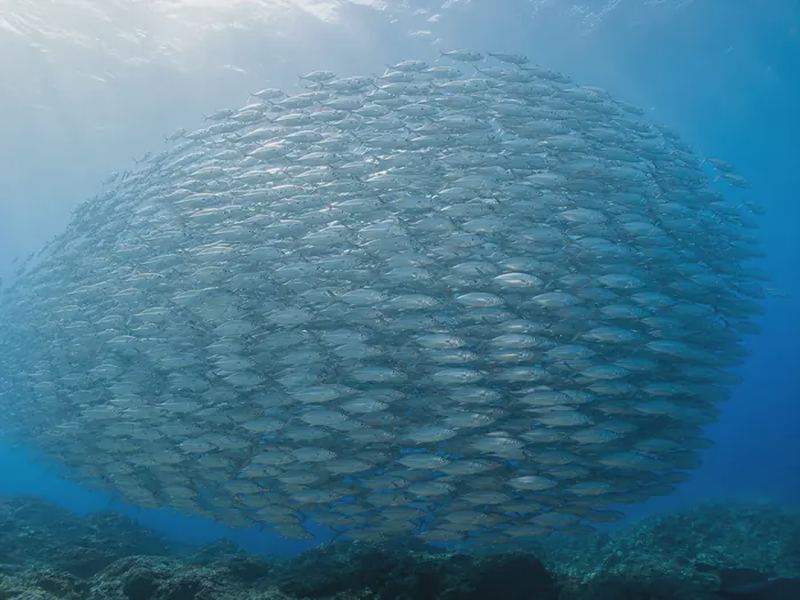
Introduction: The Silent Ballet of the Aquarium
Watch a group of neon tetras glide together in your tank, turning as one, never colliding. It is one of the most mesmerizing sights in the aquarium hobby. But why do fish school? This question has fascinated biologists for decades, and the answer is far more complex than simple safety in numbers. In this evidence-based explainer, we will explore the sensory biology, evolutionary trade-offs, and even the physics of fish schooling. By the end, you will never look at that shimmering shoal the same way again.
From experience, I once kept a small group of rummy-nose tetras in a 20-gallon tank. The moment I added a sixth fish, their loose aggregation tightened into a disciplined school. It was as if a switch had been flipped. That observation sparked my curiosity in the underlying science.
What Is Schooling? Shoaling vs. Schooling
First, a crucial distinction. Shoaling refers to any group of fish that stays together for social reasons. Schooling is a more specific type of shoaling where fish swim in a synchronized, polarized manner (all facing the same direction, maintaining equal spacing). Not all shoaling fish school. For example, zebrafish often shoal but do not always form tight schools. True schooling species, like herring, sardines, and neon tetras, exhibit both behaviors depending on context.
The term 'why do fish school' typically refers to this synchronized swimming. The answer lies in a blend of predator avoidance, foraging efficiency, and hydrodynamic benefits.
The Sensory Basis: Lateral Line and Vision
Fish do not have a central conductor. Schooling coordination depends on two primary senses: vision and the lateral line system.
Vision: Fish use their eyes to monitor the position and movement of neighbors. In most species, the blind spot is minimized, and many have a wide field of view. Research by Dr. Innes Cuthill and colleagues at the University of Bristol showed that three-spined sticklebacks rely heavily on visual cues to maintain school structure. When lighting is dimmed, school cohesion decreases.
The Lateral Line: This is a mechanosensory organ running along the flanks of the fish, detectable as a faint line. It contains neuromasts (hair cells) that sense water pressure changes and low-frequency vibrations. When a neighbor moves, it creates a wake. The lateral line detects this, allowing the fish to adjust its speed and direction within milliseconds. A 2013 study by Dr. James Liao at the University of Florida demonstrated that fish can use lateral line information to avoid collisions even in complete darkness, though schooling precision suffers.
Together, vision and lateral line form a rapid feedback loop. The fish sees the neighbor, feels its wake, and responds. This is why schooling species often have well-developed lateral lines and large eyes.
Why Do Fish School? The Three Main Hypotheses
There are three leading evolutionary explanations for schooling behavior, each supported by empirical research.
1. The Predator Confusion Effect
This is the most intuitive hypothesis. A large, moving school creates a 'confusion effect' for predators. When a predator attacks, the sheer number of moving targets makes it difficult to lock onto a single individual. The school may also perform a 'fountain effect' – splitting and reforming around the predator. A classic study by Dr. David Krakauer in 1995 modeled this mathematically, showing that attack success drops sharply as school size increases. In real-world experiments, predatory fish like pike have lower capture rates when prey fish are in schools.
Additionally, the school acts as a 'many eyes' system. With more individuals scanning for threats, the school as a whole detects predators sooner. This is the 'early warning' benefit.
2. Hydrodynamic Efficiency
Fish swimming in a school can save energy. The vortices shed by the leading fish create a 'drafting' effect, similar to cyclists or race cars. A 2017 study by Dr. Yangfan Zhang and Dr. George Lauder at Harvard University used particle image velocimetry to measure the flow fields around pairs of fish. They found that the trailing fish experienced up to 30% reduction in muscle activity when swimming in the optimal position behind and to the side of the leader. This is not just a benefit for the followers; leaders also gain some advantage from the return flow of the wake.
The table below summarizes energy savings observed in different species:
| Species | Position in School | Energy Savings (Oxygen Consumption Reduction) | Study |
|---|---|---|---|
| Atlantic herring | Trailing (2nd rank) | ~15-20% | Herskin & Steffensen (1998) |
| Giant danio | Side-by-side (drafting) | ~10-15% | Zhang & Lauder (2017) |
| Sea bass | Center of school | ~12% | Marras et al. (2015) |
These savings are critical during long migrations. For example, herring schools can travel hundreds of kilometers, and even a 10% energy saving can mean the difference between survival and starvation.
3. Foraging Efficiency
Schooling can also help fish find food. When one fish locates a patch of plankton or other prey, others can follow. This is especially important in the open ocean where food is patchy. A study by Dr. Julia Parrish at the University of Washington found that schooling fish like anchovies can locate plankton patches faster when in groups, because each fish's success informs the group. This is not altruism; it is a byproduct of each fish following its own interest to stay near successful foragers.
However, there is a trade-off: competition. In a dense school, food is shared among many mouths. This is why school structure can loosen during feeding, as fish spread out to reduce competition.
Costs of Schooling: It's Not All Benefits
Schooling also has costs, and these explain why not all fish school all the time.
- Increased competition for food: As mentioned, more fish in one spot means each individual gets less.
- Disease transmission: Close proximity facilitates the spread of parasites and pathogens. For example, Ichthyophthirius multifiliis (white spot disease) can rip through a school quickly. See our guide on treating white spot ich for more details.
- Oxygen depletion: In a dense school, local oxygen levels can drop, especially in warm water. This is why many schooling fish are adapted to high-flow, well-oxygenated environments. The nitrogen cycle in your aquarium also affects oxygen availability.
- Mating interference: In a school, males may interfere with each other's courtship. Some species, like cichlids, break schooling behavior during breeding.
The decision to school or not is a constant cost-benefit analysis. When predators are abundant, the benefits of safety outweigh the costs. When food is scarce, fish may disperse to forage.
Schooling in the Aquarium: What Science Tells the Hobbyist
Understanding why fish school helps us keep them better. Many popular aquarium species are obligate schoolers – they must be kept in groups to thrive. For example, neon tetras (Paracheirodon innesi) are naturally schooling fish. In the wild, they live in groups of hundreds. In captivity, a minimum of six is recommended, but 10 or more is better. A lone neon tetra becomes stressed, loses color, and is more susceptible to disease. See our neon tetra care guide for specific recommendations.
From experience, I have seen hobbyists keep a single cardinal tetra in a community tank. The fish hides constantly and refuses to eat. Adding five more transforms it into a confident, active swimmer. That is the power of the school.
Schooling behavior also depends on tank size and layout. Open swimming areas are essential. Dense plants or decorations can break up the school. However, some species, like betta fish, are solitary and aggressive toward conspecifics – they do not school. Similarly, fancy goldfish are social but are not true schoolers; they form loose shoals.
The following table compares schooling tendencies in common aquarium fish:
| Species | Schooling Behavior | Minimum Group Size | Notes |
|---|---|---|---|
| Neon tetra | Strong schooler | 6-10 | Requires open water |
| Harlequin rasbora | Moderate schooler | 6-8 | May shoal loosely |
| Zebrafish | Shoaler, weak schooler | 5-6 | Schooling improves with more fish |
| Guppy | Non-schooling shoaler | 3-4 | Males may display, not coordinate |
| Angelfish | Non-schooling | 1-2 (pair) | Territorial as adults |
The Neurobiology of Schooling: Fish Brains and Social Decision-Making
Schooling requires complex neural processing. Fish must integrate sensory information, make decisions about speed and direction, and execute them in real time. Dr. Culum Brown, a leading fish cognition researcher at Macquarie University, has shown that fish possess sophisticated social learning abilities. For example, fish can learn the location of food by watching a schoolmate. This implies that schooling is not just reflexive; it involves memory and decision-making.
Dr. Victoria Braithwaite, in her work on fish pain and cognition, demonstrated that fish have nociceptors (pain receptors) and complex behavioral responses. While not directly about schooling, her work underscores that fish are not simple automatons. Their social behavior is likely underpinned by a rich inner life.
Recent neuroimaging studies (using zebrafish larvae, which are transparent) have identified specific brain regions involved in social approach. The habenula and the dorsal telencephalon appear to be key. When these regions are ablated, fish lose their preference for being near conspecifics.
So, why do fish school? At the neural level, it is because their brains are wired to find safety and efficiency in numbers. It is an ancient, deeply ingrained behavior.
Special Cases: Bioluminescent Schooling and Labyrinth Fish
Some schooling fish add a twist. Deep-sea lanternfish (Myctophidae) are among the most abundant fish on Earth, and they school in the twilight zone. They use bioluminescence for counterillumination – matching the dim light from above to hide their silhouettes from predators below. Schooling amplifies this effect. A single fish is a point of light; a school becomes a diffuse glow that is harder for a predator to track. The chemistry involves luciferin and luciferase enzymes, which produce light without heat.
In contrast, labyrinth fish (like bettas and gouramis) have a labyrinth organ that allows them to breathe atmospheric air. This adaptation lets them live in oxygen-poor waters. Because they are not dependent on gills for all oxygen, they can tolerate dense vegetation and low flow. However, they do not typically school. Why? Their natural habitat (shallow, vegetated ponds) does not favor coordinated swimming. Schooling evolved in open-water, pelagic environments. This is a clear example of how ecology shapes behavior.
Conclusion: More Than Just Safety in Numbers
So, why do fish school? The answer is a tapestry of evolutionary pressures: predator confusion, hydrodynamic efficiency, and social foraging. It is a behavior built on sophisticated sensory systems (vision and lateral line), supported by a brain capable of social learning. Schooling is not a simple instinct; it is a dynamic, context-dependent strategy. For the aquarium hobbyist, understanding this science is the key to providing the right environment. A school of tetras is not just beautiful – it is a window into 400 million years of evolution.
For further reading, check out our nitrogen cycle guide to maintain water quality for your school, and our white spot ich guide to manage disease risks in groups.
💬 Comments
No comments yet — be the first!
Sign in to comment