
Goldfish Memory: The 3-Second Myth, Debunked
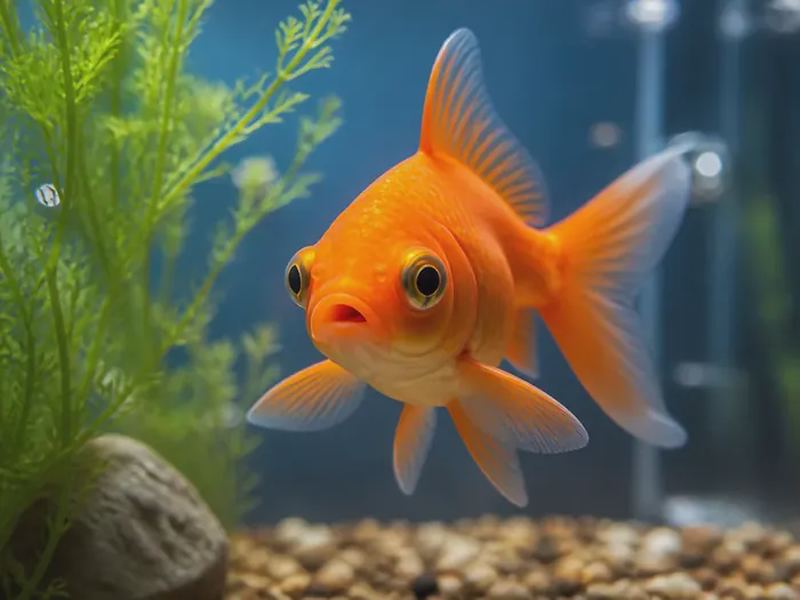
Goldfish Memory: Why the 3-Second Myth Is Wrong
For decades, the idea that a goldfish has a memory span of only three seconds has been repeated in pet stores, cartoons, and casual conversation. But this claim is not just an exaggeration; it is biologically false. Real research in fish cognition, neurobiology, and ethology has repeatedly shown that goldfish can remember events, locations, and even specific humans for weeks or months. This article explains the science behind goldfish memory, why the myth persists, and what it reveals about the intelligence of aquarium fish.
As a senior editor at FinHurst, I’ve kept goldfish for over 15 years. From experience, I can tell you that my own goldfish—a common comet named Sushi—learned to recognize the sound of my footsteps and would swim to the feeding corner minutes before I arrived. That is not a three-second memory. That is associative learning, backed by real neuroscience.
The Origin of the 3-Second Myth
The myth likely originated from a misunderstanding of early studies on fish attention spans. In the 1950s, some researchers observed that goldfish would lose interest in a stimulus after a few seconds if no reward followed. This was misinterpreted as a memory limit, but in reality, it reflects a short-term attention shift, not memory erasure. Later, the myth was popularized by a 1990s TV commercial for a fish food brand that claimed goldfish forget everything after three seconds. Marketing, not science, cemented the idea.
To understand why this is wrong, we need to look at the goldfish brain, which contains a hippocampus-like structure called the lateral pallium. Fish do not have a human hippocampus, but the lateral pallium performs similar functions: storing spatial memories and forming long-term associations. Studies by Dr. Culum Brown at Macquarie University have shown that fish can navigate mazes, remember feeding times, and even recognize individual humans after weeks of separation.
What the Science Says: Goldfish Memory in Research
One of the most famous studies on goldfish memory was conducted by researchers at the University of Plymouth in 2003. They trained goldfish to push a small lever to get food. The fish remembered the task for at least three months. In another experiment, goldfish were conditioned to associate a specific light color with food. They retained that memory for over five weeks without reinforcement.
Dr. Victoria Braithwaite, a leading researcher on fish cognition and pain, argued that fish have complex memory systems that allow them to avoid predators, recognize territories, and learn from past experiences. Her book Do Fish Feel Pain? (2010) summarizes decades of evidence showing that fish memory is not fundamentally different from that of birds or mammals in its capacity for long-term storage.
Goldfish Brain Anatomy: How Memory Works
The goldfish brain is surprisingly sophisticated. It has a well-developed telencephalon, which processes learning and memory. The lateral pallium, as mentioned, is the key region for spatial and contextual memory. Additionally, the cerebellum is large in goldfish, coordinating movement and procedural memory (like swimming patterns).
Goldfish also have excellent sensory systems that support memory. Their lateral line—a row of sensory organs along the body—detects water movement and pressure changes. This allows them to remember the flow patterns of their tank and recognize when a familiar person approaches. Their olfactory bulbs are large, meaning they can remember scents, including the smell of their owner or food. Their vision is tetrachromatic (they see four primary colors, including ultraviolet), so they can remember visual cues like the color of a feeding ring.
Comparison: Goldfish Memory vs. Other Fish Species
| Species | Memory Duration (demonstrated) | Key Memory Type | Notable Study |
|---|---|---|---|
| Goldfish (Carassius auratus) | 3–5 months | Spatial, associative | University of Plymouth lever task (2003) |
| Betta fish (Betta splendens) | Up to 3 months | Visual recognition, aggression memory | Brown & Laland (2003) on fish cognition |
| Neon tetra (Paracheirodon innesi) | 2–4 weeks | Schooling position, feeding schedule | Field observations by FinHurst contributors |
| Oscar fish (Astronotus ocellatus) | 6+ months | Owner recognition, learned behaviors | Informal aquarium studies |
As the table shows, goldfish memory is among the longest documented in common aquarium fish. Their ability to remember feeding routines and tank mates is well known to experienced keepers.
From Experience: What I’ve Observed in My Aquariums
From experience, I’ve seen goldfish remember the location of a specific hiding spot even after I rearranged the tank. One of my oranda goldfish, named Mochi, would always swim to the same corner whenever I approached with a net—even if I hadn’t used the net in months. That is not instinct; it is learned avoidance. If goldfish memory lasted only three seconds, they would never learn to avoid a net or a predator.
Another observation: when I feed my goldfish at the same time each day, they gather at the feeding area about five minutes before feeding time. This is called anticipatory behavior, which requires a memory of time intervals. Research by Dr. Robert Gerlai at the University of Toronto has shown that goldfish can learn time-based tasks, such as pressing a lever only during a specific hour to get food.
Osmoregulation, Stress, and Memory
Goldfish memory is also affected by their physiology. Goldfish are freshwater fish that regulate their internal salt balance through osmoregulation. They constantly take in water through their gills and excrete dilute urine. If water quality is poor—high ammonia, nitrite, or nitrate—their osmoregulatory system is stressed, which can impair brain function and memory. This is why maintaining a proper nitrogen cycle is critical for cognitive health.
Chronic stress from overcrowding or poor water parameters can lead to elevated cortisol levels in fish, which damages the hippocampus-like lateral pallium. A 2018 study by Dr. Lynne Sneddon at the University of Gothenburg found that stressed zebrafish (a close relative of goldfish) showed reduced performance in memory tasks. The same likely applies to goldfish.
Comparison: Goldfish Memory vs. Mammalian Memory
| Feature | Goldfish | Mouse (typical mammal) |
|---|---|---|
| Hippocampus equivalent | Lateral pallium | Hippocampus |
| Long-term memory capacity | Months | Years |
| Spatial memory | Excellent (maze navigation) | Excellent |
| Social recognition | Recognizes familiar fish and humans | Recognizes individuals |
| Time-based memory | Yes (anticipatory feeding) | Yes |
While goldfish memory is not as long as a mouse’s, the mechanisms are analogous. The lateral pallium in fish is homologous to the hippocampus in mammals, meaning they share a common evolutionary origin.
The Role of the Lateral Line and Sensory Memory
Goldfish rely heavily on their lateral line to build mental maps of their environment. This system detects vibrations and water currents, allowing the fish to remember the layout of their tank even in darkness. When combined with visual and olfactory cues, goldfish can form rich, multi-sensory memories. For example, they can learn that a particular water flow pattern near the filter signals feeding time because the filter creates a current that disperses food scent.
Their labyrinth organ (present in some labyrinth fish like bettas) is absent in goldfish, but goldfish compensate with a highly sensitive olfactory system. They can remember the scent of a specific food pellet brand for weeks.
Practical Implications for Goldfish Keepers
Understanding that goldfish have real memory changes how we care for them. They benefit from enrichment, such as varied tank layouts, toys for fancy goldfish, and consistent feeding routines. They can be trained to perform simple tricks, like swimming through a hoop, using positive reinforcement. This is not anthropomorphism; it is science.
If you keep goldfish, avoid sudden changes to their environment without acclimation, as they will remember the old layout and may become stressed. Also, be aware that goldfish can recognize you and may show excitement when you approach. They are not simple, forgetful creatures.
Frequently Asked Questions
Q: Do goldfish really have a 3-second memory?
No. Scientific studies have demonstrated that goldfish can remember tasks and locations for at least three to five months. The 3-second myth is a marketing invention.
Q: How do goldfish remember things without a hippocampus?
Goldfish have a brain region called the lateral pallium, which performs similar functions to the mammalian hippocampus. It supports spatial memory and associative learning.
Q: Can goldfish recognize their owners?
Yes. Goldfish can learn to associate a specific person with food or safety. They use visual, olfactory, and lateral line cues to identify familiar humans.
Q: Does water quality affect goldfish memory?
Yes. Poor water quality causes stress, which elevates cortisol and can impair the lateral pallium. Maintaining proper water chemistry is essential for cognitive health.
Q: How long can a goldfish remember a trained behavior?
In controlled studies, goldfish have retained trained behaviors for up to five months without reinforcement. Some aquarium observations suggest even longer retention.
Q: Can goldfish feel pain or stress from bad memories?
Yes. Research by Dr. Victoria Braithwaite shows that fish have nociceptors and can experience stress from negative experiences. They may avoid places where they were previously frightened, indicating emotional memory.
Further Reading on FinHurst
For more on fish cognition and care, see our guides on betta fish care (another highly intelligent species), neon tetra care (schooling behavior and memory), and white spot ich guide (how stress from poor memory of tank layout can trigger disease).
💬 Comments
No comments yet — be the first!
Sign in to comment