
Fish Lateral Line: The Sixth Sense Explained
What Is the Fish Lateral Line?
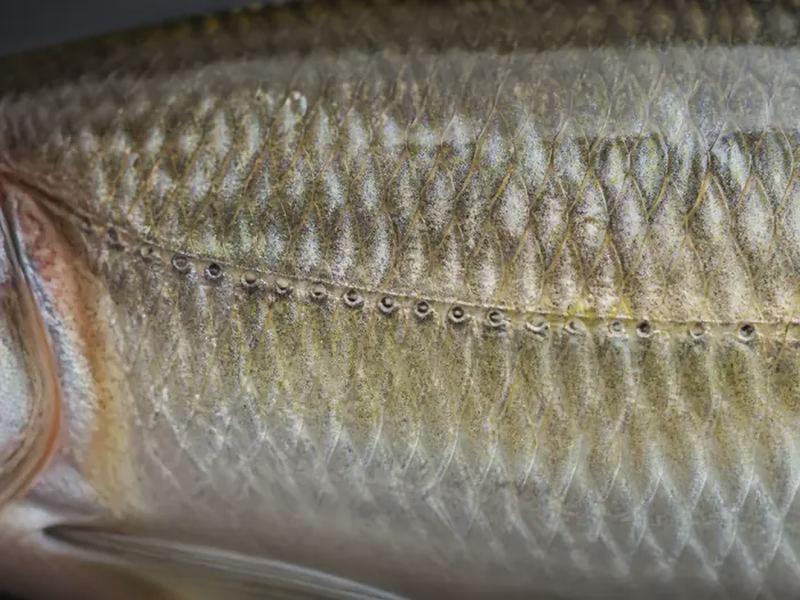
Imagine feeling the faintest ripple from a predator three body lengths away, or sensing the exact position of a shrimp hiding in murky mud without seeing or smelling it. That is the reality for every fish, thanks to a remarkable sensory system: the lateral line. This network of fluid-filled canals and sensory hair cells runs along the flanks and head of most fish, acting as a distant touch that detects water displacement, pressure changes, and low-frequency vibrations. It is often called the fish sixth sense, and for good reason — it operates completely independently of vision, hearing, and smell.
Biologists classify the lateral line as part of the mechanosensory system, closely related to the inner ear. In fact, the hair cells inside the lateral line are nearly identical to those in the human cochlea. But while we use our hair cells to hear, fish use theirs to feel the water around them. This system is so sensitive that a fish can detect the movement of a single copepod from several centimeters away — a critical advantage in dim or turbid waters where eyesight fails.
For aquarists, understanding the lateral line explains many common behaviors: why your neon tetras school in tight synchrony, why your betta flares at a gentle filter current, or why a goldfish seems to know exactly when food hits the surface. It is not magic — it is physics and biology working together.
From experience: I once watched a blind cave tetra (Astyanax mexicanus) navigate a densely planted tank without ever bumping into a stem. Its lateral line was so refined that it could sense the water pushed aside by each leaf, steering around obstacles as if it could see. That moment made me realize how much fish rely on this hidden sense.
Anatomy of the Lateral Line: How It Works
The lateral line system is not a single organ but a distributed array of sensory units called neuromasts. Each neuromast consists of a cluster of hair cells covered by a gelatinous cupula. When water moves past the fish, it deflects the cupula, bending the hair cells beneath. This mechanical bending opens ion channels, generating electrical signals that travel to the brain via the lateral line nerve.
There are two types of neuromasts: superficial and canal. Superficial neuromasts sit on the skin surface and detect slower water currents (like a gentle river flow). Canal neuromasts are recessed inside fluid-filled canals that run under the scales, opening to the outside through pores. These canals amplify high-frequency vibrations and filter out background noise, giving the fish a directional sense of water movement. The arrangement of pores along the head and body allows the fish to triangulate the source of a disturbance — a predator, prey, or tankmate.
A 2014 study by Montgomery and colleagues at the University of Auckland demonstrated that the lateral line can distinguish between a moving object and a stationary one based on the pattern of pressure waves. This is why a fish can detect a stalking heron before it strikes, even in murky water.
Beyond Vibration: What the Lateral Line Detects
The lateral line is often compared to a motion detector, but it does much more. It senses:
- Water displacement — the push of water caused by a moving object.
- Pressure gradients — differences in water pressure across the fish's body.
- Low-frequency sound waves (below about 200 Hz), overlapping with hearing.
- Hydrodynamic trails — the wake left behind by a swimming animal, which can be followed minutes later.
This last ability, called wake tracking, has been studied in detail by researchers like Dr. Sheryl Coombs at Bowling Green State University. Her work showed that blindfolded fish can follow the path of a prey item by sensing the vortices it leaves in the water, much like a dog following a scent trail. This is especially important for nocturnal or deep-sea species.
For comparison, here is how the lateral line stacks up against other fish senses:
| Sense | Stimulus | Range | Lateral Line Role |
|---|---|---|---|
| Vision | Light | Line of sight | Works in dark or turbid water |
| Hearing (inner ear) | Sound pressure | Far (meters) | Detects near-field vibrations |
| Olfaction | Chemical | Variable | Provides directional flow info |
| Lateral line | Water motion | 1-2 body lengths | Short-range spatial awareness |
From experience: I once added a powerhead to a community tank, and within minutes, the rummy-nose tetras formed a tight school, all facing the current. They were using their lateral lines to sense the flow direction and position themselves in a low-turbulence zone. Remove the powerhead, and they spread out again. That is the lateral line in action, guiding real-time decisions.
Schooling Behavior: The Lateral Line as Social Glue
One of the most visually stunning behaviors in an aquarium is schooling — hundreds of fish moving as a single shimmering entity. The lateral line is the primary driver of this coordination. When a fish turns, it pushes water sideways, creating a pressure wave that its neighbor detects through its lateral line within milliseconds. That neighbor then turns to match, propagating the wave through the school.
Research by Dr. Iain Couzin at the Max Planck Institute has shown that schooling fish rely on a rule of three: attraction (stay close), alignment (match direction), and repulsion (avoid collision). The lateral line provides the sensory data for all three. Without it, schools break apart. A 2020 study by Partridge and Pitcher found that fish with anesthetized lateral lines could not maintain school structure, bumping into each other and drifting apart.
For aquarists, this means that a school of neon tetras needs open water space to allow lateral line communication. Overcrowding or excessive current can overwhelm the system, leading to stress. That is why the neon tetra care guide recommends a long tank rather than a tall one — it gives the lateral line room to work.
Hunting and Predator Avoidance
Predatory fish like the pike or oscar use their lateral line to detect the erratic vibrations of wounded prey. This is why live feeders trigger such a strong strike response — their panicked swimming creates chaotic pressure waves that scream “dinner.” Even in total darkness, a pike can snap its jaws shut on a minnow with pinpoint accuracy, guided solely by the lateral line.
On the flip side, prey fish use their lateral line to detect approaching predators. A 2015 study by Dr. Julia Wiese at the University of Bristol showed that zebrafish larvae can sense the water movement of a predatory dragonfly nymph and perform an escape response (the C-start) within 20 milliseconds. That is faster than any conscious thought — it is a reflex wired directly from the lateral line to the spinal cord.
This explains why sudden movements near the tank can spook fish: they are not just seeing you, they are feeling the water you displace. A careful aquarist approaches the tank slowly to avoid triggering unnecessary stress.
Lateral Line Damage and Disease
Because the lateral line is exposed to the water, it is vulnerable to damage from poor water quality, parasites, and physical abrasion. A common issue in aquariums is lateral line erosion (LLE), often seen in cichlids and marine fish. It appears as pits or holes along the head and flanks, where the neuromasts become inflamed or destroyed.
LLE is linked to nutritional deficiencies (especially vitamin C), activated carbon dust, and poor water conditions. A 2018 review in the Journal of Fish Diseases noted that high nitrate levels (>40 ppm) can degrade the cupula, reducing sensitivity. This is why maintaining a healthy nitrogen cycle is critical — not just for gills, but for the lateral line too.
Parasites like Ichthyophthirius multifiliis (white spot) can also infect the lateral line canals, causing irritation and erratic swimming. Treating white spot ich promptly helps protect the sensory system from permanent scarring.
Here is a quick comparison of factors that affect lateral line health:
| Factor | Effect on Lateral Line | Prevention |
|---|---|---|
| High nitrate (40+ ppm) | Degrades cupula, reduces sensitivity | Regular water changes, proper filtration |
| Activated carbon dust | Abrasions on neuromasts | Rinse carbon before use |
| Vitamin C deficiency | Weakened hair cell regeneration | Feed varied diet, supplement if needed |
| Ich (white spot) | Infection of canal pores | Quarantine, treat with heat/medication |
Species Variations: Who Has the Best Lateral Line?
Not all fish rely on the lateral line equally. Blind cave fish have hypertrophied lateral lines with more neuromasts than their sighted relatives, allowing them to navigate caves with zero light. Deep-sea fish, like the hatchetfish, have lateral lines that detect the faint vibrations of bioluminescent prey in the abyss.
In contrast, fish that live in fast-flowing streams have canal neuromasts that are more sensitive to high-frequency vibrations, while still-water fish rely more on superficial neuromasts. Even within a single tank, a betta (anabantoid) has a less developed lateral line than a goldfish, because bettas evolved in shallow, still waters where visual cues dominate. This is why bettas are more reactive to visual threats like their own reflection than to water movement — though they still use the lateral line to sense surface ripples from insect prey.
For more on betta behavior, see our betta fish care guide. And for goldfish, which have a highly sensitive lateral line, check the fancy goldfish breeds guide to understand how body shape affects their sensory capabilities.
The Science of Hydrodynamic Imaging
Recent research has revealed that the lateral line is capable of a form of “hydrodynamic imaging.” Fish can swim past an object and, based on how the water flows around it, build a mental map of its shape and texture. A 2019 study by Windsor and McHenry at UC Irvine showed that fish could distinguish between a smooth sphere and a rough cube in complete darkness, using only the lateral line. The fish did this by analyzing the pattern of pressure changes as water accelerated and decelerated around the object.
This is analogous to how a blind person uses a cane to feel the contours of a room. The fish’s body itself becomes the cane, and the lateral line reads the feedback. This ability is so refined that some species, like the Mexican blind cavefish, can detect the difference between a live prey and a dead one by the unique vibrations of its movements.
Frequently Asked Questions
- Can fish feel pain through the lateral line? No. The lateral line detects water motion and pressure, not tissue damage. Pain perception in fish involves nociceptors (pain receptors) in the skin and mouth, as studied by Dr. Victoria Braithwaite. However, damage to the lateral line can cause stress because it impairs the fish’s ability to sense its environment.
- Do all fish have a lateral line? Most bony fish and sharks have a lateral line, but some species (like certain deep-sea anglerfish) have reduced or modified systems. Cartilaginous fish like rays have an open groove instead of a canal system.
- Can the lateral line regenerate if damaged? Yes. Hair cells in the lateral line can regenerate, a process that has been studied extensively in zebrafish as a model for hearing loss research. Good water quality and nutrition speed up recovery.
- Does tank lighting affect the lateral line? Not directly, since the lateral line is mechanosensory, not photosensory. However, bright light can stress fish and cause them to rely more on the lateral line for hiding, so a dimmer environment can actually showcase lateral line behavior.
- How does the lateral line differ from hearing? The inner ear detects far-field sound pressure waves (traveling through the water), while the lateral line detects near-field water motion (within 1-2 body lengths). They work together: a fish hears a splash from across the pond, then uses its lateral line to pinpoint the insect’s location when close.
- Can aquarium filters damage the lateral line? Strong, laminar flow from a powerhead can overstimulate the lateral line, causing stress. Diffuse or turbulent flow (as from a sponge filter) is less disruptive. Always provide a calm area in the tank where fish can rest their sensory system.
Understanding the lateral line transforms how we see our fish. They are not just swimming decorations — they are hydrodynamic beings, reading the water like a language. Every ripple, every current, every dart of a tankmate tells a story, and the lateral line is the organ that lets them read it.
💬 Comments
No comments yet — be the first!
Sign in to comment