
Do Fish Sleep? How Fish Rest Explained
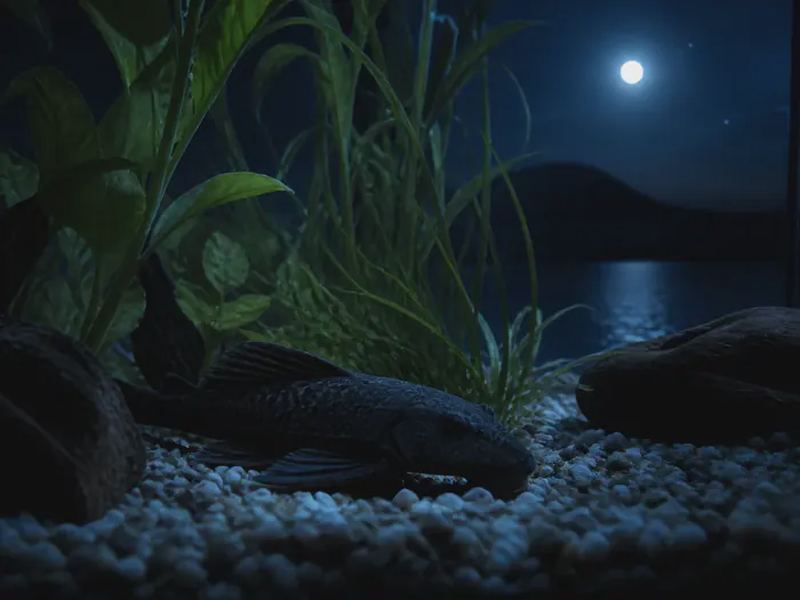
What Does Sleep Mean for a Fish?
When we think of sleep, we imagine closed eyes, a horizontal position, and a brain cycling through REM and deep sleep. Fish do none of those things. They lack eyelids, they often remain upright, and their brain activity looks different. Yet decades of research confirm that fish do sleep. The question is not whether they rest, but how their version of sleep works given the constraints of living underwater.
For a fish, sleep is a reversible state of reduced responsiveness to the environment, often accompanied by a lowered metabolic rate. Unlike mammals, fish do not have a neocortex, so they cannot experience the same EEG patterns we call sleep. Instead, scientists look for behavioral and physiological cues: a fish that stops swimming, finds a sheltered spot, and takes longer to react to a threat is likely sleeping. This definition comes from comparative sleep research pioneered by scientists like Irene Tobler, who studied rest in diverse animals, and Alexander Borbély, whose two-process model of sleep regulation applies across vertebrates.
For the home aquarium, this matters because your fish need rest just as much as you do. A fish deprived of sleep becomes stressed, more susceptible to disease, and may show erratic swimming. Understanding fish sleep helps you create a tank that respects their natural rhythms.
From experience, I have watched my neon tetras (Paracheirodon innesi) dim their bright blue stripe at night and hover near the plants. The moment I turned on the room light, they darted away. That is a sleeping fish being startled awake.
The Biological Basis of Rest in Fish
Fish sleep is regulated by two key systems: the circadian clock and the homeostatic drive. The circadian clock is an internal timekeeper, located in the pineal gland of fish, which secretes melatonin in response to darkness. Melatonin levels rise at night and fall during the day, signaling the body to rest or be active. This is why consistent light cycles are critical in an aquarium: a fish living under 24-hour light never gets the chemical signal to sleep.
The homeostatic drive means the longer a fish stays awake, the more it needs to sleep. In a 2017 study by J. E. Zimmerman et al. on zebrafish (Danio rerio), researchers found that zebrafish kept awake for 6 hours (by gentle tapping or light pulses) slept twice as long the next night. This recovery sleep is a hallmark of true sleep, not just passive rest. The study also showed that zebrafish have a sleep-like state with reduced brain activity in the hypothalamus, similar to mammals.
Fish also have a unique challenge: they must keep breathing while resting. Unlike mammals, who can stop breathing voluntarily during sleep, fish must continuously pump water over their gills. Sleep in fish is therefore a state where respiration slows but never stops. The opercular rate (gill cover movement) drops by 20-40% during deep rest, as measured in studies on goldfish (Carassius auratus).
How Do Fish Sleep? Behavioral and Physical Signs
Fish show several telltale signs of sleep. The most obvious is reduced movement. Many fish find a safe spot, such as under a rock, inside a cave, or among plants, and remain nearly motionless. Some, like parrotfish, even secrete a mucus cocoon around themselves at night, which may deter predators and parasites while they sleep.
Other signs include:
- Changes in color: Many fish darken or pale during sleep. Neon tetras lose their iridescent stripe, and cichlids often become paler. This is controlled by chromatophores in the skin, responding to melatonin.
- Posture changes: Some fish tilt to one side, rest on their pectoral fins, or even float upside down (e.g., certain catfish). This is normal, not a sign of illness, unless accompanied by other symptoms.
- Reduced responsiveness: A sleeping fish will not dart away when you approach the tank. It may take 2-3 seconds to react to a tap on the glass. This is a key behavioral measure used in sleep research.
However, not all motionless fish are sleeping. Some fish, like sharks, must swim constantly to force water over their gills (ram ventilation). They can still rest one brain hemisphere at a time, similar to dolphins. This is called unihemispheric slow-wave sleep, and it has been observed in some fish species, though it is rare. Most bony fish (teleosts) sleep with both eyes... well, they don't close them, but both sides of the brain rest simultaneously.
Nocturnal vs. Diurnal Fish: Different Sleep Strategies
Fish are divided into diurnal (day-active) and nocturnal (night-active) species. Their sleep schedules are opposite, which is important to consider when stocking a community tank. A classic mismatch is keeping a diurnal betta fish with a nocturnal corydoras catfish. The betta sleeps at night, but the catfish becomes active, potentially disturbing the betta's rest.
| Characteristic | Diurnal Fish (e.g., Tetras, Bettas, Goldfish) | Nocturnal Fish (e.g., Catfish, Loaches, Knifefish) |
|---|---|---|
| Active period | Daylight hours (6-12 hours) | Nighttime (6-12 hours) |
| Sleep period | Night (lights off) | Day (lights on) |
| Preferred sleep spot | Open water, near plants or decorations | Caves, tubes, under driftwood |
| Response to light at night | Startled, may hide | Attracted, may become active |
| Melatonin peak | Night | Day (inverted rhythm) |
Nocturnal fish have adaptations for low-light activity, including large eyes (e.g., pinecone fish), enhanced lateral line sensitivity (to detect vibrations in the dark), and even bioluminescence in some deep-sea species. The lateral line is a sensory organ running along the fish's flank that detects water movement and pressure changes. At night, this system becomes the primary way nocturnal fish navigate and hunt.
From experience, I once kept a neon tetra tank with a single kuhli loach (nocturnal). The tetras would settle down at lights out, but the loach would emerge from the gravel and swim wildly. The tetras never seemed stressed, but their colors were duller in the morning. I eventually moved the loach to a separate tank, and the tetras' nighttime rest improved noticeably.
Do All Fish Sleep? The Exception of Migratory and Open-Ocean Species
Most fish sleep, but some species have evolved to rest in ways that barely resemble sleep. Tuna and mackerel are obligate ram ventilators: they must swim constantly to breathe. Studies using accelerometers on yellowfin tuna (Thunnus albacares) show they reduce swimming speed at night but never stop. Their brain activity has not been measured directly, but behavioral data suggests they enter a low-activity state while still moving. This is called sleep swimming.
Similarly, great white sharks have been observed swimming slowly near the surface at night, possibly resting one brain hemisphere. A 2016 study by G. Schall et al. on captive lemon sharks found that they spent 30% of the night in a restful state, lying on the tank bottom with reduced eye movement. This challenges the old myth that all sharks never sleep.
For migratory fish like salmon, sleep is sacrificed during spawning runs. Salmon stop eating and swim upstream for days, powered by stored energy. They show almost no sleep behavior during this time, but after spawning, many die from exhaustion. This extreme example shows that sleep is not optional for long-term health, but it can be postponed in emergencies.
How Light and Tank Environment Affect Fish Sleep
In an aquarium, the most important factor for fish sleep is the light cycle. Fish evolved with natural day-night rhythms, and artificial lighting disrupts that. A tank left with lights on 24/7 will cause chronic sleep deprivation, leading to a weakened immune system and higher susceptibility to diseases like white spot (Ich). Ich parasites attack stressed fish, and sleep-deprived fish are stressed fish.
Recommended light duration is 8-10 hours per day, with a consistent on/off schedule. Use a timer to avoid variability. Moonlight LEDs or dim blue lights can provide a gentle transition, but total darkness for at least 6 hours is ideal for most species. Some fish, like fancy goldfish, are especially sensitive to light at night because their large eyes let in more light. A goldfish in a bright room at midnight may never reach deep sleep.
Water parameters also matter. Poor water quality from an uncycled tank (see the nitrogen cycle guide) causes gill irritation, making it harder for fish to slow their breathing and rest. High ammonia levels force fish to increase their opercular rate, preventing the respiratory slowdown needed for sleep. Always ensure your tank is fully cycled before adding fish.
Temperature fluctuations can also disturb sleep. Fish are ectotherms, so their metabolic rate depends on water temperature. A sudden drop at night (e.g., from a heater failing) will slow their metabolism, but it is not restorative sleep. It is more like torpor, a state of reduced activity that does not fulfill the same recovery functions.
Do Fish Dream? The Neuroscience of Fish Rest
The question of whether fish dream is speculative, but fascinating. In mammals, dreaming occurs during REM sleep, which is characterized by rapid eye movements and high brain activity. Fish do not have a neocortex, so they cannot have human-like dreams. However, some fish show eye movements during rest. In a 2019 study on zebrafish, researchers at Stanford University observed that zebrafish larvae occasionally twitch their eyes and tail while resting, similar to REM sleep in mammals. The study, led by Philippe Mourrain, found that these episodes were accompanied by bursts of brain activity in the hindbrain and midbrain.
This does not mean zebrafish dream of swimming through coral reefs. It suggests that the basic neural circuits for REM-like sleep evolved early in vertebrate history, possibly before the split between fish and land animals. The function of this REM-like state in fish is unknown, but it may help with memory consolidation or brain development. In the same study, zebrafish that were prevented from entering this state showed poorer learning in a simple maze task.
For the average aquarist, this means your fish are not just shutting down at night. Their brains are active, processing information from the day. Providing a dark, quiet environment allows this neural maintenance to occur.
Sleep and Fish Health: What Happens When Fish Don't Sleep?
Sleep deprivation in fish has been studied experimentally. In a 2015 study by L. C. R. de Oliveira et al. on Nile tilapia (Oreochromis niloticus), fish kept awake for 72 hours showed elevated cortisol levels (a stress hormone), reduced growth rates, and increased mortality from bacterial infection. The study concluded that sleep is essential for immune function and osmoregulation the process by which fish maintain the balance of salt and water in their bodies.
Osmoregulation is energy-intensive. Freshwater fish must constantly pump out excess water that enters through their gills, while saltwater fish must excrete excess salt. Sleep reduces metabolic demand, allowing these systems to operate more efficiently. A sleep-deprived fish may struggle with osmoregulation, leading to bloating, scale loss, or fin rot.
Another consequence is impaired labyrinth organ function in fish like bettas and gouramis. The labyrinth organ allows these fish to breathe air from the surface. During sleep, they reduce their trips to the surface. Without rest, the organ may become inflamed, and the fish may develop labyrinthitis, an infection that can be fatal.
In my own tank, I once had a betta that stopped sleeping because a bright LED strip was left on overnight. After three days, he developed clamped fins and refused to eat. Once I fixed the light timer, he recovered within a week. That experience taught me that sleep is not a luxury for fish it is a biological necessity.
Frequently Asked Questions
Do fish sleep with their eyes open?
Yes, most fish do not have eyelids, so they sleep with their eyes open. A few species, like sharks, have a nictitating membrane that partially covers the eye, but they still do not fully close them. The absence of eyelids does not mean the fish is awake; it is a physical limitation of their anatomy.
Can fish drown while sleeping?
No, fish cannot drown because they extract oxygen from water using their gills. However, some species (like bettas) need to breathe air at the surface using their labyrinth organ. If a labyrinth fish sleeps in a spot far from the surface and the water is low in oxygen, it may suffocate. This is rare in a well-maintained tank.
How long do fish sleep each day?
Most fish sleep for 6-12 hours per day, depending on species and age. Diurnal fish sleep during the night, while nocturnal fish sleep during the day. Young fish and larvae tend to sleep more than adults, similar to mammals. A 2017 study on zebrafish found they slept an average of 8 hours per night, with individual variation.
Do fish get sleep deprived?
Yes, fish can become sleep deprived if their environment is too bright, noisy, or if they are kept with aggressive tank mates. Symptoms include pale color, reduced appetite, erratic swimming, and increased susceptibility to disease like Ich. A consistent light cycle and hiding spots can prevent sleep deprivation.
Do all fish sleep at the same time?
No, different species have different sleep schedules. Diurnal fish sleep at night, nocturnal fish sleep during the day, and crepuscular fish (active at dawn and dusk) sleep during the middle of the day and night. In a community tank, it is normal to see some fish resting while others are active.
💬 Comments
Sign in to comment