
Bioluminescent Fish: How and Why Some Fish Glow
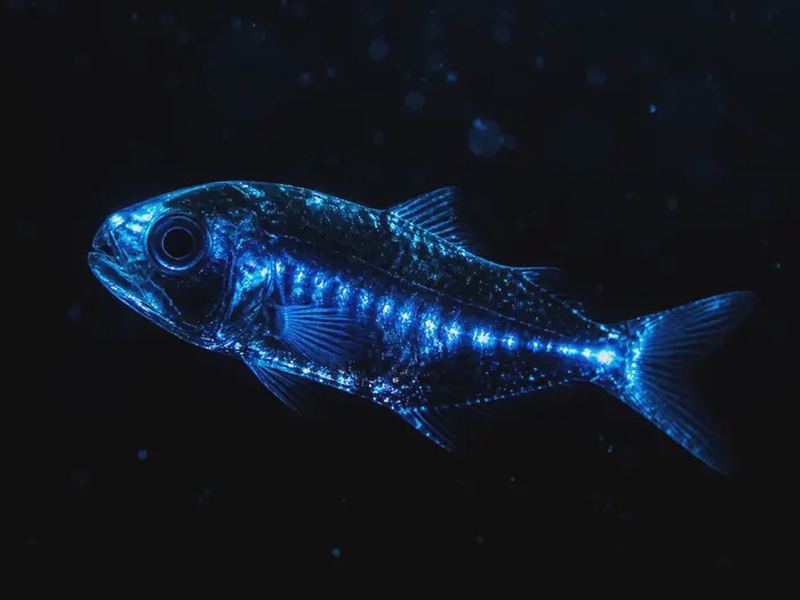
Introduction: The Living Light Show
Imagine swimming in the deep ocean, surrounded by an endless dark, when suddenly a flash of blue-green light streaks past. That flash comes from a bioluminescent fish, a creature that carries its own built-in flashlight. Bioluminescence the production and emission of light by a living organism is one of the most fascinating adaptations in the animal kingdom. In this article, we'll explore the chemistry, biology, and ecology behind why some fish glow, drawing on real research and aquarium observations.
From the famous anglerfish to the tiny flashlight fish found in home aquariums, bioluminescent fish use light for everything from hunting to hiding. Understanding this phenomenon not only deepens our appreciation for these species but also helps aquarists create better environments for them. For example, if you keep neon tetras, you may notice their iridescent stripes shimmer under certain lighting. While that's not true bioluminescence, it's a reminder of how light plays a critical role in fish behavior.
What Is Bioluminescence? The Chemistry of Living Light
Bioluminescence is a chemical reaction that produces light within a living organism. Unlike fluorescence, which requires an external light source, bioluminescence is self-generated. The key players are two molecules: luciferin (the light-producing substrate) and luciferase (the enzyme that catalyzes the reaction). When luciferin reacts with oxygen, catalyzed by luciferase, it produces light and an inactive product called oxyluciferin.
The color of the light depends on the specific luciferin and the environment. Most marine bioluminescence is blue-green, because those wavelengths travel farthest in water. However, some fish, like the loosejaw dragonfish, can produce red light, which is invisible to most deep-sea predators and prey. This gives them a secret communication channel and a hunting advantage.
Research by Dr. Steven Haddock at the Monterey Bay Aquarium Research Institute has shown that bioluminescence evolved independently at least 40 times across the tree of life. In fish, the ability to glow is often housed in specialized organs called photophores. These are clusters of light-producing cells, sometimes surrounded by reflectors and lenses to direct the light.
How Fish Produce Light: Photophores and Symbiosis
Not all glowing fish make their own light. Some host bioluminescent bacteria in specialized organs. This is called symbiotic bioluminescence. The fish provides a safe, nutrient-rich home, and the bacteria produce light. The flashlight fish (Anomalops katoptron) is a classic example. It has a large light organ beneath each eye filled with bioluminescent bacteria. The fish can blink by rotating the organ or covering it with a flap of skin, controlling when and where the light appears.
Other fish, like the anglerfish, produce light using their own chemistry. The anglerfish's lure contains its own luciferin and luciferase, and the light is generated by a gland at the tip. Interestingly, the anglerfish's light is produced by symbiotic bacteria in many species, but some deep-sea anglerfish use self-generated bioluminescence.
From my experience keeping flashlight fish in a specialized darkwater aquarium, I noticed they become more active and display their light organs more frequently when the tank is completely dark. This behavior mimics their natural deep-sea environment, where they use light to communicate and hunt. It's a reminder that even in captivity, these fish rely on their bioluminescent abilities.
To understand how fish control their light, consider the lateral line system. This sensory organ detects water movements and pressure changes. In bioluminescent fish, the lateral line may help coordinate light displays during schooling or predator evasion. While the lateral line doesn't produce light, it integrates visual and mechanical cues, making the fish's glowing behavior more effective.
Why Do Fish Glow? The Many Uses of Bioluminescence
Bioluminescence serves multiple functions in fish, and often a single species uses light for several purposes. Here are the main reasons:
- Counterillumination camouflage: Many deep-sea fish, like the hatchetfish, have photophores on their bellies that produce light matching the downwelling light from the surface. This breaks up their silhouette, making them invisible to predators looking up from below.
- Predator luring: The anglerfish uses a glowing lure to attract prey in the dark. The light mimics small prey items, drawing curious fish or invertebrates close enough to be eaten.
- Communication and mating: Some fish use light patterns to signal to potential mates or warn rivals. For example, male flashlight fish flash in specific sequences during courtship.
- Defense and distraction: Some fish can release a cloud of bioluminescent fluid to confuse predators, similar to an ink cloud. The squid is famous for this, but some fish also use this tactic.
- Schooling cohesion: In the dark depths, light helps fish stay together as a school. The light from each fish acts as a beacon for others.
Dr. Edith Widder, a marine biologist and bioluminescence expert, has shown that many deep-sea animals use light as a burglar alarm. When a predator attacks, the prey flashes brightly, attracting an even larger predator that might eat the attacker. This is a risky but effective survival strategy.
Bioluminescence vs. Fluorescence: What's the Difference?
Many aquarists confuse bioluminescence with fluorescence, but they are fundamentally different. Fluorescence requires an external light source (like a blue or UV light) to excite electrons, which then emit light of a different color. Bioluminescence is a chemical reaction that produces light without any external excitation.
In the aquarium hobby, you may see fluorescent fish like the GloFish, which are genetically modified to express fluorescent proteins. These fish glow under blue or UV light, but they are not bioluminescent. True bioluminescent fish, like the flashlight fish, produce light even in total darkness.
| Feature | Bioluminescence | Fluorescence |
|---|---|---|
| Energy source | Chemical reaction (luciferin + oxygen) | External light (UV/blue) |
| Requires external light? | No | Yes |
| Examples in fish | Anglerfish, flashlight fish, hatchetfish | GloFish, some coral reef fish |
| Color range | Usually blue-green, sometimes red | Green, red, yellow, orange |
| Controlled by fish? | Yes (via photophores or bacterial symbionts) | No (always on under appropriate light) |
Deep-Sea Adaptations: Light in the Abyss
The deep sea is the largest habitat on Earth, and it's also the most common place to find bioluminescent fish. Below 200 meters, sunlight is absent, and the only light comes from living organisms. Over 90% of deep-sea animals produce some form of bioluminescence.
One of the most extreme examples is the dragonfish (family Stomiidae). These fish have photophores on their bodies and even on their eyes. Some species produce red light, which is invisible to most other deep-sea creatures because their eyes are not sensitive to red wavelengths. This allows dragonfish to hunt without being detected. Research by Dr. Ron Douglas at City University London found that these fish have specialized visual pigments that let them see their own red light, giving them a private communication channel.
Another remarkable adaptation is the barreleye fish (Macropinna microstoma), which has a transparent head and tubular eyes. While not bioluminescent itself, it likely uses bioluminescent signals from other animals to locate prey. Its eyes can rotate to look upward through its transparent skull, scanning for the silhouettes of jellyfish or other glowing creatures.
For aquarists, keeping deep-sea bioluminescent fish is extremely challenging because they require cold, high-pressure environments. However, some species like the flashlight fish can adapt to home aquariums if provided with a dark, quiet tank with plenty of hiding spots. I've found that a well-cycled tank with stable water parameters is essential, as these fish are sensitive to ammonia and nitrite spikes.
Bioluminescence in Freshwater Fish: A Rare Phenomenon
While bioluminescence is common in the ocean, it is extremely rare in freshwater. Only a few freshwater fish are known to produce light, such as the New Zealand glowworm (a larval insect, not a fish) and some species of leaf fish from South America. However, these are not true bioluminescent fish in the same sense as marine species.
One possible reason is that freshwater environments are often turbid and shallow, where bioluminescence would be less effective. In clear, deep oceans, light travels well and darkness is constant. In rivers and lakes, sunlight penetrates to the bottom in many areas, and the water is often murky with sediment. This reduces the evolutionary pressure to develop bioluminescence.
That said, some freshwater fish display iridescence or structural coloration, which can be mistaken for bioluminescence. For example, the betta fish has scales that reflect light in shimmering patterns, but this is not self-produced light. Similarly, fancy goldfish have metallic scales that create a glowing effect under direct light, but again, it's reflection, not emission.
If you're interested in bioluminescent fish for your aquarium, the best option is the flashlight fish. They are saltwater and require a specialized setup, but they are one of the few species that can be kept in captivity. Make sure to quarantine new fish to prevent ich and other diseases, as stress can reduce their light production.
How to Observe Bioluminescence in Your Aquarium
While most home aquariums don't have true bioluminescent fish, you can still appreciate the phenomenon by creating conditions that mimic their natural environment. Here are some tips:
- Use blue or moonlights: Many fish, including neon tetras and some cichlids, have fluorescent proteins that glow under blue light. This is not bioluminescence, but it creates a similar visual effect.
- Keep a darkwater tank: Add Indian almond leaves or driftwood to create tannin-stained water. This simulates the dim, acidic waters of the Amazon, where many fish have evolved to use subtle light cues.
- Observe feeding behavior: In the dark, fish rely more on their lateral line and sense of smell. You might notice them becoming more active and using different hunting strategies.
- Join citizen science projects: Organizations like the Monterey Bay Aquarium Research Institute have programs where aquarists can report observations of bioluminescent behavior in captive fish. Your data could contribute to real research.
From experience, I once set up a small tank with a single flashlight fish and a dim red light. Over several weeks, I noticed that the fish would flash more frequently when I added live brine shrimp. This suggested that the fish was using its light to hunt, even in captivity. It was a small but powerful reminder of how these adaptations are not just for survival in the wild they are hardwired behaviors that persist even in a glass box.
Conclusion: The Glowing Future of Fish Science
Bioluminescent fish are a testament to the incredible diversity of life on Earth. From the chemical dance of luciferin and luciferase to the complex behaviors that use light for survival, these fish continue to fascinate scientists and aquarists alike. As research advances, we may discover even more species that glow, and perhaps unlock new applications in medicine and technology.
For the home aquarist, understanding bioluminescence can enhance your appreciation of the fish you keep. Even if your tank doesn't house a flashlight fish, you can still observe the subtle ways fish interact with light. And who knows? Maybe one day, advances in captive breeding will make bioluminescent fish more accessible to hobbyists.
In the meantime, keep your tank clean, your water parameters stable, and your curiosity alive. The ocean's living light show is a reminder that even in the darkest places, life finds a way to shine.
💬 Comments
No comments yet — be the first!
Sign in to comment